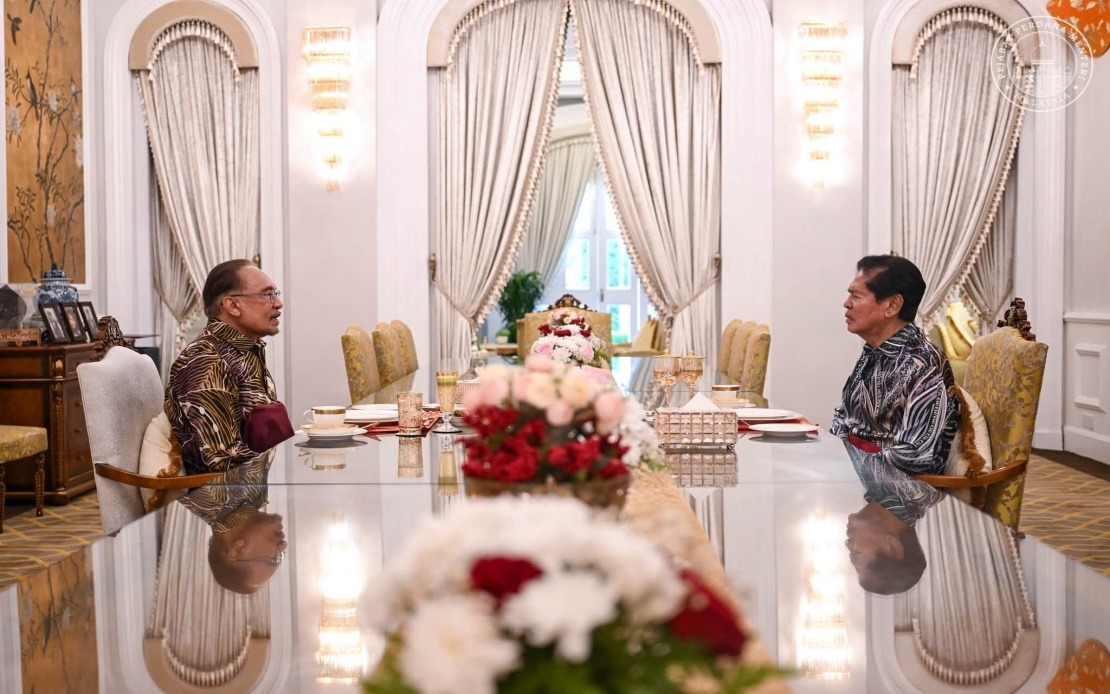
Prime Minister Datuk Seri Anwar Ibrahim brought his two-day working visit to Penang to a close on August 29 when he attended a tea reception hosted by Governor Tun Ramli Ngah Talib at the Governor's official residence, Seri Mutiara, in George Town. The occasion served as a ceremonial capstone to an intensive schedule of engagements across the state, reflecting the continued high-level engagement between federal leadership and Penang's administration.
Through a social media post, Anwar characterised the gathering as a demonstration of the strengthening partnership between Kuala Lumpur and the state capital. He underscored that both tiers of government remain aligned in their commitment to advancing Penang's development agenda while prioritising the welfare and prosperity of its residents. Such statements from the Prime Minister's office typically signal alignment on key policy directions and funding allocations that will flow to the state in coming months.
Governor Ramli received the Prime Minister with visible enthusiasm, reflecting the importance both leaders place on maintaining cordial and productive relations. Ramli highlighted the value of the encounter as a platform for discussing pertinent matters affecting both Penang and the nation at large. His public appreciation of Anwar's visit underscored the symbolic importance of such high-level engagements in reinforcing federal-state bonds, particularly in a state with significant economic and political influence within Malaysia's federation.
A particularly memorable moment during the reception involved Ramli's grandson, Aldrey Alfi, who engaged the Prime Minister with questions. Anwar's willingness to interact warmly with the young child, as noted in Ramli's subsequent Facebook post, demonstrated the personal dimensions that often accompany official state functions. Such interactions, when publicly acknowledged, serve to humanise political leadership and reinforce messaging about the accessibility and approachability of government officials to ordinary citizens.
The tea reception represented the final formal event of an itinerary that demanded considerable stamina and focus from the Prime Minister. Throughout the visit, Anwar participated in the launch or review of several significant national programmes, each designed to address specific sectoral or demographic priorities. The breadth of his engagement across Penang indicated the state's strategic importance within the government's development framework.
Among the key activities during the visit was participation in the Permatang Pauh Entrepreneur Revival Programme, a government initiative aimed at supporting small and medium enterprises and fostering entrepreneurial activity within the district. Such programmes reflect the federal government's commitment to economic diversification beyond traditional sectors and to empowering grassroots business communities. Penang's reputation as a manufacturing and services hub makes such entrepreneurial development programmes particularly relevant to maintaining its competitive economic position.
Anwar also engaged with the 15th Malaysia Scout Jamboree, a large-scale gathering of scouts from across the nation held in Penang. These jamborees serve multiple purposes: they build camaraderie and leadership skills among young Malaysians, they generate significant economic activity for host communities, and they provide visible platforms for government officials to underscore national values including unity, discipline, and civic responsibility. The Prime Minister's presence underlined the government's commitment to youth development and extracurricular engagement.
A third major programme on the itinerary was the MADANI Sahabat 2026 National Day Countdown Programme. This initiative appears designed to build anticipation and collective engagement around Malaysia's national day celebrations while promoting the government's MADANI framework—an agenda emphasising prosperity, unity, freedom, civility, and faith. Involving citizens in countdown activities several months in advance reflects sophisticated political communications strategy aimed at sustaining public enthusiasm for national symbols and achievements.
For Malaysian readers, Anwar's Penang visit illustrates how federal leadership continues to prioritise direct engagement with state administrations and communities, particularly in economically significant regions. Penang's ongoing importance as a manufacturing and tourism destination ensures that federal-state cooperation on infrastructure, human capital development, and regulatory frameworks remains essential. The visit also demonstrates how the government attempts to weave together multiple policy objectives—entrepreneurship, youth development, and national cohesion—within a single visit, maximising both symbolic and practical returns on the Prime Minister's time investment.
The formal conclusion of Anwar's visit through an intimate tea reception at the Governor's residence, rather than a public rally or press conference, suggests a preference for relationship-building between institutional leaders. This approach may reflect recognition that sustainable policy implementation requires strong personal rapport between federal and state executives, alongside public displays of unity and common purpose.

