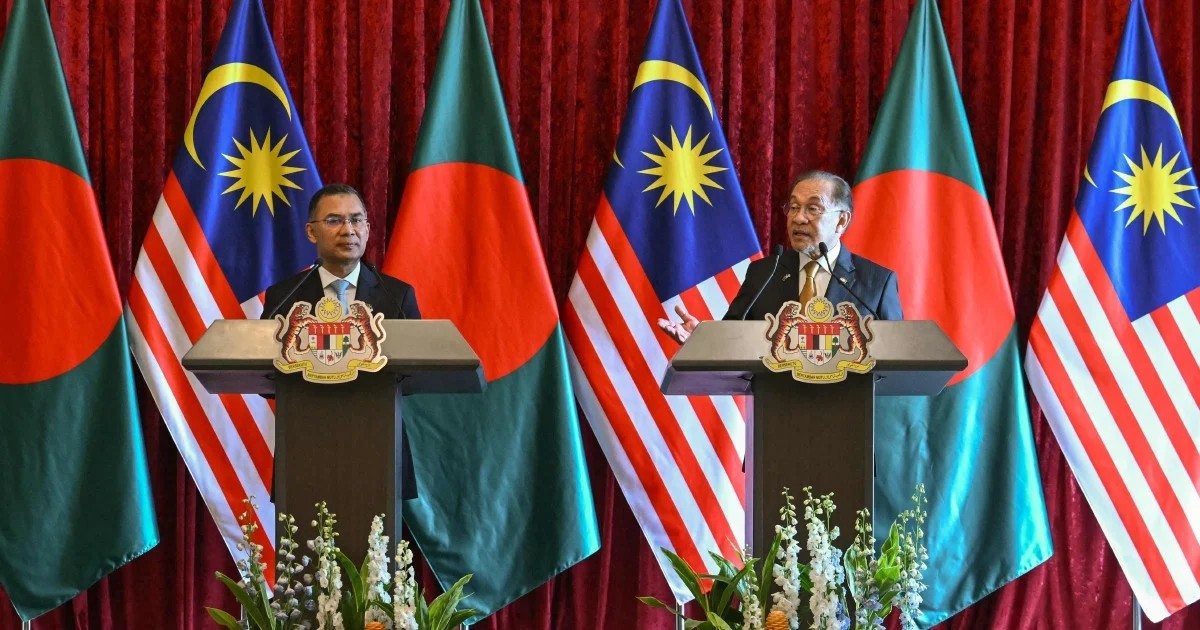
Prime Minister Datuk Seri Anwar Ibrahim has issued a forceful pledge to safeguard Bangladeshi migrant workers operating within Malaysia, explicitly framing abusive labour practices as incompatible with the nation's values and economic future. In remarks underscoring the centrality of foreign labour to Malaysian industries, Anwar characterised the mistreatment of these workers as conduct that 'cannot be tolerated', signalling an intent to strengthen oversight and accountability mechanisms across sectors reliant on Bangladeshi employment.
The Malaysian government's repositioning on migrant worker protection reflects mounting pressure from both domestic advocates and international observers scrutinising conditions in the region's construction, manufacturing, and domestic service sectors. Anwar's intervention suggests an acknowledgement that unregulated exploitation poses reputational risks to Malaysia's standing internationally whilst simultaneously undermining social cohesion at home. The pledge arrives amid growing documentation of wage theft, unsafe working conditions, and inadequate housing affecting hundreds of thousands of Bangladeshi nationals whose remittances sustain millions of dependants across South Asia.
Bangladeshi workers form one of the largest foreign labour cohorts in Malaysia, concentrated in labour-intensive industries where local recruitment has proven insufficient. Their economic contribution to Malaysia extends beyond immediate sectoral output—these workers have become indispensable to competitiveness in construction, particularly as major infrastructure projects continue to drive demand for skilled and semi-skilled labour. The interconnectedness of Bangladeshi workers to Malaysia's growth trajectory means that safeguarding their welfare is not merely a humanitarian imperative but a pragmatic economic consideration.
Exploitation within migrant worker populations typically manifests through mechanisms well documented by rights organisations: wage delays or non-payment, contract switching upon arrival, excessive working hours without overtime compensation, and withheld travel documents rendering workers immobile. Such practices disproportionately affect those lacking formal channels to lodge complaints or access legal redress, creating conditions where employers operate with substantial impunity. Bangladeshi workers, frequently arriving through labour brokers and dependent on employer-sponsored visas, occupy particularly vulnerable positions within this power asymmetry.
Anwar's commitment must now translate into concrete institutional adjustments. Effective protection would necessitate strengthening the Labour Department's inspection capacity, establishing dedicated units addressing migrant worker grievances with translational support, and imposing meaningful penalties on non-compliant employers. Malaysia's existing labour laws already contain provisions addressing wage security and safe working conditions, yet enforcement remains inconsistent across states and industries. The challenge lies not in legislative gaps but in operationalising existing frameworks with sufficient rigour and resources.
The economic dimension of Anwar's statement reflects a mature recognition that labour standards and economic productivity are complementary rather than antagonistic objectives. Workers subjected to systematic exploitation become less productive, more prone to illness and injury, and more likely to exit the formal economy toward irregular arrangements benefiting neither workers nor employers committed to legitimate operations. Countries that have invested in migrant worker protections whilst maintaining competitive labour costs have typically experienced improved industrial stability and reduced fraud-related losses.
Regional dimensions warrant consideration as Anwar's initiative unfolds. Bangladesh, as the primary labour source, maintains direct interest in monitoring how Malaysian employers treat its nationals, and government-to-government friction over worker protection standards could complicate bilateral relations. Indonesia, Thailand, and Vietnam operate parallel labour migration systems managing comparable dynamics, creating competitive pressures around who offers destination countries demonstrable worker protection credentials. Malaysia's approach could establish benchmarks influencing broader Southeast Asian labour governance.
For Malaysian employers, particularly construction and manufacturing firms, a credible enforcement commitment carries operational implications. Compliance costs will rise where practices currently remain unchecked—formalised wage systems, documented working hours, improved housing provisions. However, legitimate businesses already observing standards would gain competitive advantage by operating on level terrain. The announcement simultaneously signals to investors and international partners that Malaysia operates under modernised labour governance, potentially offsetting compliance costs through enhanced business confidence.
Bangladeshi workers themselves remain central stakeholders whose agency in claiming protections will determine outcomes. Access to complaint mechanisms and legal representation independent of employers proves essential, as workers often fear retaliation through dismissal or blacklisting affecting future employment prospects. Civil society organisations, both Malaysian and Bangladeshi, will play monitoring roles in verifying whether governmental commitments translate to material improvements in workplace conditions.
Anwar's pledge represents repositioning rather than revolutionary change, but the framing matters. By publicly centering Bangladeshi worker protection within economic discourse rather than relegating it to humanitarian margins, the Prime Minister has elevated the issue's political salience and created accountability expectations the government must meet. Implementation will demand coordination across multiple agencies, substantial resource allocation, and sustained political will beyond electoral cycles. The coming months will test whether rhetoric hardens into institutional capacity.