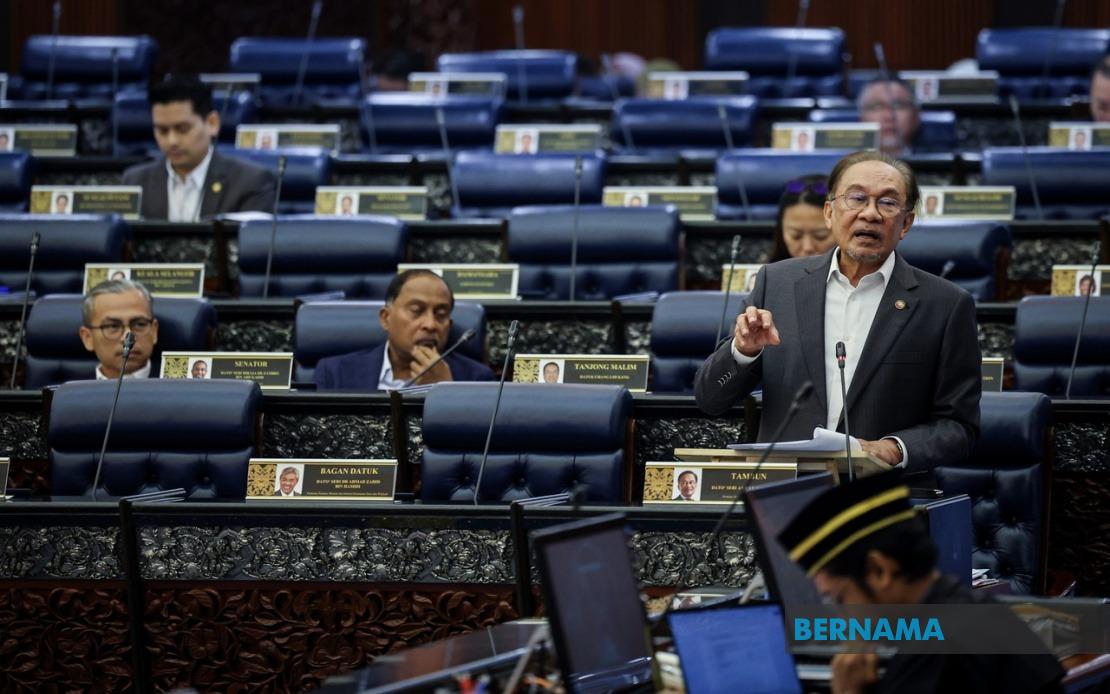
Prime Minister Datuk Seri Anwar Ibrahim sought to draw a clear distinction on Wednesday between offering personal observations and attempting to sway an independent institution, asserting that his recent comments about the Johor state election timing fell squarely into the former category. Speaking during parliamentary proceedings at the Dewan Rakyat, Anwar emphasised that the Election Commission retained sole authority over scheduling polling days and that his earlier intervention during the campaign trail should not be misinterpreted as official pressure on the constitutional body.
The clarification came in response to concerns raised by Ahmad Fadhli Shaari, the PN member for Pasir Mas, who questioned whether the Prime Minister's advocacy for Sunday voting represented an attempt to circumvent the EC's independent judgment. Anwar's position underscores the delicate balance Malaysian leaders must maintain when commenting on electoral matters—acknowledging institutional autonomy while exercising legitimate democratic discourse. The distinction carries particular weight in Malaysian politics, where accusations of prime ministerial overreach in electoral affairs have periodically challenged constitutional conventions.
Anwar's underlying rationale for preferring Sunday polling was rooted in pragmatic consideration of Malaysia's cross-border workforce dynamics. The Prime Minister noted that substantial numbers of Malaysian employees working across the causeway in Singapore face scheduling constraints that make Saturday voting inconvenient, particularly those whose employers require half-day weekend shifts. A Sunday polling date, from this perspective, would theoretically reduce barriers to participation for this significant demographic segment, thereby potentially increasing overall voter turnout—a legitimate policy consideration independent of any attempt to manipulate electoral procedures.
However, the PM was adamant that the Election Commission's sovereign authority remained inviolate. Should the EC determine that Saturday voting best served the broader electoral calendar and logistical requirements, Anwar stated unequivocally that such a decision would be final and beyond reproach. This deference to institutional independence reflects the constitutional architecture governing Malaysia's electoral system, where the EC operates as a creature of statute rather than executive will, though in practice the boundaries between civilian criticism and undue influence remain contested terrain in Malaysian democracy.
The episode gained additional dimension when another parliamentarian, Mohd Sany Hamzan from the PH coalition representing Hulu Langat, probed whether Malaysia might formally approach Singapore to facilitate the return of cross-border voters for the Johor election. This suggestion raised implications regarding sovereignty and electoral interference that Anwar felt compelled to address comprehensively. The Prime Minister's categorical rejection of any direct governmental approach to Singapore reflected Malaysia's commitment to the principle of non-interference in neighbouring countries' electoral sovereignty—a reciprocal norm essential to regional stability in Southeast Asia.
Anwar noted that despite Malaysia's extensive and deepening bilateral relationship with Singapore, encompassing robust economic cooperation and his own cordial working relationship with Singapore Prime Minister Lawrence Wong, electoral matters remained strictly within each nation's domestic purview. This compartmentalisation between general diplomatic partnership and electoral independence demonstrates the sophistication required in managing relations between neighbouring democracies. Even where practical coordination might theoretically improve voter convenience, doing so through formal governmental channels would breach conventions that both Kuala Lumpur and Singapore have observed as fundamental to their mutual respect and institutional integrity.
Instead, Anwar clarified that the operative approach had involved informal notification to private sector employers in Singapore rather than any official diplomatic engagement. Companies employing Malaysian nationals had simply been advised that Malaysian workers would be granted reasonable leave to return home during election periods—a standard administrative courtesy that requires no governmental negotiation with Singapore authorities. This distinction between corporate workplace accommodation and formal electoral diplomacy preserved both Malaysia's democratic principles and Singapore's expectations regarding the boundaries of cross-border coordination.
The entire sequence reflects broader tensions inherent in modern electoral democracy, particularly in nations with significant transnational populations and cross-border employment. The challenge of maximising participation among citizens working abroad while respecting electoral institutions' independence and neighbouring countries' sovereignty admits no perfectly elegant solution. Anwar's comments, whether viewed charitably or critically, exemplify the tightrope that political leaders walk when addressing such questions in public forums where every utterance risks being interpreted as improper pressure.
For Malaysian voters, particularly the diaspora in Singapore and other neighbouring jurisdictions, the interchange offered some reassurance that their electoral accessibility remained a policy consideration, even if not one that would override institutional decision-making. The Prime Minister's framing suggested that while sympathetic to cross-border voters' practical constraints, the government would not compromise electoral independence or regional diplomatic conventions to address them. This position will likely resonate differently across Malaysia's political spectrum, with government-aligned commentators viewing it as appropriately balanced and opposition voices potentially characterising it as insufficient advocacy for voter convenience.
The Johor election itself, scheduled under the EC's ultimate authority, represented a significant political test for Anwar's coalition government and its state-level partners. Managing the optics of this election—demonstrating neither excessive influence over the commission nor indifference to voter participation challenges—required precisely the kind of nuanced positioning the Prime Minister attempted on Wednesday. Whether his clarification successfully recalibrated public perception or merely deepened existing suspicions depends substantially on viewers' pre-existing assessments of executive-institutional relationships in Malaysia's democracy.
Looking forward, the episode illustrates enduring questions about how Malaysian democracy continues evolving. As the electorate becomes increasingly geographically dispersed and cross-border mobility increases, tensions between institutional independence and responsive governance will persist. Solutions may eventually emerge through policy changes—expanded early voting, postal ballot expansion, or other mechanisms—that address voter convenience without requiring either electoral commission pressure or regional diplomatic negotiations. Until such comprehensive reforms materialise, Prime Ministers will continue defending comments about electoral timing, and observers will persistently scrutinise whether such remarks constitute legitimate political participation or improper institutional interference.

