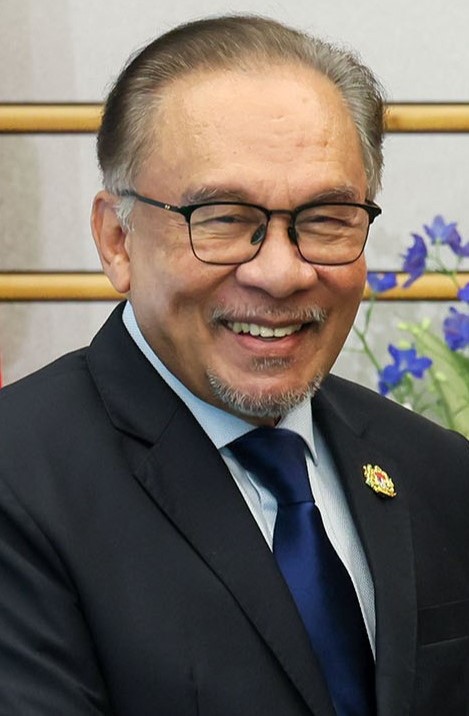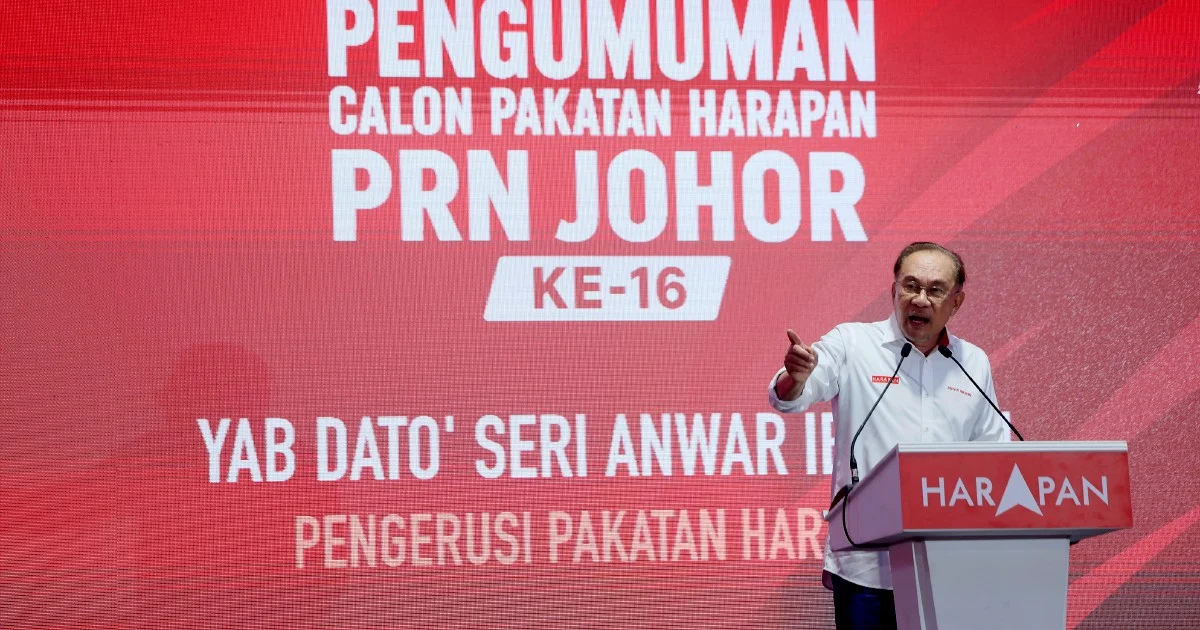
Prime Minister Datuk Seri Anwar Ibrahim has called on Johor's executive councillors to press the previous Barisan Nasional and Perikatan Nasional federal administrations for answers regarding longstanding grievances that the state did not obtain its rightful share of federal revenue during their respective tenures in government.
Anwar made the remarks during an engagement in Tangkak, where he encouraged state officials to take a more assertive stance in demanding accountability from past administrations. His comments reflect growing scrutiny over how revenue distribution mechanisms have operated between federal and state governments across Malaysia's fiscal framework. The call represents an attempt to shift focus toward alleged historical injustices in financial allocations that may have affected Johor's development capacity and infrastructure investment capabilities.
Johor has long been a focal point in Malaysia's political landscape, holding significant economic weight as the nation's southern industrial and agricultural hub. Concerns about equitable revenue sharing between the federal centre and the state have periodically surfaced in political discourse, with various administrations arguing they received insufficient funding for state-level projects and services. By encouraging officials to investigate these claims, Anwar appears to be lending credibility to grievances that may resonate with the state's leadership and electorate.
The timing of Anwar's statement carries political significance, given the fragmented coalition arrangements that have characterised Malaysian governance in recent years. Johor, like several other states, experienced different administrations during the BN era and the PN period, creating varying approaches to centre-state fiscal relations. Each administration operated under different federal-state political alignments, which sometimes complicated cooperation on revenue matters.
The Barisan Nasional's extended rule prior to 2018 established a particular framework for state funding that came under increasing criticism as economic pressures mounted on state governments. When Perikatan Nasional subsequently formed the federal government, questions emerged about whether new priorities would alter historical patterns of resource allocation. The transition to Anwar's current administration has again reshaped these dynamics, creating an opening for re-examination of past arrangements.
Revenue distribution between federal and state governments is governed by Malaysia's constitutional framework and the Revenue Allocation Formula. These mechanisms determine how tax revenue is divided and how grants are distributed to states for development and operational purposes. Disputes over whether these mechanisms adequately serve particular states have occasionally surfaced, with some governments arguing that their share does not reflect their economic contribution or service delivery costs.
Anwar's encouragement of transparency and accountability in revenue matters aligns with his administration's broader messaging about institutional reform and better governance. By empowering state-level officials to question federal predecessors, the Prime Minister positions his government as supportive of state interests while simultaneously framing past administrations as potentially negligent in their fiscal stewardship. This approach serves multiple political purposes simultaneously.
For Johor specifically, the push for revenue reviews could influence upcoming budget negotiations and long-term development planning. If state officials substantiate claims of historical underfunding, they may argue for compensatory allocations or adjusted formulas going forward. The state's economic significance in Malaysia's overall growth strategy means that any improvements in its fiscal position could have broader implications for regional development across the southern corridor.
The broader context involves Malaysia's ongoing efforts to strengthen federalism and clarify centre-state relations. Various states have from time to time felt marginalised in fiscal negotiations with federal authorities, and systematic review of historical allocations could establish precedents for more transparent, rules-based distribution mechanisms. Better documentation of how revenue has been shared could reduce future disputes and improve predictability for state-level planning.
Anwar's statement also reflects the pragmatic political reality that Johor remains strategically important for any federal government seeking stable parliamentary support and electoral strength. Whether from coalition parties or the ruling alliance, Johor's cooperation matters significantly. By appearing receptive to the state's grievances and encouraging officials to pursue accountability, Anwar cultivates goodwill among Johor's political establishment.
The practical outcome of such investigations remains uncertain, as historical revenue records and justifications for past allocation decisions may be difficult to reconstruct or contest through existing institutional channels. Nevertheless, the exercise of transparency itself carries value, potentially clarifying the bases on which decisions were made and establishing clearer parameters for future negotiations. Whether this leads to actual remediation through revised allocations or merely to acknowledgment of past disparities will likely depend on fiscal capacity and political negotiations in coming budget cycles.
Moving forward, Anwar's initiative suggests that revenue equity among states will remain a topic of political attention throughout his administration's tenure. Johor's response to this encouragement will be telling, as state officials decide whether to pursue formal investigations into revenue claims or adopt a more measured approach. The outcome could shape how other states subsequently assert their own interests in future fiscal discussions with the federal government.