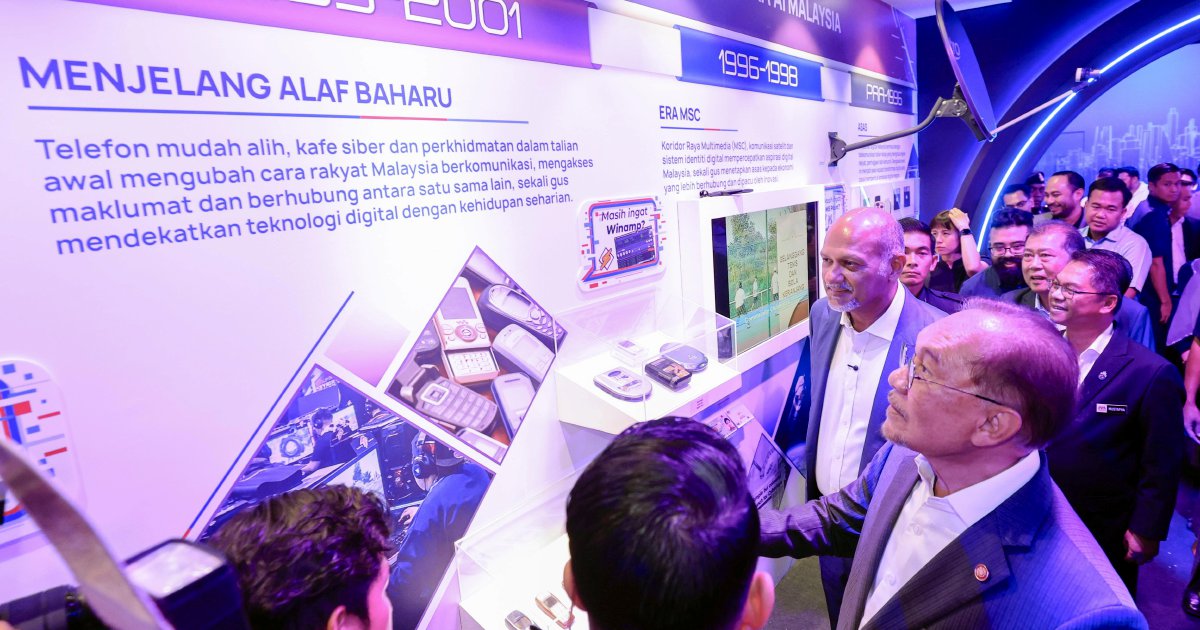
Prime Minister Datuk Seri Anwar Ibrahim delivered a pointed caution in Cyberjaya, warning that Malaysia's ambitions to establish itself as a regional artificial intelligence powerhouse could inadvertently deepen existing economic and social divides if policymakers fail to ensure equitable access to technology and its benefits. The statement reflects growing concerns among regional leaders about the dual-edged nature of rapid technological advancement, particularly in developing economies where infrastructure and educational gaps already stratify opportunities.
Anwar's remarks underscore a critical tension shaping Malaysia's digital strategy: the nation seeks to capitalize on AI's transformative potential to boost economic competitiveness and attract high-value investment, yet simultaneously faces the challenge of ensuring that prosperity reaches beyond urban technology hubs and privileged segments of society. This balancing act is not merely rhetorical—it touches upon fundamental questions about the country's social cohesion and long-term stability as automation reshapes labour markets and concentrates wealth among those positioned to leverage advanced technologies.
The Malaysian context makes this concern particularly acute. Despite the nation's reputation as a regional technology hub, significant rural-urban disparities persist in internet connectivity, digital literacy, and access to quality technology education. Communities in East Malaysia, rural Peninsular regions, and lower-income urban neighbourhoods often lack the foundational infrastructure and skills necessary to participate meaningfully in an AI-driven economy. Without deliberate intervention, Anwar's warning suggests, these populations risk becoming passive observers of an economic transformation that leaves them materially worse off relative to tech-enabled peers.
The Prime Minister's statement implicitly acknowledges that historical patterns of development in Malaysia have frequently concentrated benefits among already-advantaged groups. Previous technological transitions, from industrialisation to the internet revolution, created windows of opportunity for some while others struggled to adapt or access basic services. An unmanaged AI transition could replicate or amplify these patterns, with workers displaced by automation and small businesses unable to afford sophisticated AI tools facing obsolescence, while large corporations and tech-savvy entrepreneurs accelerate ahead.
Anwar's emphasis on inclusive development reflects a broader regional understanding that AI adoption cannot be treated as a purely market-driven phenomenon. Thailand, Indonesia, and Singapore have similarly grappled with balancing technological ambition against social equity concerns. However, Malaysia's relatively more developed digital ecosystem positions it as a test case for whether a middle-income nation can harness AI's benefits distributively rather than concentrating them. Success would provide a model for other Southeast Asian economies; failure could exacerbate regional inequality and undermine social stability.
Effective inclusion in an AI-driven economy requires multiple interventions operating simultaneously. Digital infrastructure expansion to underserved areas forms the foundation, but without complementary investments in education, reskilling programs, and support for small and medium enterprises (SMEs) to adopt AI tools, mere connectivity becomes insufficient. Malaysia's vocational and technical education systems must evolve to equip workers with AI literacy and complementary skills—problem-solving, creativity, emotional intelligence—that machines cannot easily replicate. Equally important is ensuring that SMEs, which employ roughly 40 percent of Malaysia's private sector workforce, can access AI technologies at affordable costs and understand their practical applications.
Government policy frameworks will prove decisive in determining whether Malaysia's AI push reinforces or reduces inequality. Targeted subsidies for rural digital infrastructure, free or subsidized AI training programs for underprivileged communities, and preferential contracting opportunities for AI-enabled SMEs could direct opportunity toward currently marginalized populations. Conversely, an approach that leaves adoption purely to market forces will almost certainly concentrate AI benefits among larger firms, urban professionals, and investors with capital to acquire cutting-edge systems. The question Anwar's statement implicitly raises is whether Malaysia's political and economic leadership possesses the will to implement genuinely redistributive policies rather than merely rhetorical commitments to inclusion.
The timeline matters considerably. AI's transformation of work is accelerating, with automation increasingly affecting routine cognitive tasks alongside traditional manual labour. Malaysia's window for proactive, inclusive policy design is narrowing. Every quarter of delay in expanding digital access, reskilling initiatives, or SME support tools allows the technological divide to widen further, making subsequent remedial efforts exponentially more expensive and difficult. Anwar's warning should be interpreted as a call for urgent, comprehensive action rather than incremental adjustments to existing development frameworks.
Regional implications also warrant consideration. Malaysia aspires to lead Southeast Asia in AI adoption and development, positioning itself as a hub for regional tech talent and investment. However, this leadership position rings hollow if domestic inequality deepens visibly while the country pursues technological prestige. Other Southeast Asian nations watching Malaysia's approach will draw conclusions about whether AI-led development can genuinely benefit societies across income and geographic lines, or whether it inevitably reproduces colonial-era patterns of wealth concentration and marginalization. Success in inclusive AI development would enhance Malaysia's soft power and regional influence; failure would damage its credibility as a development model.
Practically, Anwar's statement signals that Malaysia's Ministry of Science, Technology and Innovation, alongside the Treasury and Human Resources Ministry, should be tasked with designing and implementing a comprehensive inclusivity strategy before AI adoption reaches inflection point. This strategy must address access gaps, skill deficits, and entrepreneurial barriers while simultaneously encouraging innovation and commercial dynamism. The challenge lies in crafting policies that neither stifle technological progress through excessive regulation nor abandon disadvantaged populations to market forces indifferent to their welfare.
Ultimately, Anwar's caution reflects recognition that technology adoption is never purely technical—it is fundamentally about power, opportunity, and the distribution of benefits within society. Malaysia has opportunity to demonstrate that a developing nation can harness AI's transformative potential while deliberately ensuring inclusion. The alternative—drifting toward a two-tiered society where technology-enabled elites flourish while others stagnate—would constitute a failure of governance and vision that would dwarf the economic gains of AI adoption itself.

