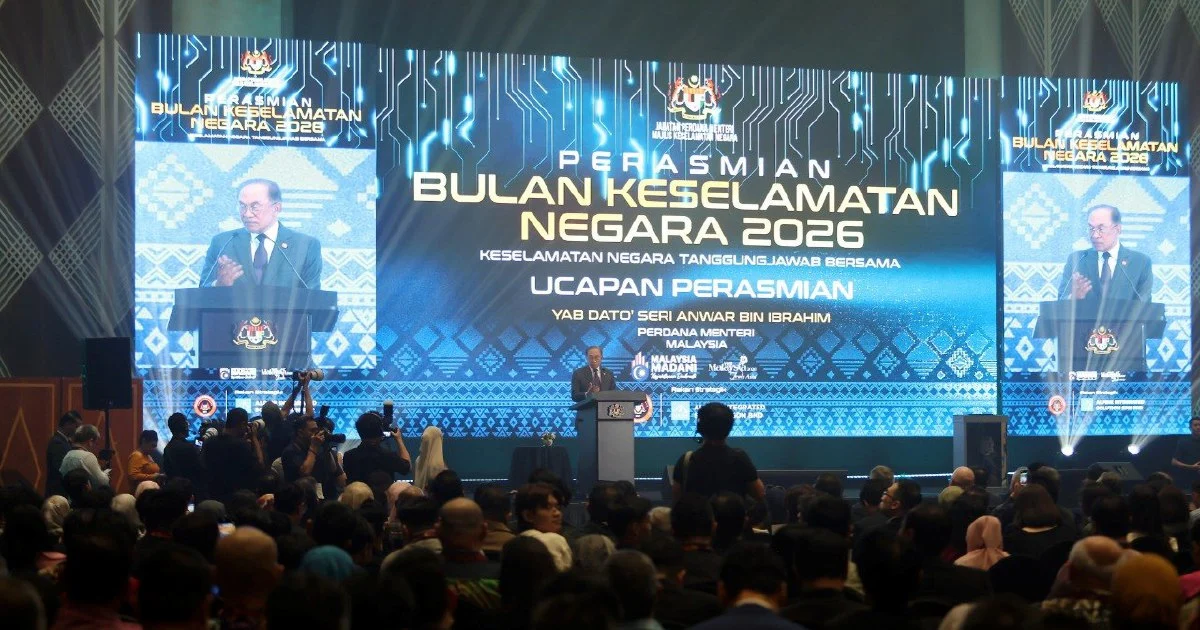
Prime Minister Datuk Seri Anwar Ibrahim has issued a pointed reminder to Malaysians about the dangers of retreating into familiar patterns of racial and regional division, particularly as the southern state of Johor gears up for its electoral contest. Speaking from Putrajaya, Malaysia's administrative capital, Anwar expressed unease at the persistence of old political narratives that continue to shape electoral discourse, warning that allowing such polemics to dominate public debate risks undermining the nation's progress and social cohesion.
The Prime Minister's intervention speaks to a broader pattern in recent Malaysian electoral campaigns, where demographic anxieties and identity politics have resurged as campaign strategies. Anwar's comments suggest that campaign strategists across multiple political coalitions may be leaning heavily on racial and regional appeals—messaging that promises to protect specific communal interests while potentially stoking anxiety among others. This electoral approach, while longstanding in Malaysian politics, represents a step backward from the development-focused messaging that has dominated national policy discourse in recent years.
Johor's significance in Malaysian politics cannot be overstated. As the largest state in peninsular Malaysia by area and home to over four million residents, the state has historically served as a kingmaker in national politics. The Johor electorate's preferences have repeatedly influenced federal outcomes, making state-level contests there particularly consequential for the broader political landscape. Elections in Johor thus tend to set the tone for political competition across the region, with campaign strategies tested there often spreading to neighbouring states.
Anwar's specific concern about "old narratives" appears directed at political forces that frame electoral competition through ethno-religious lenses rather than policy substance. Such framing typically emphasizes perceived threats to specific communities' political or economic position, rather than offering constructive visions of development. In Malaysia's multiethnic context, where Malays constitute roughly 70 percent of the population and form the majority in most states, such narratives frequently invoke questions about constitutional safeguards and political dominance, effectively weaponizing constitutional provisions as campaign fodder.
The Prime Minister's caution arrives at a moment of significant political flux in Johor itself. The state has experienced considerable turbulence in its political leadership in recent years, with multiple shifts in government and persistent competition between established parties and newer political formations. This volatility creates space for both constructive debate about governance and resource allocation, and for more divisive appeals that mobilize voters primarily through identity-based grievances rather than programmatic offerings.
For Southeast Asian observers, Malaysia's experience with identity-based electoral mobilization carries regional implications. Several of Malaysia's neighbours, including Thailand and Myanmar, have faced serious social fracture resulting partly from the politicization of religious and ethnic identities. Anwar's push toward more inclusive political competition suggests recognition that this trajectory, if unchecked, can erode democratic institutions and social stability. His intervention thus represents a strategic choice to place Malaysia on a different path than some regional peers have followed.
The practical challenge Anwar faces is substantial. Political parties benefit electorally from identity-based mobilization, particularly those seeking to consolidate support among specific demographic groups. Asking parties to voluntarily abandon effective campaign strategies requires either regulatory intervention or the development of countervailing incentive structures—for instance, making non-divisive campaigns more electorally rewarding. Malaysia's existing electoral framework provides few such incentives, leaving the burden primarily on political leaders to voluntarily elevate discourse standards.
Johor's economic dynamism complicates but also highlights why Anwar's message matters. As a major manufacturing hub and investment destination, Johor's success depends substantially on investor confidence and social stability. Economic development requires predictability and inter-communal trust, commodities that deteriorate when electoral campaigns heighten anxiety about community-level resource distribution. The state's attractiveness to both domestic and foreign investors depends partly on the signal that political leadership sends about the relative stability and inclusivity of its institutions.
The timing of Anwar's statement reflects apparent confidence that the issue requires prominent political intervention. His decision to raise these concerns publicly, rather than addressing them privately through inter-party dialogue, suggests both urgency and strategic calculation about the risks ahead. By framing the concern as one affecting the nation broadly—rather than targeting specific parties—Anwar positions himself as guardian of national unity rather than as a partisan actor, though the underlying critique clearly applies to some political forces more than others.
Moving forward, the effectiveness of Anwar's intervention will become evident through campaign conduct in Johor itself. If political parties moderate their identity-based messaging and instead emphasize governance records and policy platforms, the Prime Minister's warning will have registered. Conversely, if campaigns grow increasingly divisive, his intervention will stand as a marker of a road not taken—a presidential moment when the nation's chief executive urged a different political direction, even if not immediately heeded.

