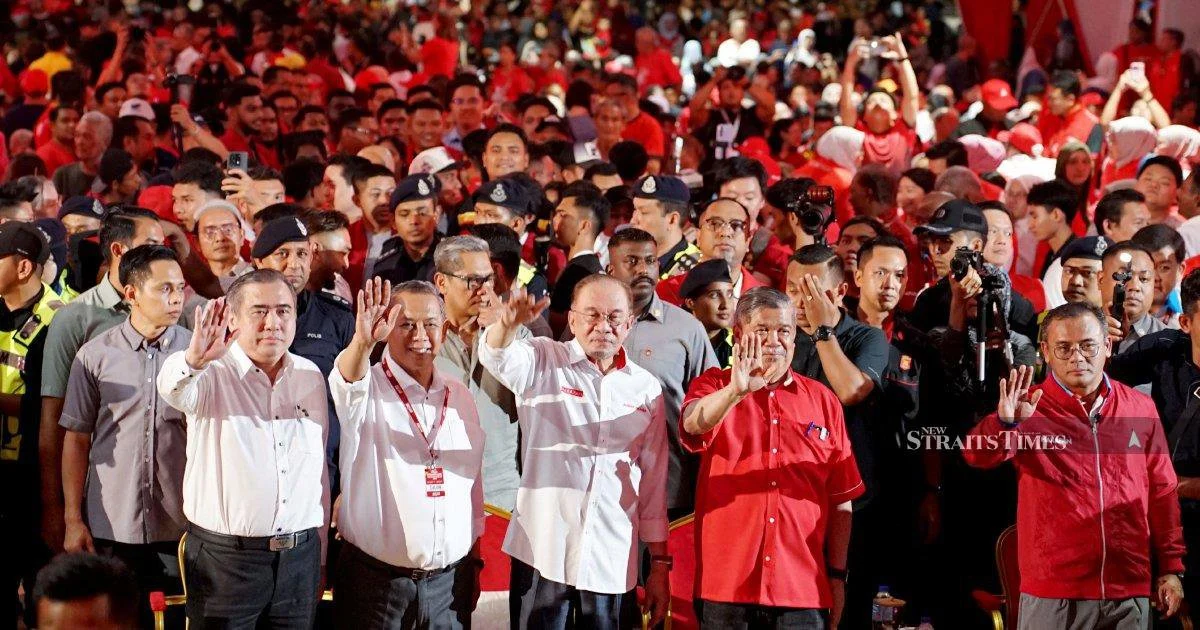
Prime Minister Datuk Seri Anwar Ibrahim has issued a stern reminder to all political stakeholders, with particular emphasis on party leaders, to refrain from invoking the royal institution as a tool for political gain during the Negri Sembilan state election campaign. Speaking in Kuala Pilah, the premier underscored the critical importance of maintaining the sanctity of Malaysia's constitutional monarchy, a cornerstone of the nation's political architecture that transcends partisan interests.
The warning arrives at a time when electoral fever grips Negri Sembilan, with various political formations intensifying their campaigns across the state. Malaysia's royal institutions occupy a unique constitutional position, serving as symbols of national unity and institutional stability. By cautioning against their politicisation, Anwar has sought to preserve a longstanding convention that shields the monarchy from becoming entangled in the rough-and-tumble dynamics of electoral politics, a principle that has largely held sway across Malaysian political discourse.
This admonition reflects deeper concerns about the evolving boundaries between constitutional symbolism and political strategy. The royal institution's moral authority derives substantially from its perceived distance from partisan competition. When political actors attempt to harness royal prestige or invoke the monarchy's name to advance electoral objectives, they risk diminishing the institution's unifying role. For Malaysia's multicultural society, where the constitutional monarchy serves as a unifying symbol above political divisions, such restraint carries particular significance.
The timing of Anwar's statement suggests heightened sensitivity to potential boundary violations during this electoral cycle. Political campaigns in Malaysian states frequently test the limits of acceptable discourse, and the line between invoking traditional values and inappropriately politicising revered institutions can become blurred. By speaking publicly in Kuala Pilah, the prime minister has sought to establish clear parameters for the conduct of all parties involved in the campaign, signalling that such violations will not escape notice or comment from the highest echelons of government.
Negri Sembilan's electoral contest holds particular relevance given the state's historical significance and its current political dynamics. The state has traditionally played an important role in Malaysia's overall political balance, and campaigns conducted there often carry implications for national political trajectories. The involvement of the royal institution—whether through subtle allusions, formal engagements, or symbolic deployment—could colour perceptions of the election's legitimacy and fairness across the broader electorate.
Anwar's intervention also speaks to broader concerns about institutional integrity that have animated Malaysian public discourse. The constitutional role of the monarchy requires careful stewardship, particularly when political temperatures run high. By establishing this principle before campaigning reaches its crescendo, the prime minister has attempted to inoculate the electoral process against accusations that any winning party derived advantage from royal associations or that losing parties were disadvantaged by their perceived distance from such symbols.
The practical implications of this warning extend across multiple dimensions of campaign conduct. Political rallies, advertising, public statements, and media engagement all represent potential venues where the boundary might be crossed. Party operatives must now calibrate their messaging carefully, ensuring that appeals to tradition, national pride, and constitutional values remain distinct from attempts to leverage the monarchy itself as electoral capital. This distinction may prove challenging to maintain in practice, given how deeply the royal institution is woven into Malaysia's national fabric and political consciousness.
For Malaysia's political ecology, such reminders serve an essential function. In systems where democratic norms remain under development or contested, protecting institutional independence from electoral pressures becomes especially important. The monarch's constitutional role—whether as head of state at the federal level or through the sultan's position in Negri Sembilan—depends upon maintaining public confidence in the institution's impartiality and elevation above faction. Any perception that the monarchy has been drawn into partisan competition undermines this confidence and potentially weakens the institution's ability to serve its stabilising constitutional function.
The warning equally applies to opposition parties and emerging political forces, not merely to those in government. In electoral contests, the temptation to mobilise all available symbolic and cultural resources can prove strong. By establishing this principle beforehand, Anwar has created a framework against which public commentary can judge all parties' conduct, reducing the possibility that complaints of unfair advantage can be dismissed as sour grapes from defeated contestants.
Looking forward, the effectiveness of this cautionary statement will depend upon whether political actors heed its substance and spirit. Malaysian political culture has generally respected the convention that the monarchy remains above electoral competition, though this consensus has occasionally been tested. The current reminder may prove sufficient to ensure compliance, or it may presage further interventions should parties transgress these understood boundaries during the campaign's intensity.
Ultimately, Anwar's stance reflects recognition that Malaysia's stability and social cohesion depend partly upon the monarchy remaining a genuinely unifying institution. By articulating clear expectations for the Negri Sembilan campaign, the prime minister has sought to protect not merely the state election's integrity but also the longer-term institutional health upon which Malaysian democracy depends. For voters and observers across the region, such leadership on constitutional matters offers a template for how democracies might protect revered institutions from the corrosive effects of partisan competition.

