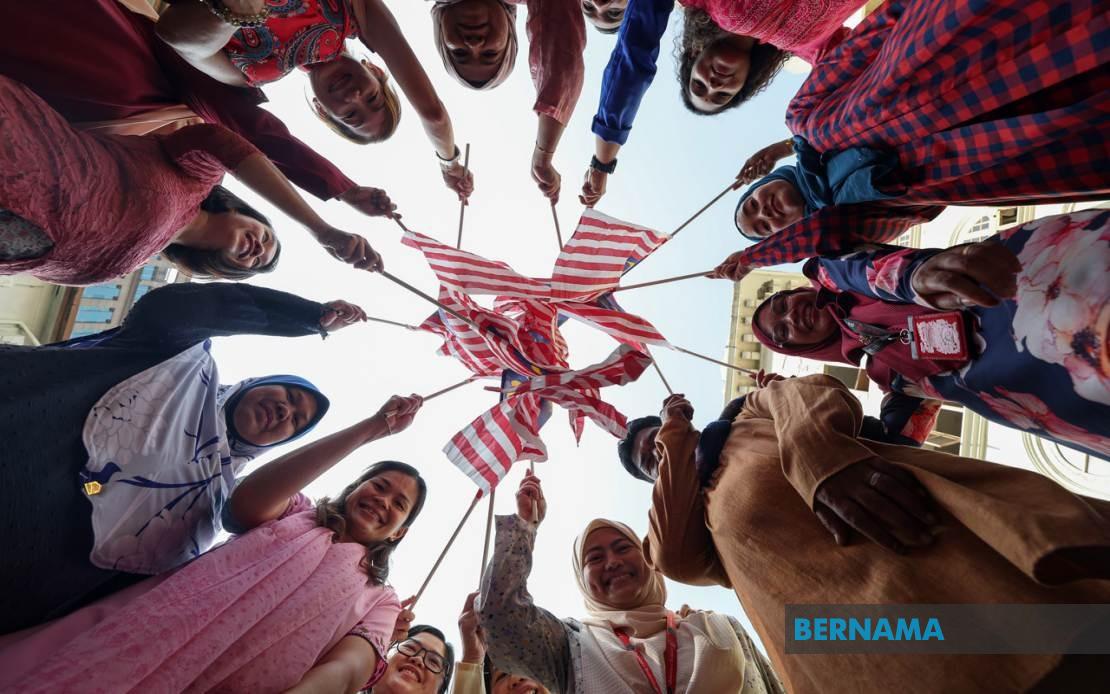
Prime Minister Datuk Seri Anwar Ibrahim has made an impassioned plea to Malaysians to guard their country with vigilance and preserve the delicate fabric of national unity, which he identifies as the fundamental source of Malaysia's resilience. Speaking ahead of the nation's 69th National Day celebrations, Anwar stressed that true independence extends beyond political sovereignty to encompass the freedom for a people to chart their own course with confidence and self-determination, grounded in the dignity of both populace and state.
In remarks distributed through social media on August 30, the Prime Minister articulated a vision of Malaysia rooted in the collective strength of its diverse population. He called upon citizens of all backgrounds to recognise that racial and communal harmony represents not merely a nice ideal but an essential structural element upon which the nation's capacity to thrive depends. This emphasis reflects the ongoing challenge of maintaining cohesion in a multi-ethnic nation where periodic tensions emerge around issues of religious rights, economic opportunity, and cultural representation.
Anwar grounded his appeal in historical memory, reminding Malaysians that their present freedoms and achievements are products of tremendous effort expended by preceding generations. He characterised this legacy as one forged through sacrifice, hardship, and perseverance—a framing that implicitly positions current responsibilities as obligations to honour those who came before. This historical consciousness carries particular weight in Malaysia's political discourse, where narratives of the nation's founding and its struggle for independence continue to shape contemporary debates about national identity and direction.
In an accompanying video message, the Prime Minister expanded his vision of national strength by naming the constituent communities that form Malaysia's social foundation. By explicitly referencing the Malay, Chinese, Indian, Iban, Kadazan, Murut, Bidayuh, and Orang Ulu peoples, Anwar sought to underscore the point that Malaysian identity encompasses this entire spectrum of groups rather than privileging any single community. The deliberate enumeration of indigenous Sabah and Sarawak peoples alongside peninsular populations signals recognition of the federal structure and the particular concerns of East Malaysian constituencies.
A significant element of Anwar's message involves repositioning the hierarchy of national interests. He argued unequivocally that Malaysia's collective welfare must supersede ethnic and regional loyalties whenever these come into tension. This framing challenges a long-standing pattern in Malaysian politics whereby communal leaders have sometimes mobilised support along parochial lines, and party coalitions have been constructed partly around ethnic-based constituencies. Anwar's insistence on this principle reflects his effort to advance a more inclusive national vision, though implementing such ideals remains contested within Malaysia's plural society.
The Prime Minister coupled his calls for unity with explicit commitments to justice, arguing that Malaysia must distinguish itself as a nation committed to fair treatment and equitable outcomes for all citizens. He specifically referenced those who have been marginalised or excluded from mainstream prosperity, acknowledging that segments of the population experience unequal access to opportunity and state protection. This dimension of his message addresses long-standing grievances among lower-income Malaysians, rural populations, and certain minority communities who feel left behind by the nation's economic development.
Anwar's emphasis on collective action and shared responsibility recurs throughout his statement, with calls for Malaysians to function as a united team and to defend the nation with determined effort. This language mobilises notions of common purpose and mutual obligation, framing national defence not as a military undertaking alone but as a broader civic responsibility encompassing economic stability, social cohesion, and institutional integrity. The appeal invokes patriotic sentiment while attempting to redirect it toward inclusive rather than exclusionary nationalism.
The timing of these remarks—immediately preceding National Day celebrations—situates them within the context of Malaysia MADANI, the government's overarching policy framework oriented toward shared prosperity and societal well-being. The 69th National Day observance, scheduled for August 31, carries the thematic emphasis of inclusive prosperity enjoyed across society. Anwar's message thus serves to articulate the philosophical underpinnings of this agenda, connecting historical independence to contemporary governance objectives.
For Malaysian and regional observers, Anwar's statement reflects an attempt to navigate the persistent tensions between Malaysia's founding commitment to multi-ethnic cooperation and the communal politics that frequently characterise electoral competition and coalition-building. His repeated emphasis on unity, justice, and collective strength suggests awareness that these tensions remain active rather than resolved. The appeal to remembered sacrifice and historical legacy serves partly to remind citizens of the costs incurred to establish pluralistic institutions and systems, implicitly warning against their erosion through narrow partisan or communal mobilisation.
The broader context includes Malaysia's ongoing efforts to address economic disparities, managing expectations amid inflation and cost-of-living pressures, and sustaining confidence in democratic and institutional processes. Anwar's invocation of unity and shared purpose addresses these challenges by attempting to cultivate public consensus around a national vision transcending immediate partisan struggles. Whether such appeals prove effective in shaping behaviour and political discourse during a period of economic adjustment and political competition remains an open question.

