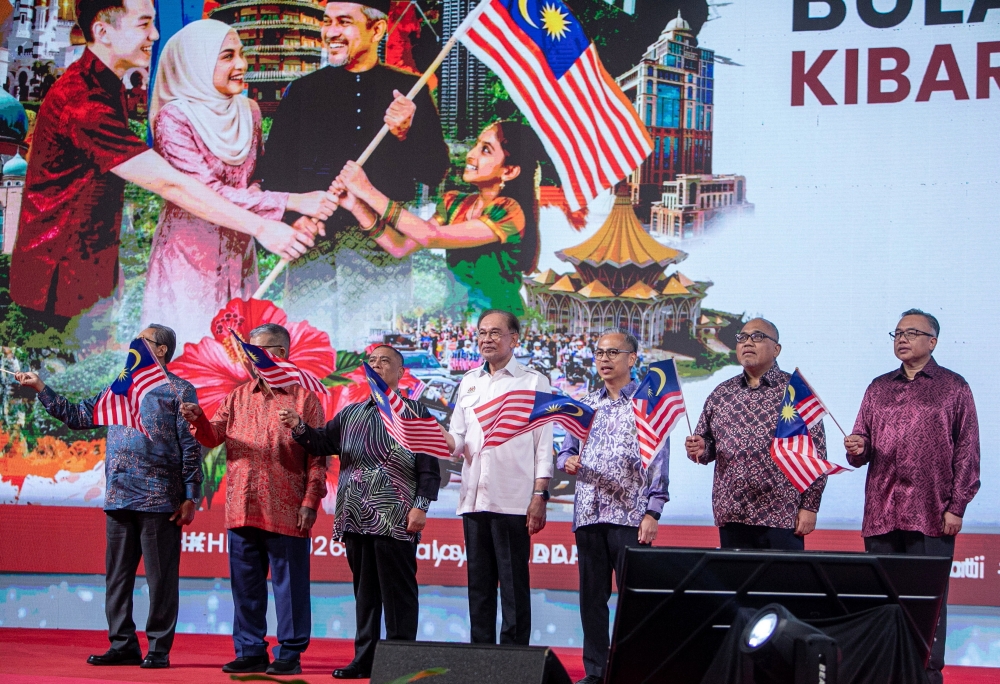
Prime Minister Datuk Seri Anwar Ibrahim delivered a pointed reminder to Malaysia's younger generation on July 19 in Ipoh, stressing the moral imperative to understand and remember the liberation efforts that secured the nation's independence. Speaking to an audience of youth, Anwar emphasized that contemporary Malaysians risk losing sight of the historical costs borne by previous generations if they fail to actively engage with this crucial chapter of their national story. His remarks underscore a persistent concern among Malaysia's political leadership that historical amnesia poses a genuine threat to national cohesion and civic responsibility.
Anwar's intervention reflects broader anxieties within Malaysia's establishment about generational disconnect. Young Malaysians, many of whom were born decades after Merdeka, inhabit a vastly different political and social landscape from their grandparents. They navigate digital environments, face economic pressures distinct from previous eras, and increasingly question inherited narratives about national history. The Prime Minister's exhortation suggests concern that without deliberate cultural transmission, the emotional and moral weight of Malaysia's independence struggle risks becoming an abstraction—something learned in textbooks rather than internalized as a living civic inheritance.
The independence movement that culminated in August 1957 involved extensive negotiation between the British colonial administration and Malayan political leaders, alongside popular mobilization and complex inter-communal dynamics. Figures including Tunku Abdul Rahman, Tun Tan Cheng Lock, and countless ordinary citizens contributed to the political and diplomatic machinery that birthed the nation. The struggle was neither purely military nor entirely peaceful; it encompassed constitutional negotiation, civil resistance, and the management of diverse aspirations within a multiethnic polity. Understanding this nuance matters deeply for contemporary Malaysians seeking to comprehend their country's foundational compromise.
Anwar's appeal carries particular significance given his own history of political struggle. The Prime Minister has personally experienced detention and political marginalization during Malaysia's post-independence era, most notably during the tumultuous 1998 Reformasi movement. His current position represents a vindication of sorts, suggesting that Malaysian democracy, while imperfect, retains mechanisms for political evolution and rehabilitation. When Anwar speaks of remembering struggle, he potentially channels both the historical independence movement and more recent democratic contestations into a unified narrative about sacrifice and persistence.
The timing of these remarks in Ipoh, a city with rich industrial and political heritage in Perak, adds contextual weight. Perak played significant roles during both the colonial period and independence negotiations, hosting key political developments and serving as a constituency where various political movements gathered support. Situating this message in Ipoh suggests deliberate effort to ground national remembrance in specific regional histories and to acknowledge that independence was not a uniform national experience but rather a collection of local struggles and contributions.
For Malaysian youth, the challenge of connecting with independence struggles intersects with contemporary anxieties about economic opportunity, climate change, and social justice. Younger Malaysians are increasingly vocal about corruption, institutional accountability, and inclusive governance—issues that resonate with anti-colonial narratives but express themselves through distinctly modern idioms. Anwar's call to remember independence history might productively link these contemporary concerns to longer arcs of political aspiration, suggesting that struggles for dignity and self-determination transcend particular historical moments.
Regionally, Malaysia's emphasis on historical consciousness reflects patterns evident across Southeast Asia, where nations grapple with how to transmit nationalist narratives to generations born into independence. Thailand, Indonesia, Vietnam, and the Philippines all face similar questions about whether and how young citizens should internalize their countries' liberation histories. Malaysia's particular challenge involves weaving together independence narratives with its multiethnic, multireligious composition—a balancing act that requires acknowledging diverse contributions and experiences within a unified national framework.
Educational institutions bear substantial responsibility in this transmission process. Schools throughout Malaysia incorporate independence history into curricula, yet questions persist about pedagogical effectiveness and whether classroom instruction generates genuine emotional engagement or remains rote memorization. The gap between formal historical education and the kind of internalized, lived understanding Anwar appears to advocate represents an ongoing challenge. Digital natives accustomed to consuming information through fragmented social media feeds may require fundamentally different pedagogical approaches to develop deep historical consciousness.
Anwar's rhetorical strategy—framing remembrance as obligation rather than mere sentiment—carries implicit warnings about social fragmentation and erosion of national bonds. By urging youth not to forget, he implicitly suggests that forgetting constitutes a risk, perhaps even a failure of citizenship. This approach positions historical consciousness as foundational to Malaysia's continued stability and coherence, suggesting that national unity depends partly on shared understanding of how the nation came into being and what sacrifices sustained that process.
The practical implications of Anwar's message extend beyond symbolic or emotional registers into questions about institutional design and political behavior. If younger Malaysians internalize the values supposedly embedded in independence struggles—sacrifice, compromise, inclusive nation-building across communal lines—these dispositions could theoretically influence their approaches to contemporary political challenges. Whether exhortations from political leaders effectively shape such dispositions remains debatable, but the attempt reflects recognition that historical consciousness shapes political culture.
Conversations about remembering independence also intersect with debates about how Malaysia positions itself internationally. As Southeast Asian nations navigate great-power competition, economic interdependence, and transnational challenges, their self-understanding as independent nations retains strategic importance. A population confident in its historical agency and appreciative of hard-won sovereignty arguably proves more resilient against external pressures and more committed to autonomous decision-making.

