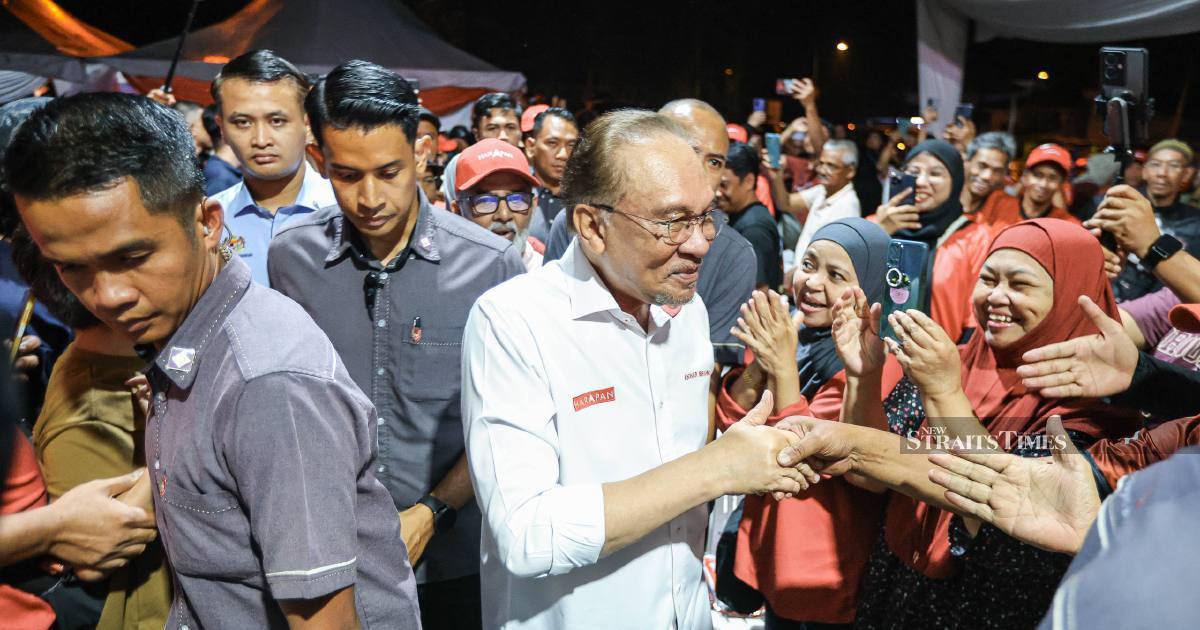
Datuk Seri Anwar Ibrahim, leading Pakatan Harapan as its chairman, has made an earnest appeal to the Johor electorate to prioritise their civic duty by returning to the southern state for the upcoming election scheduled for next Saturday. His message carries particular significance given the dispersed nature of Johor's voting population, with thousands of citizens residing temporarily or permanently in neighbouring Singapore, the federal capital Kuala Lumpur, and other regions across Malaysia.
The election represents a critical moment for Johor's political trajectory, and Anwar's direct appeal underscores the coalition's recognition that voter turnout, particularly among those who have relocated for employment or other opportunities, could prove decisive in determining outcomes across multiple constituencies. The Pakatan Harapan leadership has long understood that Johor's diaspora communities—whether working in Singapore's financial sector, employed in Kuala Lumpur's corporate headquarters, or pursuing opportunities elsewhere—maintain strong ties to their home constituencies and retain voting rights that carry weight in state-level contests.
For many Johoreans, the decision to return home for voting involves genuine logistical challenges and financial considerations. Those working in Singapore face potential complications with leave arrangements and must navigate border crossing protocols, while voters dispersed across peninsular Malaysia must account for travel time and expenses. Anwar's call effectively acknowledges these obstacles while framing electoral participation as a fundamental responsibility that transcends convenience, appealing to voters' sense of civic engagement and connection to their community of origin.
The specific mention of Singapore reflects the unique nature of cross-border mobility in this region. Hundreds of thousands of Malaysians commute daily across the causeway, while others maintain residential arrangements in both territories. The Singapore-Johor employment nexus has only intensified in recent years, with major corporations, financial institutions, and petrochemical facilities drawing substantial Malaysian workforces. This demographic reality shapes electoral dynamics differently than in other states, where internal migration patterns predominate.
Anwar's appeal also carries implicit recognition of generational patterns in voter engagement. Younger Johoreans who have migrated for educational or career advancement may feel less connected to home-state politics or underestimate the importance of their individual votes in determining outcomes. By addressing voters wherever they reside, the Pakatan Harapan chairman seeks to re-establish the emotional and political salience of the election, particularly among demographics who might otherwise deprioritise the commitment to return.
The timing of his statement, coming just days before polling day, reflects a strategic calculation that last-minute mobilisation efforts can still shift participation patterns. Political campaigns traditionally intensify in the final week, but appeals to diaspora voters require earlier messaging to accommodate travel planning. Anwar's public call serves both as direct encouragement and as media-amplified notification that non-resident voters remain central to coalition calculations.
Historically, Johor elections have turned on relatively narrow margins across key constituencies. The state's political landscape encompasses diverse demographic communities, from the urban centres of Johor Bahru to the industrial zones and smaller towns distributed throughout the state. Each constituency presents distinct voter profiles and concerns, yet the mobilisation of non-resident voters could prove influential in closely contested races where local turnout fluctuations produce meaningful shifts in seat distribution.
The opposition's own efforts to mobilise diaspora voters remain underexplored in most reporting, though typically rival coalitions deploy similar strategies. Competition for non-resident voter support often remains implicit rather than openly acknowledged, yet represents a significant dimension of contemporary Malaysian electoral contests. Anwar's public appeal makes this previously understated aspect of campaign strategy explicit, effectively legitimising diaspora voter mobilisation as a standard and expected component of competitive campaigns.
For Malaysian voters contemplating return journeys, the election presents a moment to reassert agency over their state's direction and composition of elected representatives. Johor's political outcomes influence not only local governance but also carry implications for national coalition dynamics, given the state's size, population, and historical political significance. Diaspora participation, though individually modest in aggregate numbers, can prove consequential in determining which coalition's vision for Johor's development and governance ultimately prevails following Saturday's polls.

