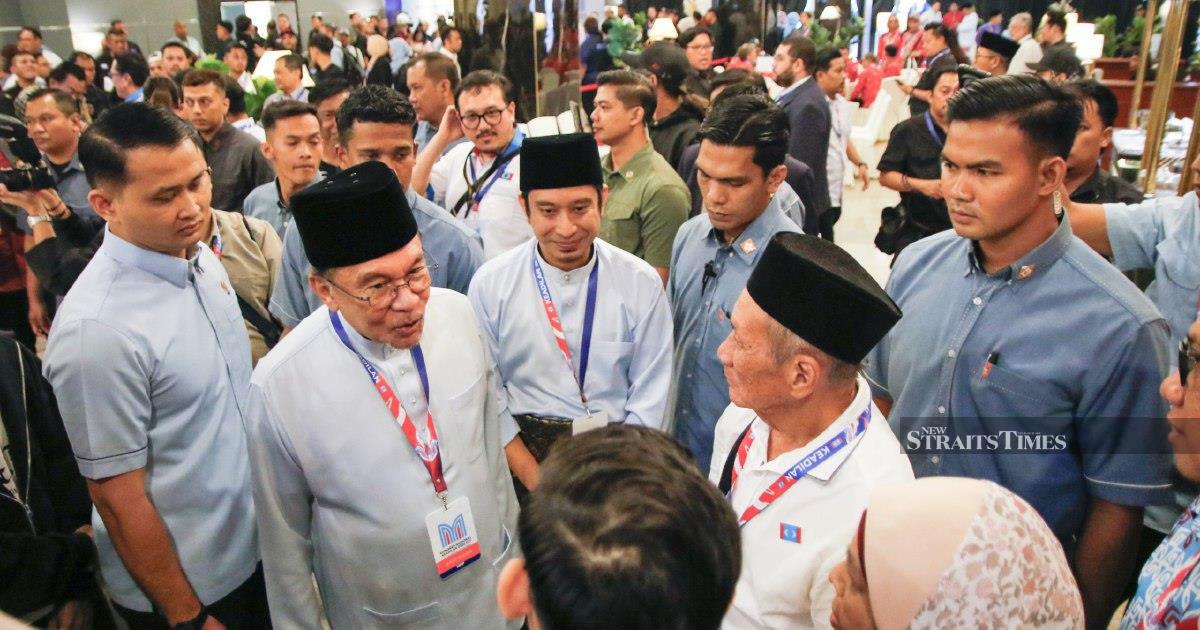
Prime Minister Datuk Seri Anwar Ibrahim has moved to quell speculation about friction within the top echelons of Malaysia's leadership, publicly dismissing suggestions that his relationship with Deputy Prime Minister Datuk Seri Dr Ahmad Zahid Hamidi has deteriorated. Speaking during an engagement in Ayer Keroh, Anwar stated unequivocally that the two leaders maintain a stable and constructive working relationship, contradicting recent narratives of discord that have circulated in political circles and social media.
The timing of Anwar's remarks appears strategic, arriving amid ongoing discussions about internal party dynamics and coalition cohesion within Malaysia's federal government. Speculation about potential tensions between leadership figures has periodically surfaced in Malaysian politics, often reflecting broader questions about the stability of the ruling coalition and the distribution of power within cabinet structures. By publicly reaffirming his working relationship with Zahid, Anwar sought to project an image of unified governance at the highest level, a message that carries significance for both investor confidence and the government's policy implementation agenda.
The relationship between a prime minister and deputy prime minister carries outsized importance in Westminster-influenced political systems, particularly in Malaysia where constitutional powers and cabinet authority rely heavily on consensus and personal rapport between senior leaders. Any genuine rift between these two figures would potentially undermine government effectiveness and create openings for opposition parties to exploit legislative gridlock or policy disagreements. Anwar's insistence that relations remain positive can be read as a reassurance to coalition partners, government stakeholders, and the business community that Malaysia's executive branch remains functional and focused.
Zahid's position as Deputy Prime Minister places him second in the constitutional hierarchy and gives him significant influence over government decisions and resource allocation. His background leading the United Malays National Organisation (UMNO), Malaysia's largest component party within the ruling coalition, also grants him substantial political leverage that extends beyond his formal title. Maintaining harmonious relations between leaders from different party backgrounds becomes essential when managing a coalition government, where party interests may occasionally diverge from government-wide objectives.
The broader context of Malaysian coalition politics reveals why such public statements hold importance. The current government comprises multiple political parties with distinct constituencies and policy priorities, making consensus-building an ongoing necessity. Regular media inquiries about potential rifts between senior leaders suggest that maintaining visible unity requires consistent messaging and periodic clarification from government principals themselves. Anwar's statement serves that clarification function, resetting expectations about leadership cohesion.
Government officials rarely make categorical denials of internal friction without reason, suggesting that accumulating questions about the PM-DPM relationship had reached a threshold warranting direct response. Whether concerns arose from media interpretation of public differences on policy matters, internal party politics within coalition members, or broader speculation about succession planning remains unclear. Regardless of the catalyst, Anwar's public stance effectively places responsibility on observers to demonstrate concrete evidence of actual deterioration rather than assumption or inference.
For Malaysian stakeholders monitoring government stability, such assurances from the Prime Minister himself carry weight beyond mere rhetorical value. They signal continuity in decision-making processes, predictability in cabinet operations, and commitment to institutional functionality. Investors, civil servants, and policy implementers across government agencies take their cues from visible unity among top leadership, interpreting discord as potential instability and harmony as organizational health.
The deputy prime minister's role in Malaysian governance has evolved considerably, particularly given Zahid's prominence within UMNO and his track record in senior ministerial positions. His appointment to the deputy role represented a significant power consolidation within the coalition structure, acknowledging UMNO's numerical strength in parliament and its essential role in maintaining the government's legislative majority. Preserving functionality within the PM-DPM dynamic thus becomes essential for sustaining the coalition's viability.
Anwar's choice to address the matter directly, rather than allowing speculation to accumulate unchecked, reflects contemporary Malaysian political communication where rapid response to rumour prevents narrative entrenchment. The alternative approach of remaining silent often allows speculation to intensify, eventually requiring more extensive damage control. By getting ahead of the narrative at Ayer Keroh, Anwar attempted to reset the discussion on his preferred terms.
Looking forward, the sustainability of cabinet harmony will likely depend on navigating genuine policy disagreements without allowing them to devolve into personal friction. Coalition governments inherently feature competing interests, and managing those tensions while maintaining public unity requires mature political leadership and mutual commitment to institutional priorities. Anwar's statement, while addressing immediate speculation, implicitly acknowledged the importance of continued emphasis on such unity as the government pursues its legislative and policy agenda.

