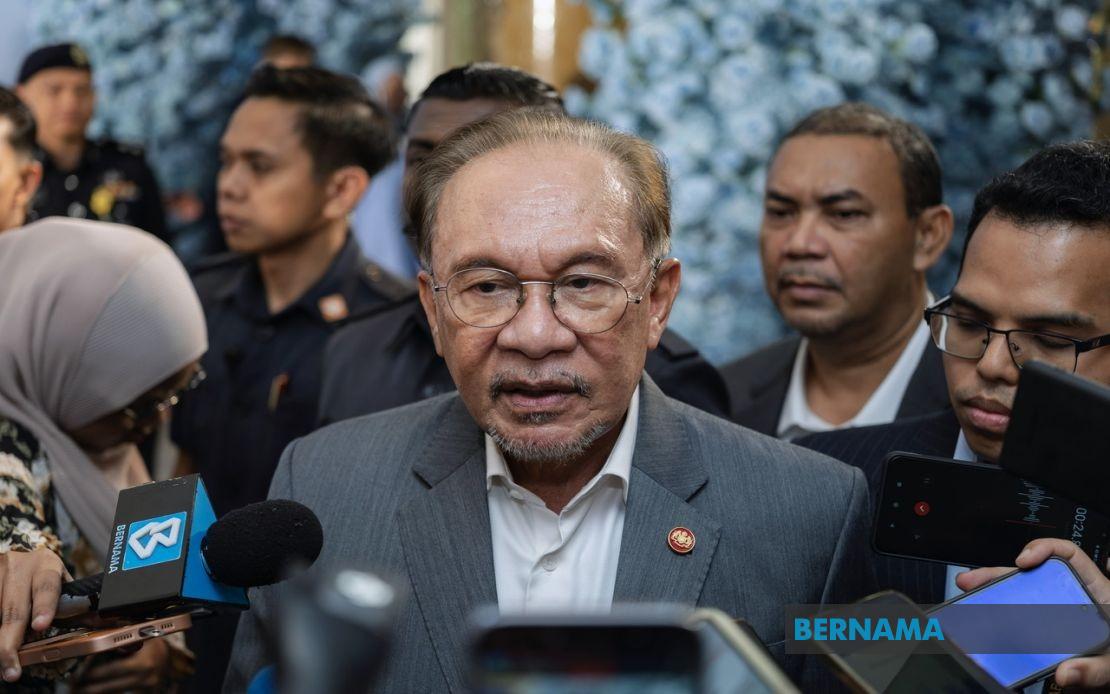
Prime Minister Datuk Seri Anwar Ibrahim acknowledged on Monday that he has not yet received a formal briefing regarding the sudden departure of four Melaka DAP state assemblymen from the Melaka state government, marking a fresh challenge for the ruling coalition's cohesion at the state level.
Speaking to journalists in Kuala Lumpur, Anwar confirmed that as chairman of Pakatan Harapan, the top leadership of the coalition would be examining the circumstances surrounding the withdrawal and would take appropriate action in due course. The matter represents an internal crisis that threatens to destabilize the ruling arrangement in one of Malaysia's key states, and the Prime Minister's remarks suggest the coalition's central command is still gathering information on the motivations and broader implications of the move.
The four assemblymen who announced their withdrawal are Allex Seah Shoo Chin from Kesidang, Low Chee Leong from Kota Laksamana, Leng Chau Yen from Banda Hilir, and Kerk Chee Yee from Ayer Keroh. Their decision came immediately after the Melaka State Legislative Assembly approved constitutional amendments that would permit the appointment of nominated assemblymen to the state legislature, a move that has proven controversial among DAP members and the broader opposition bloc.
The timing of the withdrawal raises questions about the relationship between the constitutional amendments and the DAP representatives' decision to exit the state government. Opposition to nominated assembly seats typically stems from concerns about democratic accountability and the concentration of power in the hands of fewer elected officials. The amendments essentially allow for the introduction of unelected legislators, which party members may view as undermining the principle of representative democracy that DAP has long championed.
On the same day that the four assemblymen announced their withdrawal, Anwar had publicly appealed to the Melaka DAP to reconsider their decision, urging them to prioritize development initiatives and the broader interests of the state's residents rather than proceed with what he characterized as a precipitous exit. His intervention underscored the gravity of the situation for Pakatan Harapan, which depends on maintaining stable government coalitions at the state level to demonstrate its capacity to govern effectively ahead of future national elections.
The incident reflects broader tensions within Pakatan Harapan's coalition dynamics, particularly between DAP and other allies on matters of governance structure and democratic principles. DAP, as the coalition's predominant component in urban and Chinese-majority areas, has historically emphasized transparency and meritocratic representation. The party's resistance to nominated seats aligns with its core messaging to supporters, but the withdrawal of elected representatives from government creates administrative and political complications that ripple beyond Melaka.
The loss of four assemblymen reduces the coalition's numerical strength in the Melaka state assembly, potentially creating vulnerabilities in legislative voting and budget approval processes. This development could embolden opposition parties to exploit any structural weaknesses in the government's majority, or encourage other state administrations to test the boundaries of coalition loyalty.
Anwar's measured response, indicating that Pakatan Harapan leadership would follow up soon, suggests a deliberate approach to managing the crisis rather than an immediate confrontation. The Prime Minister's acknowledgment that he lacks full briefing also hints at communication gaps within the coalition's coordination mechanisms, raising questions about how quickly information flows between state-level party branches and the national leadership.
For Malaysian observers, the Melaka situation illustrates the persistent fragility of multi-party coalitions, especially when component parties hold differing ideological priorities. DAP's emphasis on democratic principles and opposition to nominated seats reflects its voter base expectations, while other coalition partners may prioritize governmental stability and pragmatic power-sharing arrangements. Reconciling these divergent perspectives without fracturing the coalition remains a persistent challenge for Anwar's administration.
The constitutional amendments that triggered the DAP withdrawal also warrant scrutiny regarding their implications for state governance more broadly. Nominated seats can provide representation for specific constituencies or expertise areas, but they simultaneously concentrate appointment power among current office-holders and reduce the transparency of the selection process, creating potential avenues for patronage or political favoritism.
As Pakatan Harapan navigates this internal crisis, the broader significance extends to the coalition's credibility as an alternative government. The ability to manage internal disagreements without public acrimony, while maintaining effective state administrations, remains crucial for maintaining voter confidence heading toward future electoral contests. The Melaka situation will therefore merit close monitoring as an indicator of the coalition's organizational maturity and problem-solving capacity.

