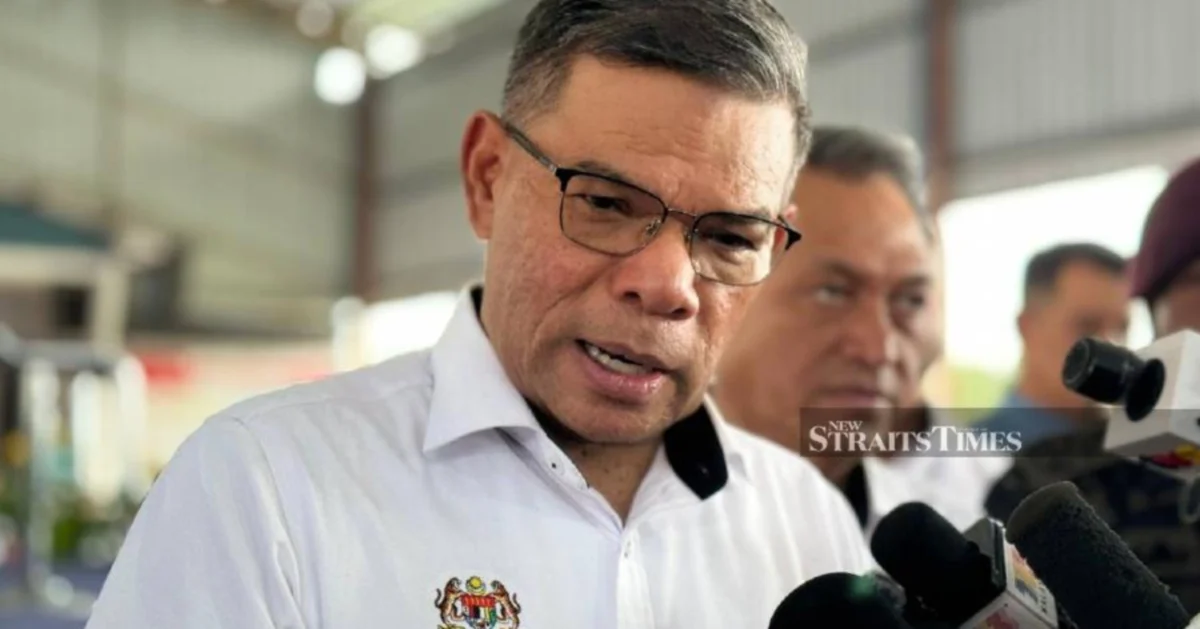
The Malaysian government has moved to bolster its land and maritime border defences with a substantial financial commitment to upgrading the operational capacity of the country's newest security apparatus. Prime Minister Datuk Seri Anwar Ibrahim has sanctioned RM22 million in funding to provision the Malaysian Border Control and Protection Agency (MCBA) with modern firearms and associated equipment necessary for frontline operations.
This allocation represents a significant investment in Malaysia's layered approach to border security at a time when the nation faces persistent challenges from transnational smuggling networks, human trafficking syndicates, and cross-border organised crime. The MCBA, as the dedicated federal agency responsible for policing Malaysia's extensive land borders and maritime boundaries, requires contemporary weaponry and protective gear to match evolving security threats in an environment of increasingly sophisticated criminal operations.
The RM22 million commitment demonstrates the government's recognition that effective border control demands both personnel and material resources. Beyond firearms themselves, the funding allocation encompasses the spectrum of equipment required for sustained field operations—ranging from communication systems and surveillance aids to personal protective gear and vehicle-mounted systems. This holistic approach to equipping the agency reflects contemporary security doctrine that emphasises interoperability and technological integration.
Malaysia's border security landscape presents distinctive challenges that necessitate this investment. The country shares terrestrial borders with Thailand to the north and with Indonesia across multiple maritime zones, while maintaining responsibility for extensive maritime territories in the South China Sea and Straits of Malacca. The MCBA must therefore operate across diverse terrain and environmental conditions, from jungle checkpoint posts to offshore patrol vessels, demanding equipment versatility that this funding mechanism helps facilitate.
The establishment of the MCBA itself represented a consolidation of border security functions previously distributed across multiple agencies. By concentrating mandate and resources under a single authority, the government aimed to eliminate coordination gaps and create a more responsive enforcement capacity. This latest budgetary commitment should be understood as part of that broader institutional restructuring, providing the MCBA with the material foundation necessary to fulfil its unified command purpose.
For Malaysian business and civil society, enhanced border security translates into multiple implications. Legitimate cross-border commerce benefits from more professional and efficient security checkpoints staffed by better-equipped personnel operating under unified procedures. The reduction of smuggling and contraband trafficking protects domestic industries from unfair competition and helps preserve the integrity of customs revenue. Additionally, more effective border policing contributes to national security and regional stability, reducing the transit space available for transnational organised crime networks.
Regionally, Malaysia's border security capabilities intersect with broader Southeast Asian cooperation frameworks. A more capable MCBA strengthens Malaysia's ability to contribute to trilateral and multilateral security initiatives with Thailand, Indonesia, and ASEAN partners. The agency's operational effectiveness influences maritime security in the Straits and coordination against transnational criminal networks that affect the entire region's stability and economic performance.
The timing of this allocation also carries strategic weight amid shifting security dynamics across Southeast Asia. The region continues to experience increasing maritime tensions, persistent human trafficking flows, and the operational expansion of drug trafficking organisations. Countries like Malaysia that maintain critical geographical positions cannot afford underfunded border agencies, as capacity gaps create vulnerabilities that transnational actors systematically exploit.
Financially, the RM22 million represents a concentrated investment rather than a routine operational budget supplementation. This suggests the MCBA has undertaken procurement planning to identify specific equipment deficiencies and costed solutions. The focused allocation implies deliberate acquisition of defined capabilities—possibly new firearm platforms, specialised surveillance equipment, or enhanced mobility assets—rather than general funding that becomes dispersed across numerous minor initiatives.
Implementation of this funding will require the MCBA to execute transparent procurement processes compliant with government regulations while ensuring the selected equipment meets operational requirements and international standards. The effectiveness of this investment will ultimately depend on deployment strategy, personnel training, and integration with existing security infrastructure operated by the Royal Malaysian Police and the Malaysian Armed Forces.
Looking forward, this budget commitment establishes a precedent for continued investment in border security modernisation. Policymakers and security analysts will monitor whether the MCBA's enhanced capacity translates into measurable improvements in contraband interdiction rates, human trafficking disruption, and overall border control effectiveness. The success of this RM22 million investment may well influence future allocations and demonstrate to stakeholders that the government prioritises the institutional and material foundations necessary for professional border security operations.
The allocation ultimately reflects governmental recognition that modern border management transcends mere personnel deployment. In an era of sophisticated smuggling techniques and transnational organised crime, professional frontier security demands competitive weaponry, intelligence-sharing systems, and protective equipment that position officers to execute their duties safely and effectively. This funding commitment provides the MCBA with tools to discharge its mandate across Malaysia's challenging borderlands.