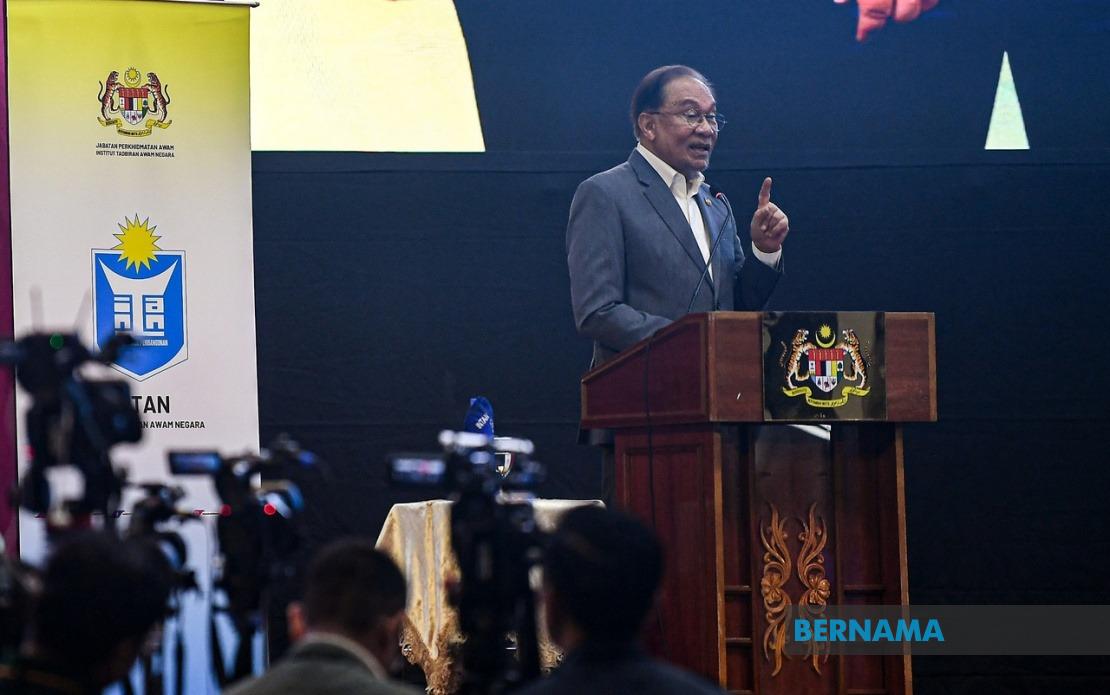
Prime Minister Datuk Seri Anwar Ibrahim extended an apology on July 20 if his forthright manner of speaking to civil servants across various forums had been interpreted as excessively stern, acknowledging feedback that his communication approach may not align with conventional expectations of prime ministerial conduct. Speaking through a video released via Facebook following an engagement with Central Zone civil servants at Universiti Islam Selangor, Anwar addressed concerns raised by those who had counselled him on the need for a more measured, diplomatic tone befitting his office.
The Prime Minister's candid reflection came in response to suggestions that he ought to moderate his volume and intensity when communicating with government officials and the broader population. Anwar indicated that various individuals had privately advised him that his elevated tone and passionate delivery, while potentially effective in conveying messages, could be perceived as inappropriate for someone holding the highest executive office in the nation. He acknowledged these concerns while simultaneously defending his natural inclination to express himself with conviction and emotional authenticity.
Anwar's remarks reveal a tension between his established personal style—characterised by direct, emotionally-charged communication—and the perceived decorum traditionally associated with the prime ministerial role. He noted that when matters strike at his core convictions and stir his emotions, his instinctive response is to speak with force and urgency, a trait that has defined his political career spanning decades. This fundamental aspect of his personality, he suggested, sometimes conflicts with the expectation that holders of high office maintain an even, composed demeanour at all times.
The context for these comments was an address to civil servants from the Central Zone, delivered in the presence of Chief Secretary to the Government Tan Sri Shamsul Azri Abu Bakar. Anwar used this platform to discuss the critical role of the public service machinery in translating government policies into tangible results for the nation. His emphasis on accountability and urgency in implementation—delivered with characteristic intensity—apparently prompted sufficient feedback to warrant a public clarification of his intent.
Anwar's defence of his communicative approach centred on the substance of his message rather than its delivery. He argued that his firm tone when addressing civil servants was deliberate, designed to underscore the significance of their institutional role in advancing the government's development agenda. By speaking with evident passion and conviction, he suggested, he was attempting to impress upon the bureaucracy the gravity of their responsibilities and the need for diligent, committed execution of policy initiatives. In his view, such intensity reflects appropriate recognition of what is at stake.
The Prime Minister posed a rhetorical question regarding to whom he should direct his most candid expressions of concern and conviction if not to the very government machinery tasked with implementing national programmes and policies. This framing positions his forthright communication as an internal leadership matter, one conducted within the context of directing his own team rather than public grandstanding. He appeared to suggest that civil servants, as the institutional backbone of government, should expect and perhaps even welcome the kind of direct, emotionally-invested engagement he provides.
Anwar's willingness to issue a conditional apology—apologising for perception rather than for his actual behaviour—demonstrates a delicate balancing act. He acknowledged the concerns raised while firmly declining to renounce his fundamental approach to leadership communication. This posture may resonate with those who view his passion as a sign of genuine commitment to national causes, while potentially failing to fully satisfy critics who contend that prime ministerial authority derives partly from measured, dignified presentation.
The broader context for this exchange relates to ongoing discussions within Malaysia's political and administrative circles about the relationship between the prime ministerial office and the civil service. The bureaucracy, which operates across all tiers of government and implements policies affecting millions of citizens, requires clear direction and motivation. Anwar's approach suggests he believes that passionate, direct communication from political leadership is more likely to galvanise the public service into action than softer, more diplomatic messaging.
For Malaysian civil servants themselves, Anwar's remarks carry important implications. His communication style signals an expectation of rigorous performance, accountability, and commitment to delivering results. Whether this approach proves ultimately more effective than alternatives in driving bureaucratic efficiency and policy implementation remains an empirical question, one that will likely become apparent in coming months as major government initiatives advance. The Prime Minister has, in effect, signalled that his intensity should be read as a measure of the stakes involved rather than as personal displeasure with individual officials.
The incident also illuminates the evolving nature of prime ministerial communication in the modern era, where video addresses and social media constitute primary channels for direct engagement with both civil servants and the general public. Anwar's recourse to Facebook to clarify his remarks demonstrates how contemporary political leadership operates across multiple communication platforms, each with its own conventions and audience expectations. His willingness to address criticism publicly, while defending his fundamental approach, reflects an understanding that prime ministerial authority in a modern democracy rests partly on the ability to explain and justify one's actions to multiple constituencies.

