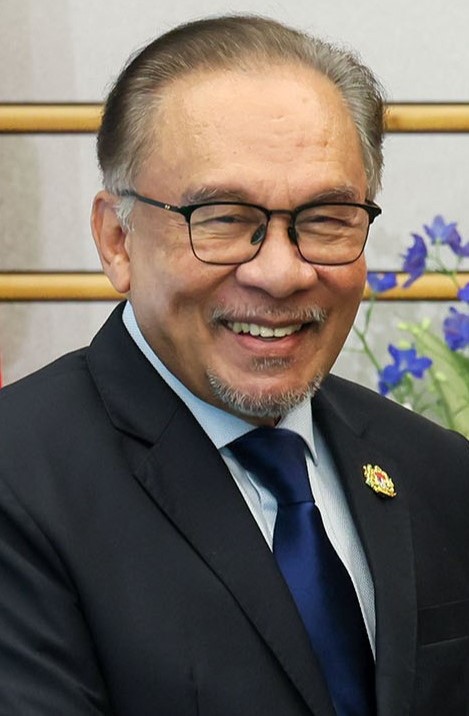
Prime Minister Anwar Ibrahim held a significant meeting with the Johor Regent Tunku Mahkota Johor in Kuala Lumpur to underscore the importance of preserving cordial relations between the state and federal administrations. The gathering represents a deliberate effort to fortify the institutional framework that governs centre-state cooperation, a matter of considerable consequence given Malaysia's federal structure and Johor's substantial economic and political weight within the federation.
The visit was initiated by the Prime Minister, who sought audience with the royal figure, reflecting the protocol and deference traditionally afforded to the monarchy within Malaysia's constitutional arrangement. This gesture carries symbolic significance beyond the immediate bilateral discussion, conveying to stakeholders that the highest levels of federal executive authority remain engaged with Johor's leadership through formal channels.
Johor occupies a distinctive position within the Malaysian federation as one of the nation's most economically productive and populous states. Its capital, Johor Bahru, sits directly across from Singapore and serves as a critical gateway for commerce and investment. The state government's policies on economic development, infrastructure, and investment therefore have ramifications that extend well beyond state boundaries, affecting regional supply chains and cross-border commercial arrangements that are vital to Malaysia's broader economic architecture.
The relationship between the federal government and the Johor state administration has intermittently drawn public attention over jurisdictional matters and policy divergences. By scheduling a formal meeting to reaffirm mutual commitment to preserving positive working relations, the Prime Minister seeks to establish clear ground rules for engagement and prevent any escalation of administrative friction that could undermine governance effectiveness or investor confidence. Such meetings typically function as mechanisms for clarifying expectations and building personal rapport between political and royal figures.
The emphasis on preserving good relations carries particular importance in the Malaysian context, where the institution of the monarchy remains deeply embedded within the federal structure. The position of the Johor Regent, a senior member of the royal household and heir apparent to the Johor sultanate, grants considerable cultural and institutional standing. Demonstrating respect for and commitment to coordination with such figures is therefore integral to maintaining political legitimacy at the federal level.
From a governance perspective, strong state-federal coordination mechanisms facilitate more efficient implementation of national policies and programmes. When state governments work constructively with federal authorities, resource allocation becomes smoother, inter-agency conflicts diminish, and citizens experience more seamless access to public services. Conversely, adversarial relationships between tiers of government create friction that can cascade downward and affect service delivery, project timelines, and investor perceptions of Malaysia's administrative stability.
Johor's economic trajectory and development agenda increasingly depend upon coordinated planning with federal entities responsible for national infrastructure, trade policy, and investment promotion. The state government's initiatives in areas such as the Iskandar Malaysia development corridor and industrial diversification require alignment with federal economic strategies and access to federal resources and support mechanisms. The meeting therefore likely encompassed discussion of ongoing development projects, federal funding for state-level priorities, and coordination of economic policies.
The timing and initiation of this meeting by the Prime Minister suggests a proactive approach to relationship management. Rather than allowing potential tensions to accumulate or fester, the federal executive is demonstrating willingness to invest time and political capital in reinforcing institutional bonds. This approach reflects lessons from Malaysian political history, where centre-state tensions have occasionally erupted into public disputes that damaged both governance credibility and investor confidence.
For Malaysian businesses and investors, particularly those operating within Johor or dependent upon seamless cross-state operations, such affirmations of governmental cooperation provide reassurance regarding the stability of the regulatory and operational environment. Political uncertainty at the centre-state interface can deter investment decisions and slow business expansion. Conversely, clear signals of institutional stability and cooperative governance encourage long-term capital commitments and expansion plans.
The broader Southeast Asian context also merits consideration. Malaysia's position as a regional economic hub depends partly upon perceptions of stable, functional governance across all tiers of administration. When subnational units and the centre demonstrate commitment to collaborative rather than confrontational relationships, Malaysia's standing as an attractive investment destination is strengthened. This is particularly salient given regional competition for foreign direct investment from Singapore, Thailand, and Vietnam.
Moving forward, the substantive outcomes of such meetings typically materialise through ongoing inter-agency coordination, joint task forces addressing specific policy domains, and collaborative problem-solving around infrastructure and development challenges. The formal meeting thus represents the visible expression of deeper institutional mechanisms designed to translate political commitment into administrative practice.