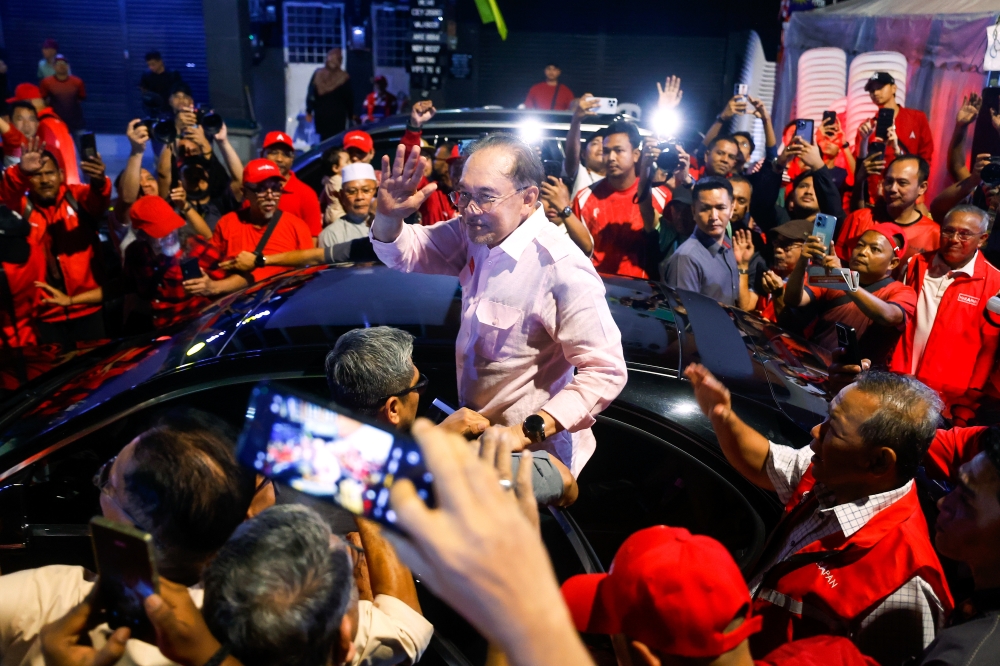
Prime Minister Datuk Seri Anwar Ibrahim sought to reassure Malaysians about the steadfastness of the federal unity government and the strength of the nation's economic standing during remarks made in Seremban on July 23. The premier's comments represent a deliberate effort to project confidence in both political stability and fiscal performance at a time when such assurances carry particular weight in the region.
The unity government, which has governed since its formation following the 2022 general election, continues to command the necessary parliamentary support and remains functional in advancing the administration's policy agenda, according to Anwar. The coalition, comprising multiple political parties with differing ideologies, has weathered various pressures and internal tensions characteristic of broader-based governments. Anwar's public reaffirmation of the government's robustness suggests ongoing attention to perceptions of political fragility that have periodically circulated in Malaysian political discourse.
Economic fundamentals remain sound, Anwar maintained, pointing to indicators that demonstrate Malaysia's resilience in managing inflationary pressures and external economic headwinds. The assertion addresses persistent concerns among Malaysians about cost-of-living challenges and the broader stability of employment and investment. Such declarations from the Prime Minister carry practical implications, as public confidence in economic stewardship influences consumer behaviour, business investment decisions, and capital flows within Southeast Asia's third-largest economy.
The Seremban address takes on particular significance given Malaysia's position within the region's economic landscape. As a nation with substantial exposure to global trade, foreign direct investment, and financial markets, Malaysia's perceived stability directly affects investor sentiment across Southeast Asia. Anwar's messaging appears calibrated to project both domestic and international confidence at a moment when regional economies face headwinds from slowing global growth and shifting trade patterns.
Political coalitions of the unity government's composition require constant management and communication to sustain cohesion. The diverse membership of the coalition, spanning different communal bases and ideological orientations, necessitates regular affirmation from leadership that the partnership serves national interests effectively. Anwar's restatement of the government's strength serves not only as public communication but potentially as reinforcement of commitment among coalition members themselves.
The timing of such assurances matters within Malaysia's political calendar and global economic context. With discussions around budget allocations, infrastructural spending, and social welfare provisions ongoing at various levels of government, declarations of economic solidity from the Prime Minister set the tone for resource distribution debates and fiscal policy direction. Malaysian households closely monitor such signals when assessing their own financial security and planning for the coming months.
Regional observers and investors increasingly view political stability as inseparable from economic performance. Anwar's dual emphasis on both governmental cohesion and economic resilience reflects an understanding that these factors reinforce each other in the minds of stakeholders. A government perceived as internally divided generates investor caution regardless of actual economic metrics, whilst economic uncertainty magnifies perceptions of political weakness.
The Prime Minister's comments also implicitly address scepticism from certain opposition quarters that have periodically suggested the unity government faces insurmountable internal contradictions. By publicly reaffirming both political and economic stability, Anwar signals that the coalition has successfully managed the inherent tensions of multi-party governance whilst delivering tangible outcomes on the economic front. This framing positions the government's diversity as a source of strength rather than vulnerability.
For Malaysian consumers and business operators, such statements from leadership create frameworks through which they interpret their own economic circumstances. When the Prime Minister affirms that the economy rests on solid footing, many Malaysians weigh this against their personal experience of inflation, employment prospects, and purchasing power. The gap between official messaging and lived experience remains a persistent challenge for any administration seeking to build and maintain public confidence.
The unity government's continuation depends on sustained agreement among coalition partners on fundamental governance questions and policy priorities. Anwar's emphasis on governmental strength serves partly to discourage defections or alternative political arrangements that could undermine the current arrangement. Within Malaysia's parliamentary system, where coalition dynamics can shift relatively rapidly, such public reinforcements of governmental stability carry practical political weight.
Looking forward, the resilience that Anwar emphasises will face further tests from global economic trends beyond Malaysia's direct control. Commodity price fluctuations, international trade relations, and regional geopolitical developments all influence Malaysian economic performance. The government's ability to navigate these external pressures whilst maintaining internal political cohesion will determine whether the Prime Minister's current assessments prove substantive or merely aspirational.
For Southeast Asian observers and regional investors, Anwar's Seremban remarks contribute to a broader picture of Malaysia's positioning within an increasingly complex regional economic environment. As other nations across the region also navigate questions of political stability and economic performance simultaneously, Malaysia's experience offers both opportunities for comparison and cautionary lessons about the delicate balance required to sustain both governmental unity and economic progress.

