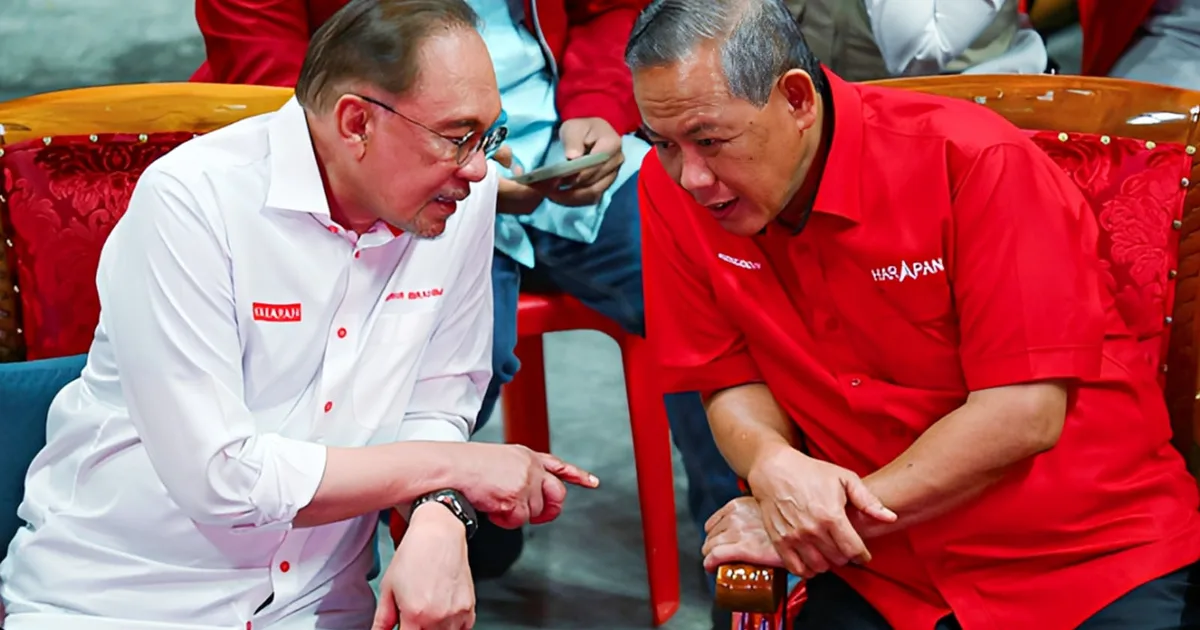
PKR president Anwar Ibrahim has reaffirmed that the former Negeri Sembilan menteri besar Aminuddin Harun remains an invaluable asset to the party, particularly in his capacity to nurture and develop the next cohort of political leaders within the organisation. Anwar's remarks reflect a broader strategic consideration within PKR regarding succession planning and institutional knowledge transfer at a time when the party navigates evolving political landscapes across Malaysia.
The PKR president's endorsement of Aminuddin carries particular weight given his stature within the ruling coalition and his influence over party direction. Rather than viewing Aminuddin's recent electoral difficulties as a reason for sidelining him, Anwar appears to be signalling continuity and stability within the party hierarchy, suggesting that experience and maturity in political life remain valued commodities even when electoral outcomes prove challenging.
Anwar specifically highlighted Aminuddin's comportment following his recent political setback, emphasising that the former menteri besar's refusal to assign blame to others represents a leadership standard worthy of emulation among party ranks. This dignified acceptance of electoral defeat, without resorting to internal accusations or factional recriminations, demonstrates a maturity of political character that Anwar evidently wishes to inculcate throughout PKR's membership base.
The incident underscores a fundamental challenge facing Malaysian political parties: maintaining unity and institutional cohesion during periods when electoral performance disappoints. PKR, like other major parties, has experienced internal tensions following unexpected electoral outcomes, with some members questioning the competence or tactics of senior figures. Anwar's public backing of Aminuddin in a mentorship role appears designed to quell potential dissatisfaction and reinforce the importance of party loyalty even in difficult circumstances.
Aminuddin Harun has maintained a presence within PKR's organisational structure despite his departure from the menteri besar position in Negeri Sembilan. His political experience spans multiple decades and various portfolios, making him a repository of institutional knowledge about party operations, coalition management, and state-level governance. For younger members still developing their political skills and networks, access to such experience can prove invaluable in navigating the complexities of Malaysian politics.
The emphasis on mentorship also reflects international best practices in political party management, where established democracies increasingly recognise the importance of deliberate knowledge transfer between generations of political leaders. Parties that fail to develop emerging talent systematically often face succession crises or the loss of institutional memory at critical junctures. Anwar's framing of Aminuddin's role suggests PKR intends to avoid such pitfalls through structured developmental initiatives.
For Southeast Asian readers, the dynamics playing out within PKR offer broader lessons about how ruling parties manage internal dissent and electoral disappointment. Malaysia's relatively competitive political environment, where power alternates between coalitions and where intra-party contests can have real consequences for political advancement, creates particular pressures on senior figures during difficult periods. Anwar's public affirmation that experienced practitioners retain value regardless of recent setbacks sends a stabilising message across the party apparatus.
The timing of Anwar's remarks also warrants consideration. Positioned against the backdrop of PKR's broader coalition responsibilities and its role within the Pakatan Harapan alliance, signals about leadership continuity and institutional stability carry implications beyond the single party. Coalition partners monitor such developments carefully, as internal PKR instability could potentially affect the broader ruling alliance's cohesion and electoral prospects in future contests.
Aminuddin's acceptance of electoral defeat without finger-pointing represents a departure from typical Malaysian political responses, where blame-shifting and accusations of sabotage frequently follow unfavourable outcomes. Anwar's decision to publicly celebrate this restraint suggests he views it as a character trait sufficiently unusual and valuable to merit explicit endorsement and wider imitation. Such public reinforcement of particular behavioural standards can gradually shift party culture toward greater professionalism and reduced internal acrimony.
The mentorship framework Anwar describes also facilitates a graceful transition for senior figures whose electoral viability may have diminished, offering them alternative pathways to remain influential and engaged rather than forced into political oblivion. This approach may enhance party retention of experienced personnel who might otherwise feel cast aside, preserving valuable human capital and institutional relationships. For younger members, structured access to seasoned practitioners provides educational and networking opportunities that enhance their long-term political effectiveness.
Moving forward, the success of Aminuddin's mentorship role will likely depend on concrete institutional arrangements within PKR—whether mentorship occurs through formal party structures, informal guidance, or task-based collaborations. The credibility of such initiatives often hinges on visible results: do younger members who benefit from such mentoring subsequently perform more effectively? Do they develop greater party loyalty and institutional commitment? These practical outcomes will ultimately determine whether Anwar's emphasis on Aminuddin's ongoing value translates into tangible benefits for PKR's organisational health and electoral prospects.

