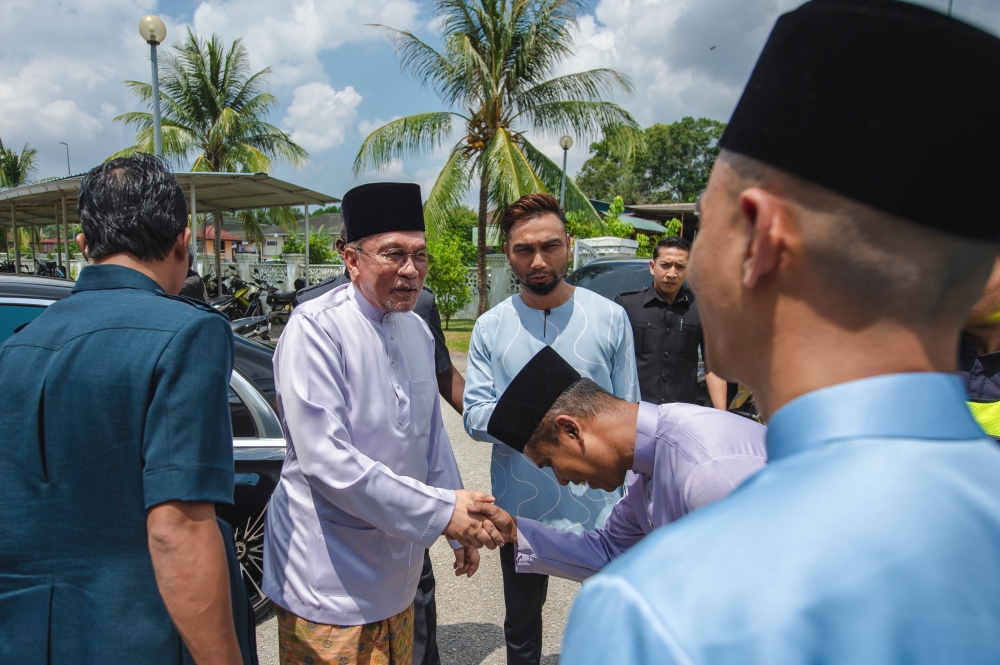
Prime Minister and Finance Minister Datuk Seri Anwar Ibrahim has underscored the government's awareness that substantial segments of Malaysia's population and business sector remain under considerable financial strain, even as the nation's economic performance in the second quarter surpassed forecaster predictions. His remarks reflect the administration's recognition that macroeconomic statistics, while encouraging on the surface, do not uniformly translate into tangible improvements in living standards across all demographic and economic strata.
The assertion carries particular weight given the divergence that frequently exists between headline growth figures and the experiences of workers, pensioners, and entrepreneurs operating in Malaysia's vast informal and small-business economy. When national GDP expands at a healthy pace, it does not necessarily mean that purchasing power has strengthened for households struggling with inflation, or that cash flow pressures have eased for operators of micro-enterprises dependent on thin profit margins. Anwar's positioning suggests the cabinet is attempting to strike a balance between celebrating statistical achievements and addressing the palpable concerns of constituencies who feel economically squeezed despite official growth narratives.
The strength of second-quarter performance—exceeding consensus estimates from economic analysts—demonstrates underlying resilience in Malaysia's productive sectors. This outperformance likely reflects contributions from manufacturing, services, and trade activities that have stabilised following periods of pandemic-related disruption. However, the distribution of gains from this growth remains uneven. The government's emphasis on acknowledging hardship suggests an attempt to build political credibility by appearing responsive to grassroots economic frustration, a particularly delicate consideration in Malaysia's heavily politicised environment where public sentiment regarding economic management directly influences electoral prospects.
Small and medium enterprises occupy a critical place in Malaysia's economic ecosystem and employment landscape, accounting for a substantial share of the workforce and contributing meaningfully to GDP. These businesses frequently face acute challenges including restricted access to affordable credit, elevated operational costs, and difficulty competing against larger corporations with greater resources and economies of scale. When PMEs report continued struggle despite national growth acceleration, they are often referring to squeezed margins, delayed customer payments, inventory challenges, and labour availability issues. Anwar's specific invocation of MSME concerns indicates that government policymakers perceive vulnerability in this segment as a significant political and economic risk requiring acknowledgment and potentially, targeted intervention.
The inflation backdrop remains relevant to understanding why economic growth alone has failed to translate into universal prosperity. While second-quarter GDP expansion reflects increased economic activity, it occurs against a context where consumer prices for essential goods and services—food, utilities, transport, housing—have risen substantially. For households operating at or near subsistence levels, wage stagnation combined with price rises creates a squeeze that official growth figures do not capture. Anwar's comments implicitly acknowledge this disconnect between aggregate expansion and household financial stress, a distinction that matters greatly for policy calibration and public communication strategy.
Government policy responses to widespread perception of economic difficulty face constraints on multiple fronts. Fiscal space remains limited by Malaysia's debt position and revenue requirements, restricting the scale of cash transfers or subsidies that authorities can sustainably deploy. Monetary considerations similarly constrain options, as interest rate decisions must balance domestic inflationary pressures against currency stability and capital flow management. Within these parameters, the government has pursued initiatives including targeted social assistance, skill development programmes, and attempts to improve SME financing access. Anwar's acknowledgment of ongoing hardship may be preparing ground for justifying the adequacy of existing measures or signalling that further interventions are under consideration.
The political dimension of Anwar's statement deserves careful attention. Malaysia's government coalition faces ongoing electoral uncertainty, with recent state-level contests demonstrating voter volatility across regions. Economic management remains a primary criterion by which voters evaluate political leadership. By explicitly recognising that many citizens experience continued hardship despite positive GDP data, Anwar appears to be preemptively addressing potential criticism that the administration is out of touch with ordinary Malaysians' lived experiences. This rhetorical positioning suggests awareness that positive economic statistics alone are unlikely to secure public confidence if they are not experienced as improvements in day-to-day circumstances.
The regional context also influences Malaysia's economic narrative and policy imperatives. Competitors across Southeast Asia, including Thailand, Vietnam, and Indonesia, pursue their own growth strategies and attract foreign direct investment. Malaysia's ability to sustain growth, improve competitiveness, and retain capital depends partly on investor confidence in macroeconomic stability and partly on internal factors including workforce quality, infrastructure adequacy, and political predictability. Second-quarter GDP growth helps reinforce Malaysia's image as a stable regional economy, which carries implications for Malaysia's ability to finance development and service its external obligations.
Looking forward, the government faces a substantive challenge in translating aggregate growth into measurable welfare improvements for economically vulnerable populations and MSMEs. Policy instruments under consideration likely include labour market interventions such as skills training and wage support, credit facility expansion targeting small businesses, and strategic subsidy maintenance for essential goods. Anwar's public acknowledgment of hardship may foreshadow adjustment to existing programmes or introduction of new measures designed to address specific pain points identified through government consultation with affected communities.
The tension between celebrating encouraging macroeconomic indicators and validating public perceptions of continued struggle reflects a broader challenge confronting policymakers globally. Nations frequently experience situations where growth resumes before its benefits reach lower-income and vulnerable households, creating windows during which government legitimacy faces testing despite objectively improving statistics. Anwar's positioning suggests recognition that managing this tension requires explicit communication acknowledging the reality of widespread economic difficulty, coupled with credible articulation of government commitment to ensuring growth benefits extend beyond statistical aggregates to actual improvements in living standards and business viability.

