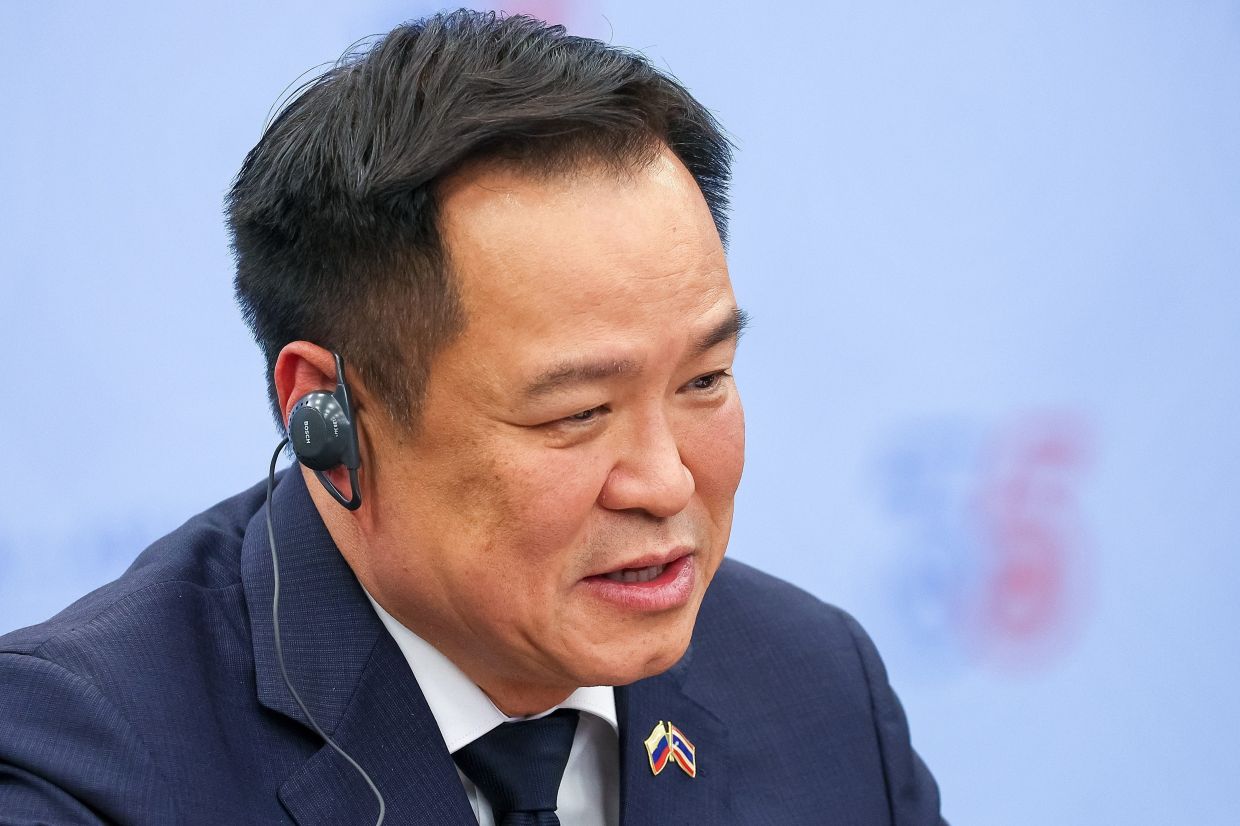
Thailand's prime minister Anutin Charnvirakul has completed his first hundred days in office since taking the oath on March 20, and the emerging assessment is one of cautious competence rather than transformative ambition. The 59-year-old leader, sworn in following his Bhumjaithai Party's electoral victory in February 2026, inherited the premiership nine months earlier after the Paetongtarn Shinawatra government collapsed, and his administration has since prioritised immediate stability over the deeper reforms many Thais and regional observers believe the nation desperately requires.
The government faced its most pressing challenge within days of assuming power. The February 28 attacks on Iran by the United States and Israel triggered an energy crisis that reverberated across Southeast Asia, disrupting oil supplies and exposing Thailand's economic vulnerability to external shocks beyond its control. Panic buying at petrol stations and sustained oil prices above US$100 a barrel created genuine anxiety about fuel shortages and further inflation in an already fragile economy. Shipping disruptions through the Strait of Hormuz persisted throughout the spring, keeping global energy markets volatile and Thai consumers worried about their livelihoods.
Anutin's response to this crisis, though pragmatic, drew on existing financial reserves rather than innovative policy solutions. His government deployed the national Oil Fuel Fund to subsidise fuel prices, reducing borrowing costs for farmers and industrial operators struggling with energy expenses. Coal-fired power plants operated at maximum capacity to supplement supply, while the administration sought to diversify energy imports by increasing purchases from the United States, Malaysia and Brunei. These were sensible, short-term measures that prevented cascading economic damage, but they also masked deeper structural vulnerabilities in Thailand's energy security and industrial competitiveness.
Political science analysts, including Mathis Lohatepanont from the University of Michigan, acknowledge that Anutin successfully "weathered the initial storm" without triggering the mass protests or social unrest that might have destabilised the government. While Thais continue to grumble about elevated fuel prices, the absence of street demonstrations reflects both Anutin's political skill and public fatigue after two decades of military coups and governance instability. This stability is genuinely significant in a Thai context, yet it also reveals a troubling pattern: the government appears satisfied with managing crises rather than preventing them through structural change.
The prime minister has also fulfilled campaign promises on highly visible, populist initiatives. His "Thais Help Thais Plus" subsidy scheme, launched on June 1, allows approximately 30 million eligible citizens to purchase selected goods from participating merchants at just 40 percent of retail price, with the government covering the remainder. Allocated 176 billion baht (US$5.27 billion), the programme delivers immediate relief to struggling households and represents genuine political follow-through on electoral pledges. Yet even proponents recognise its limitations: Puangthong Pawakapan of Chulalongkorn University's political science faculty observed that while Thais appreciate the temporary cost-of-living assistance, the scheme does "absolutely nothing to solve the underlying economic crisis".
On foreign policy, Anutin has also delivered on nationalist commitments that energised his electoral base. His decisive stance on the long-running maritime boundary dispute with Cambodia, including the unilateral termination of a 2001 bilateral agreement and escalation to UN arbitration, appeals to Thai voters concerned about national sovereignty. By maintaining military prominence in border protection activities, Anutin signalled continuity with campaign messaging while consolidating support among nationalist constituencies. These moves cost little domestically and provided early political victories, yet they also distracted from pressing economic challenges requiring sustained attention.
The deeper concern, however, involves what Anutin is not doing. Thailand's economy has expanded by less than three percent annually over the past five years, a sluggish pace that leaves the country vulnerable to regional competition. The International Monetary Fund projects growth of merely 1.5 percent for this year, the slowest trajectory across Southeast Asia. Vietnam is expected to expand by 7.1 percent, Cambodia by four percent, and even Myanmar, despite ongoing civil conflict, by three percent. These disparities reflect not temporary setbacks but chronic structural weaknesses: Thailand's ageing population, elevated household debt, insufficient investment in innovation, and underdeveloped digital and clean energy sectors.
Although Anutin has publicly expressed interest in developing new economic engines around digital technology, artificial intelligence and clean energy, observers detect no coherent roadmap translating those aspirations into policy reality. Stithorn Thananithichot of Chulalongkorn University notes that the administration's "energies have gone into routine administration and day-to-day management rather than into any initiative aimed at meaningful economic or political change." This diagnosis suggests an administration focused on preventing disaster rather than creating prosperity, a fundamental difference in governing philosophy.
Constitutional reform offers perhaps the starkest illustration of this pattern. Nearly 60 percent of voters—approximately 20 million citizens—indicated in a February 2026 referendum their desire to change the 2017 Constitution, which many regard as fundamentally undemocratic because it was drafted under former prime minister Prayut Chan-o-cha following the 2014 coup. Despite this overwhelming popular mandate, constitutional change has languished with minimal progress. Stithorn argues that "a government that intended to reform would have signalled at least one substantive structural commitment at the outset; this one did not, and that absence is by design rather than a matter of time." This assessment suggests Anutin's choice of stability represents not temporary pragmatism but fundamental reluctance to disturb existing power arrangements.
For Malaysian and broader Southeast Asian observers, Anutin's approach carries important implications. Thailand's regional influence derives partly from its economic dynamism and institutional credibility; a Thai government content with crisis management risks gradual decline relative to more ambitious neighbours. Malaysia, Vietnam and other ASEAN members are pursuing aggressive digitalisation and sectoral diversification while Thailand consolidates around subsidy schemes and nationalist foreign policy. The structural economic gaps will widen unless Thailand undertakes the difficult reforms its population clearly demands. Anutin's 100 days reveal a capable administrator managing immediate pressures, but they offer little evidence that his government possesses either the vision or the political will to address the deeper transformations Thailand's economy requires.

