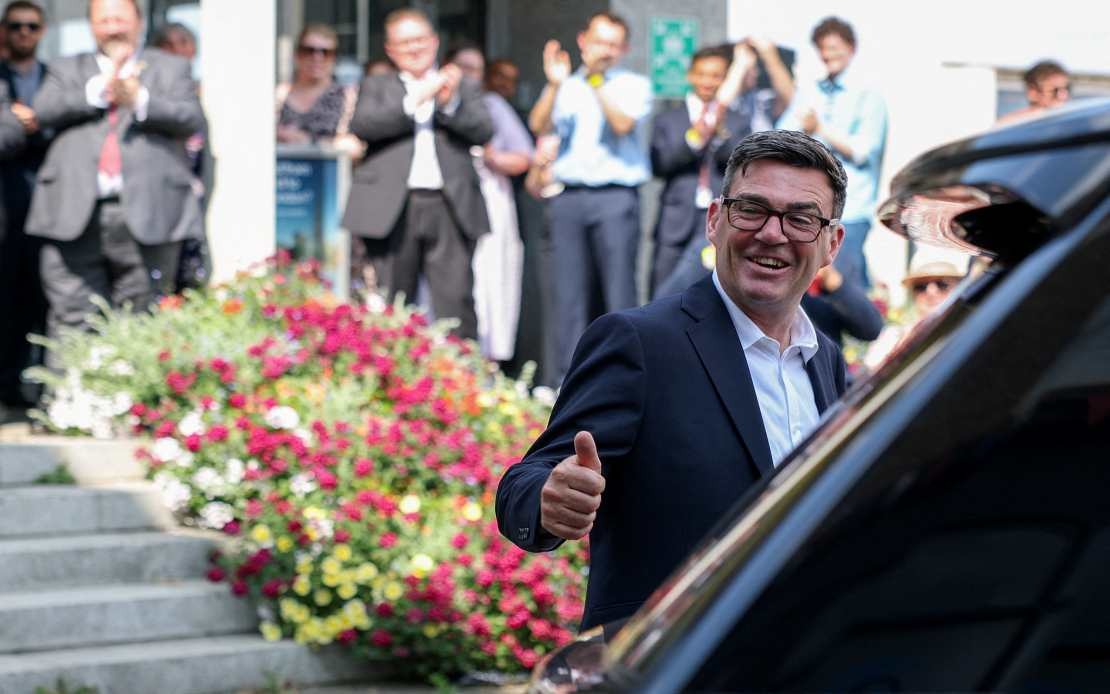
Andy Burnham will formally assume office as United Kingdom prime minister on Monday, stepping into a role he secured without a contested leadership election barely one month after returning to Parliament. During his inaugural speech at Downing Street following his audience with King Charles III, the former Greater Manchester mayor intends to emphasise the restoration of public faith in government institutions and offer what he describes as "breathing room" on pressing household expenses that have strained British families throughout recent years.
The timing of Burnham's ascension carries particular symbolic weight given the tumultuous nature of recent British politics. Over the preceding decade, the United Kingdom has cycled through seven prime ministers, creating an impression of governmental chaos and inconsistency that has eroded public confidence. Burnham's messaging strategy explicitly acknowledges this pattern, with close associates indicating he will stress the imperative for steadier, more accountable political leadership that prioritises long-term solutions over short-term positioning. This framing represents a deliberate effort to contrast his administration with the perception of instability that has come to characterise Westminster in recent years.
Though Burnham rose to the Labour leadership swiftly and without opposition, his substantive policy platform remains partially opaque to the public. Nevertheless, several priorities have begun emerging. Devolution stands central to his vision, with the new premier signalling his intention to redistribute power away from London's central control towards regional authorities. Such an approach resonates with his background as a metropolitan mayor and suggests a philosophical commitment to subsidiarity that could reshape governance structures across England, Scotland, Wales, and Northern Ireland. For Malaysia and other Commonwealth nations observing British constitutional arrangements, this movement towards regional empowerment represents a significant structural shift in how Westminster exercises authority.
One early and concrete commitment involves abandoning his predecessor's digital identification scheme, a flagship Keir Starmer initiative. Burnham has determined that resources and political capital previously allocated to this programme should redirect towards addressing immediate cost-of-living pressures afflicting working and middle-class households. This reprioritisation signals a pragmatic triage of government objectives, with consumer purchasing power and household finances positioned as paramount concerns demanding urgent intervention.
During his opening week in office, Burnham anticipates introducing policies designed to tangibly improve daily life for ordinary citizens. Energy bills represent a focal area, with speculation mounting regarding expanded North Sea oil and gas extraction licences. Environmental advocates have mounted robust resistance to this approach, contending that the Labour Party's 2024 electoral manifesto explicitly pledged against issuing fresh drilling permits and that such expansion would yield minimal downward pressure on energy costs regardless. This tension between environmental commitments and immediate economic relief needs illustrates the difficult balancing act confronting the new administration.
Thames Water's precarious financial position presents another urgent challenge awaiting Cabinet attention. The water utility company carries a debt burden exceeding £20 billion, threatening operational viability and essential service delivery. Temporary nationalisation has emerged as a potential remedy, with the company's creditors indicating willingness to engage with Burnham's ministers regarding rescue arrangements. The new premier has previously articulated sympathy for expanded public ownership of critical infrastructure, suggesting government intervention in Thames Water's affairs remains plausible. Such intervention would represent significant state involvement in sectors traditionally managed through private enterprise, marking a notable ideological shift.
Burnham's Cabinet selection process will commence immediately following his Downing Street address, with particular attention focused on the chancellorship appointment. Energy Secretary Ed Miliband and Home Secretary Shabana Mahmood have emerged as the primary contenders for this economically consequential portfolio. The chancellor selection carries substantial implications for fiscal policy direction, tax approaches, and budgetary priorities, making this decision consequential for the broader character of the Burnham administration. Each candidate brings distinct experience and ideological inclinations that could shape economic governance substantially.
The transition from Keir Starmer's premiership to Burnham's represents the culmination of Labour's internal dynamics and the broader political forces reshaping British governance. Burnham's ascension without a formal leadership contest suggests either unusual party consensus or circumstances that foreclosed competitive succession mechanics. Regardless of the mechanics, his stewardship arrives at a moment when British voters increasingly demand governmental competence, economic improvement, and institutional stability after years of turbulence and policy reversals.
For regional observers in Southeast Asia and the Commonwealth, Burnham's approach merits attention insofar as it may influence broader discussions regarding devolution, regional governance, and the distribution of authority within Westminster-style parliamentary systems. Malaysia's own federal arrangements and the ongoing dynamics between federal and state governments offer interesting comparative contexts. Additionally, British government approaches to infrastructure privatisation, utility regulation, and state intervention establish precedents that influence thinking across Commonwealth jurisdictions regarding the appropriate role for public sector management of essential services during periods of acute economic stress.

