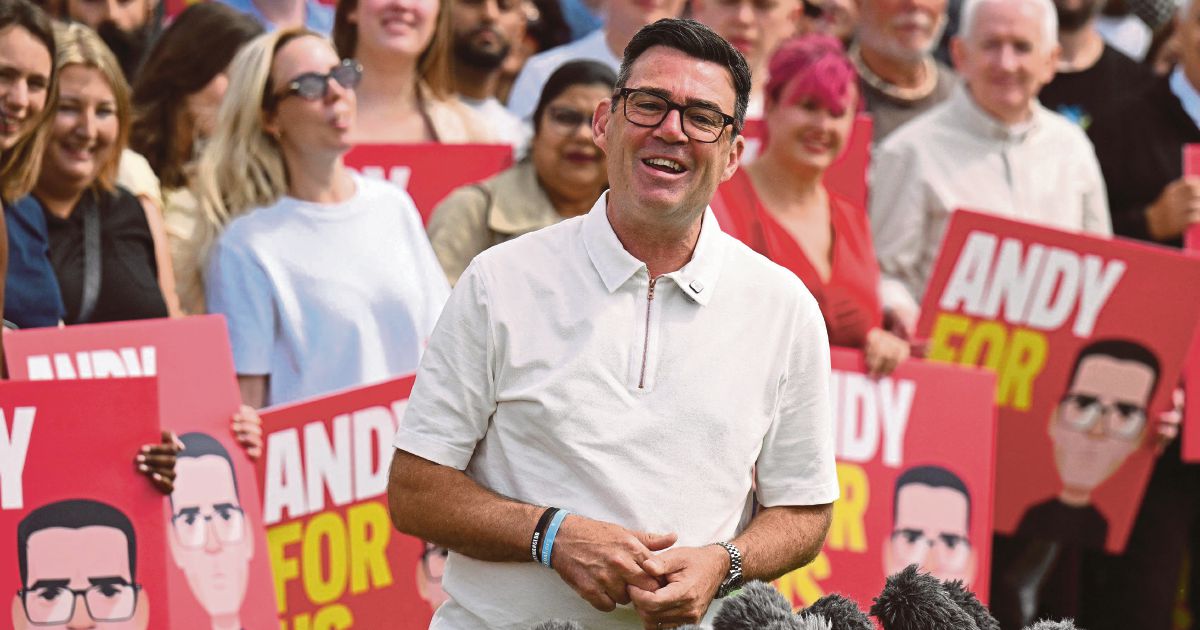
Andy Burnham, a figure long synonymous with advocacy for Northern England's interests, has assumed the office of Prime Minister, marking another shift in Britain's political leadership. His appointment on Monday represents the seventh change in the nation's top office within the past decade, underscoring the volatility that has characterised recent British politics. Burnham's rise to the premiership reflects the growing political weight of regional voices outside London, particularly those demanding greater attention to the pressing challenges facing ordinary households and communities across the country.
The incoming Prime Minister has articulated an ambitious agenda centred on what he terms "rewiring" the United Kingdom's institutional and political apparatus. This framing suggests not merely incremental adjustments but rather a comprehensive reimagining of how government prioritises spending, allocates resources, and structures its responses to national challenges. For observers in Southeast Asia watching Westminster politics, the concept of rewiring reflects a recognition that entrenched systems and traditional approaches have failed to deliver for significant portions of the British electorate, a phenomenon with echoes in regional democracies grappling with similar accountability questions.
Among Burnham's stated priorities is addressing the cost-of-living crisis that has burdened British households for several years. This issue transcends conventional left-right political divisions, reflecting genuine economic hardship affecting workers across sectors and regions. The squeeze on household budgets has been particularly acute in Northern England, the geographic base from which Burnham draws his political identity and electoral support. His elevation to the premiership thus represents, in some measure, a validation of regional economic grievances that earlier administrations appeared to downplay or mishandle.
Equally prominent in Burnham's stated vision is reform of the nation's public services, particularly the health, education, and social care systems. The National Health Service, in particular, has faced mounting criticism over waiting times, staff shortages, and treatment delays. These service failures have accumulated over years of budgetary constraints and systemic pressures, creating a political liability for the government and a genuine source of frustration for voters. The commitment to address service delivery deficiencies represents recognition that technical governance must accompany political ambition if voter confidence is to be restored.
Burnham's epithet as "King of the North" derives from his long tenure as Mayor of Greater Manchester, a role in which he championed regional autonomy and challenged Westminster's centralised approach to policymaking. His political career has been defined by advocacy for devolution, arguing that decisions affecting Northern communities should be made closer to those communities rather than by distant bureaucracies. This orientation suggests his premiership may see a recalibration of centre-periphery relationships within the British state, potentially offering more agency to regional authorities in addressing local problems.
The succession of seven prime ministers in a decade speaks to structural turbulence within British politics itself. Each change in leadership typically reflects either electoral rejection or intraparty instability, suggesting the political system has struggled to produce sustained, coherent governance. The frequency of these transitions creates practical challenges: policy continuity becomes difficult, institutional relationships require constant recalibration, and the government's ability to implement long-term strategic initiatives is compromised. For regional players like Malaysia observing international governance trends, the British experience illustrates the costs of political instability at the highest levels.
Burnham's appointment may also signal a shift in how British politics approaches regional inequality, an issue that has festered beneath Westminster debates for years. Northern England, despite its historical industrial significance and population, has experienced relative economic decline compared to London and the Southeast. Political movements in recent years have reflected this geographic divide, with Northern constituencies increasingly viewing Westminster as indifferent to their circumstances. A Prime Minister drawn from and identified with Northern interests may be expected to reverse, or at least address, this perception through policy and resource allocation.
The "rewiring" agenda, while rhetorically compelling, faces substantial practical challenges. Implementing systemic change across complex institutions requires parliamentary support, bureaucratic capacity, and sustained political will across an electoral cycle. Public services like the NHS cannot be transformed overnight; cost-of-living pressures reflect global economic forces only partly amenable to domestic policy solutions. The gap between the ambitious framing of Burnham's vision and the incremental pace of actual institutional change may become a source of subsequent political disappointment, a pattern familiar to leaders across democracies who inherit governance during periods of heightened public expectation.
For Malaysia and Southeast Asia, Burnham's accession merits attention as a case study in how established democracies manage regional grievances and institutional reform. The British experience suggests that political legitimacy requires not merely electoral victory but also demonstrable responsiveness to specific geographic and demographic constituencies. Moreover, the instability characterising recent British politics—while reflecting particular historical circumstances—raises broader questions about whether liberal democracies in mature, developed economies can sustain effective governance when political competition intensifies and traditional party structures weaken.
The months immediately ahead will test whether Burnham's reformist agenda can translate into tangible improvements in service delivery and economic conditions for British households. His background in regional governance and his explicit commitment to rewiring national institutions suggest at least a serious intent to deviate from patterns established by recent predecessors. Yet the true measure of his premiership will ultimately rest not on promises of systemic transformation but on whether ordinary Britons experience meaningful improvements in their living standards, health services, and access to opportunity—the fundamental metrics by which voters in any functioning democracy ultimately judge their leaders.

