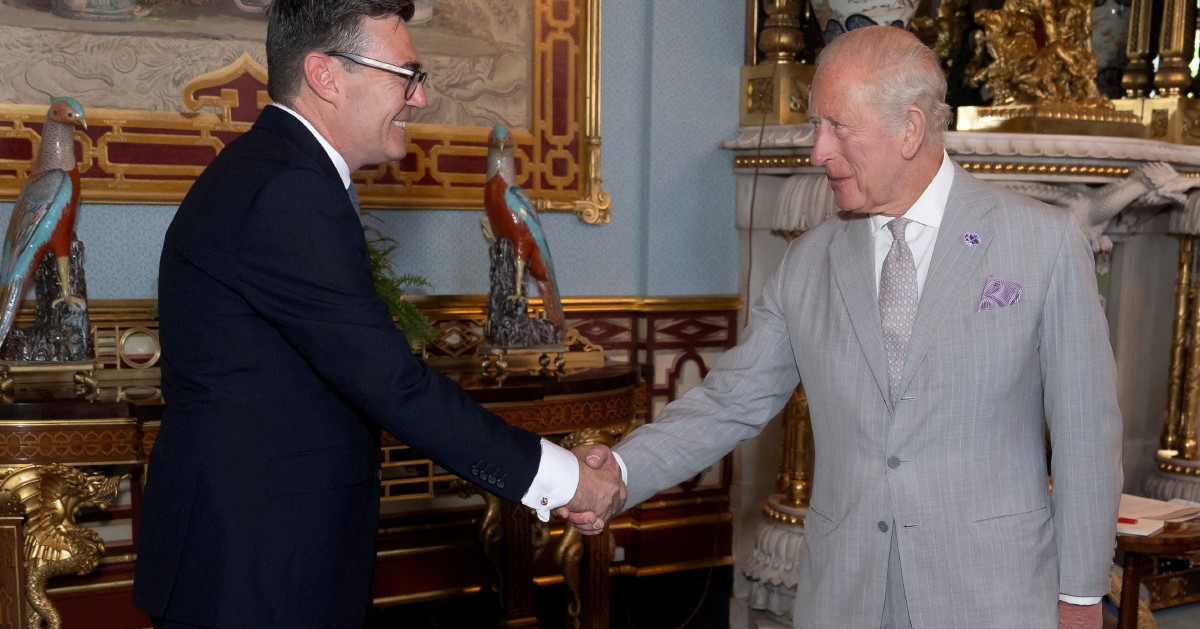
Andy Burnham formally assumed the office of British Prime Minister on Monday following a traditional audience with King Charles III at Buckingham Palace in London. The appointment marks a significant shift in British political leadership and represents a transition that comes after Keir Starmer's time in the top job. Burnham's path to the premiership reflects evolving dynamics within British politics and the Crown's ceremonial role in legitimising executive power transfer.
The meeting at the royal residence followed the established constitutional protocol that governs the appointment of British prime ministers. Burnham's audience with the King represents the formal moment when the monarch formally invites the newly designated premier to form a government and take the oath of office. This centuries-old ritual underscores the constitutional principles that separate the Crown's symbolic authority from the Prime Minister's executive responsibilities in the British parliamentary system.
Burnham's elevation to the premiership comes at a time when the United Kingdom faces considerable economic and social challenges. His assumption of office signals that governing parties believe the political and electoral landscape demands fresh leadership at the highest level. The transition occurs within the context of ongoing debates about cost-of-living pressures, healthcare reform, and economic growth that have dominated British political discourse in recent years.
As the new Prime Minister, Burnham is expected to articulate a comprehensive vision for the nation's future direction. This articulation of policy priorities and governing philosophy typically occurs through major speeches, parliamentary statements, and media engagements in the days and weeks following assumption of office. The specifics of his agenda will be closely scrutinised by MPs, media organisations, and the British electorate as they assess the potential outcomes of this leadership transition.
For Malaysian and Southeast Asian observers, the change in British leadership carries implications for regional engagement and bilateral relations. The United Kingdom maintains significant diplomatic, trade, and security partnerships across Southeast Asia, including with Malaysia. Leadership transitions in Westminster often result in reassessments of foreign policy priorities and can affect the intensity and focus of Britain's regional involvement. Burnham's government may recalibrate approach to Commonwealth relations, trade negotiations, and regional security matters that affect Southeast Asia.
The transition from Keir Starmer to Burnham demonstrates the flexibility of Westminster's parliamentary system, where prime ministerial changes can occur without requiring general elections if party members choose to replace their leader. This aspect of British constitutional practice differs significantly from many other democracies and reflects the centralised power that governing parties wield over executive transitions. The nature of this particular handover may provide insight into internal party dynamics and factional considerations within Burnham's party.
Burnham's background and political career will shape how he approaches the premiership and which issues receive priority within his government. His previous roles and experiences inform the policy positions and administrative style he brings to Number 10 Downing Street. Understanding his track record and stated priorities provides crucial context for assessing what changes his administration might implement across various policy domains.
The formal appointment process at Buckingham Palace represents a moment of institutional continuity despite the change in political leadership. King Charles III's role in the transition, while ceremonial, carries symbolic weight that connects contemporary governance to Britain's historical constitutional traditions. The ritual nature of the appointment underscores the stability mechanisms embedded within British democratic institutions, particularly the non-partisan role of the Crown in facilitating peaceful power transfers.
As Burnham prepares to outline his vision for the country, domestic and international observers will assess whether his premiership represents continuity with previous approaches or signals substantial departures from established policies. His decisions regarding economic management, public services, and domestic reform will carry implications beyond Britain's borders, affecting trade relationships and diplomatic partnerships across the Commonwealth and with nations like Malaysia that maintain strategic ties with London.
The appointment of a new Prime Minister also provides an opportunity to examine how British politics continues to evolve in response to demographic changes, technological transformation, and shifting global circumstances. Burnham's premiership will be tested against the country's pressing needs and the expectations of both his parliamentary colleagues and the broader electorate who will ultimately judge whether his leadership delivers the improvements and stability that voters seek.
In the context of regional developments, Malaysia and other Southeast Asian nations will monitor how Burnham's government approaches trade negotiations, technology partnerships, and security cooperation. The United Kingdom's strategic posture in Asia and its engagement with regional organisations and bilateral partners often depend significantly on the priorities and outlook of the Prime Minister. How Burnham chooses to position Britain within the evolving Asia-Pacific landscape may have tangible consequences for Malaysian interests and opportunities.

