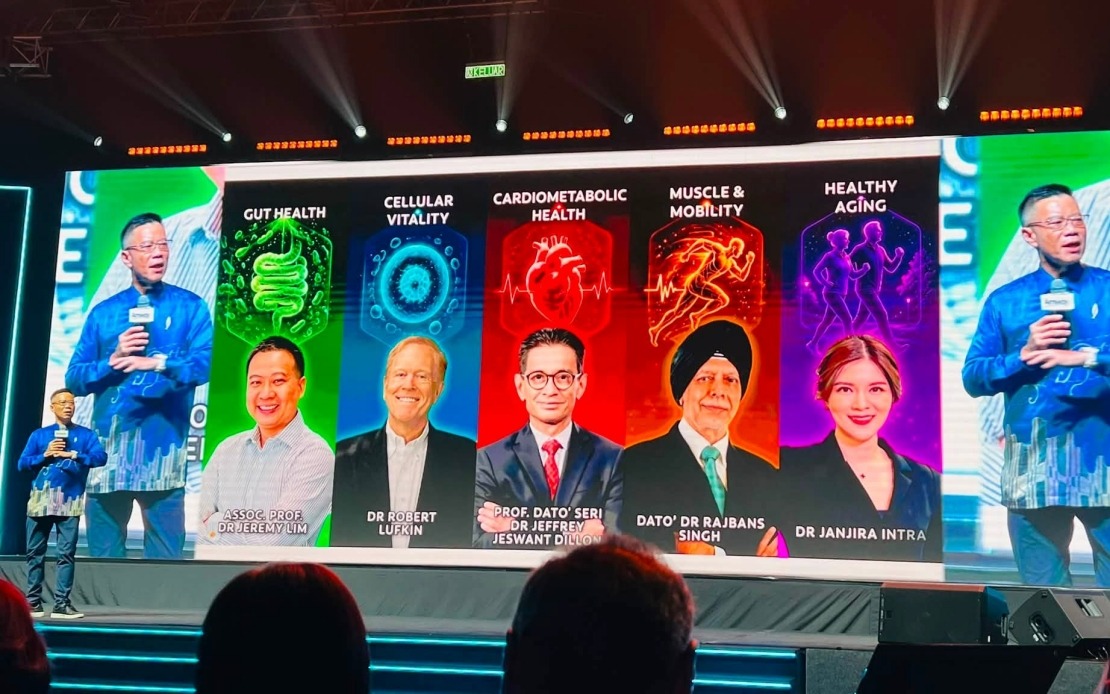
Amway Malaysia is substantially expanding its preventive healthcare advocacy as Malaysia transitions into a rapidly ageing society, marking a strategic pivot toward wellness promotion rather than illness management. The company recently hosted its inaugural Healthspan Summit in collaboration with the Malaysian Healthy Ageing Society (MHAS), drawing approximately 2,000 participants and professionals across multiple disciplines. Jason Leng, managing director for Amway Malaysia, Singapore and Brunei, characterised the gathering as a watershed moment in raising public consciousness about the importance of building both longevity and quality of life simultaneously.
The conceptual reframing that Leng emphasised during a recent press conference reflects a fundamental shift in how Malaysians might approach their health trajectories. Preventive care, he argued, extends far beyond the reactive model where individuals visit clinics or hospitals only after symptoms emerge or illness manifests. Instead, he positioned early intervention and lifestyle optimisation as proactive strategies that can substantially alter health outcomes across a lifespan. This messaging resonates particularly in Malaysia, where healthcare systems increasingly strain under the dual pressures of rising chronic disease prevalence and mounting aged-care demands.
The scale of corporate engagement signals genuine market recognition of demographic imperatives. Malaysia's population is ageing visibly, with the proportion of citizens aged 60 and above projected to rise significantly over the coming decades. This structural reality creates both social obligations and commercial opportunities for organisations positioned in wellness, nutrition, and preventive health sectors. Amway's summit attendance and the breadth of expert participation suggest that Malaysian audiences are receptive to preventive health messaging, even as systemic barriers—whether educational, economic, or cultural—continue to complicate widespread adoption of sustained lifestyle modifications.
Amway's experience with its complementary health screening initiative provides quantifiable evidence of this receptivity. The company initially targeted 50,000 utilised screening passes but has already surpassed that threshold, having distributed over 60,000 passes to date. This overperformance indicates that substantial demand exists among Malaysians for accessible health assessment opportunities. For a nation where many individuals lack regular contact with primary healthcare providers and where out-of-pocket expenses often deter preventive screening, corporate-sponsored initiatives can meaningfully extend coverage into underserved population segments.
However, Leng's emphasis on gradualism and incremental change introduces an important psychological dimension to the wellness agenda. Rather than promoting dramatic lifestyle upheaval—a approach that typically produces short-lived behaviour change followed by relapse—Amway's messaging advocates for small, consistent dietary and nutritional improvements woven into existing routines. This scaffolding approach aligns with behavioural psychology research demonstrating that sustainable health transformations emerge from compounding minor adjustments rather than shock-based interventions. For Malaysian workers navigating demanding employment schedules, family obligations, and economic pressures, such a philosophy may offer more credible and achievable pathways toward improved health than aspirational but unrealistic prescriptions.
The emphasis on community as a facilitating mechanism addresses a critical implementation challenge that individuals pursuing health improvements invariably encounter. Maintaining discipline in isolation proves extraordinarily difficult; social contexts, peer influence, and collective accountability structures substantially enhance persistence. Amway's community network, built across its multilevel marketing architecture, potentially leverages these social dynamics to encourage sustained engagement with healthier behaviours. Whether through formal wellness groups, informal peer support, or community-based challenges, this relational infrastructure can reinforce individual motivation when personal discipline falters.
Professor V. Nathan, president of the Malaysian Healthy Ageing Society, contextualised this corporate partnership as particularly timely given Malaysia's demographic trajectory. He stressed that ageing represents a continuous biological process beginning at birth rather than an abrupt transition at retirement, fundamentally reframing how society might approach prevention across the entire lifespan. His assertion that meaningful quality-of-life improvements remain possible even at advanced ages—citing documented research showing that 70-year-olds can substantially enhance their functional status through lifestyle modification—challenges ageist assumptions that often discourage health investment in older populations. This perspective carries particular weight in Malaysian cultural contexts where extended family structures and intergenerational responsibilities create tangible incentives for maintaining older adults' physical and cognitive functionality.
Prof Nathan's holistic articulation of healthy ageing encompasses dimensions frequently overlooked in simplified wellness messaging. Beyond nutrition and exercise, he identified caregiving arrangements, psychological wellbeing, social integration, and financial security as equally essential pillars. This multidimensional framework acknowledges that individuals exist within complex social and economic ecosystems where health cannot be divorced from broader life circumstances. For Malaysia specifically, where families increasingly face dual-income pressures and geographic dispersion that complicates traditional caregiving arrangements, this integrated approach carries particular relevance. Addressing healthy ageing therefore demands coordinated attention to employment practices, housing policy, social safety nets, and community infrastructure alongside individual behaviour change.
The collaboration between a multinational corporation and a professional health organisation represents an emerging governance model in which private sector resources, expertise, and distribution networks supplement government capacity and non-profit efforts. Amway's positioning of itself as a unifying force capable of orchestrating stakeholders toward collective health improvement reflects growing recognition that demographic transitions require coordination across sectors. Yet such partnerships inevitably involve commercial dimensions—corporate preventive health initiatives generate customer loyalty, product awareness, and market expansion opportunities. This does not necessarily undermine public health benefits, but it warrants acknowledgment that aligned interests do not automatically equate with comprehensive or equitable solutions.
For Malaysian policymakers and public health authorities, Amway's initiative presents both opportunities and considerations. The corporate engagement can extend preventive health messaging to populations that government resources alone might not efficiently reach, particularly among working-age adults embedded in commercial networks. The summit's substantial attendance demonstrates latent public interest in ageing-related health information. Conversely, the reliance on corporate vehicles to deliver public health advocacy potentially privileges populations with commercial connections over the most vulnerable elderly citizens, who often inhabit rural areas or lack disposable income for consumer-oriented health products. Genuine advancement toward healthier ageing across Malaysian society likely requires integrating corporate initiatives with strengthened primary healthcare systems, accessible mental health services, and structural supports for family caregiving.
The initiative also reflects shifting private sector recognition that population health constitutes a legitimate business concern extending beyond direct pharmaceutical or medical device markets. As chronic diseases increasingly dominate healthcare expenditure and mortality patterns across Southeast Asia, companies positioned in nutrition, wellness products, and preventive services find themselves defending market relevance by demonstrating broader health impacts. This commercial logic can align with genuine public health improvement, particularly when corporations invest in education and behaviour change rather than merely promoting product consumption. The critical distinction lies in whether preventive health messaging genuinely prioritises health outcomes or instrumentalises health concerns primarily to drive sales and customer acquisition.
For Malaysian individuals considering engagement with such initiatives, the practical value resides in accessing evidence-based health information, screening opportunities, and peer support systems that facilitate sustained behaviour change. The specific products or business model through which these benefits are delivered matter less than the actual health improvements achieved. Simultaneously, critical evaluation of messaging remains warranted—corporate wellness initiatives sometimes oversimplify complex health determinants or suggest that individual behaviour change alone can overcome structural barriers related to poverty, limited healthcare access, or environmental factors beyond personal control.
As Malaysia's population ages substantially over coming decades, preventive healthcare approaches will prove increasingly essential for maintaining workforce productivity, managing public health expenditure, and supporting quality of life across the lifespan. Corporate initiatives like Amway's Healthspan Summit can meaningfully contribute to this agenda by raising awareness, providing accessible screening, and fostering community-based support for health improvements. Such efforts gain greatest impact when coordinated with government health promotion, primary care system strengthening, and social policies that address the broader determinants of healthy ageing. The collaborative model emerging between businesses and professional health organisations may well become a defining feature of Malaysia's response to demographic transition.

