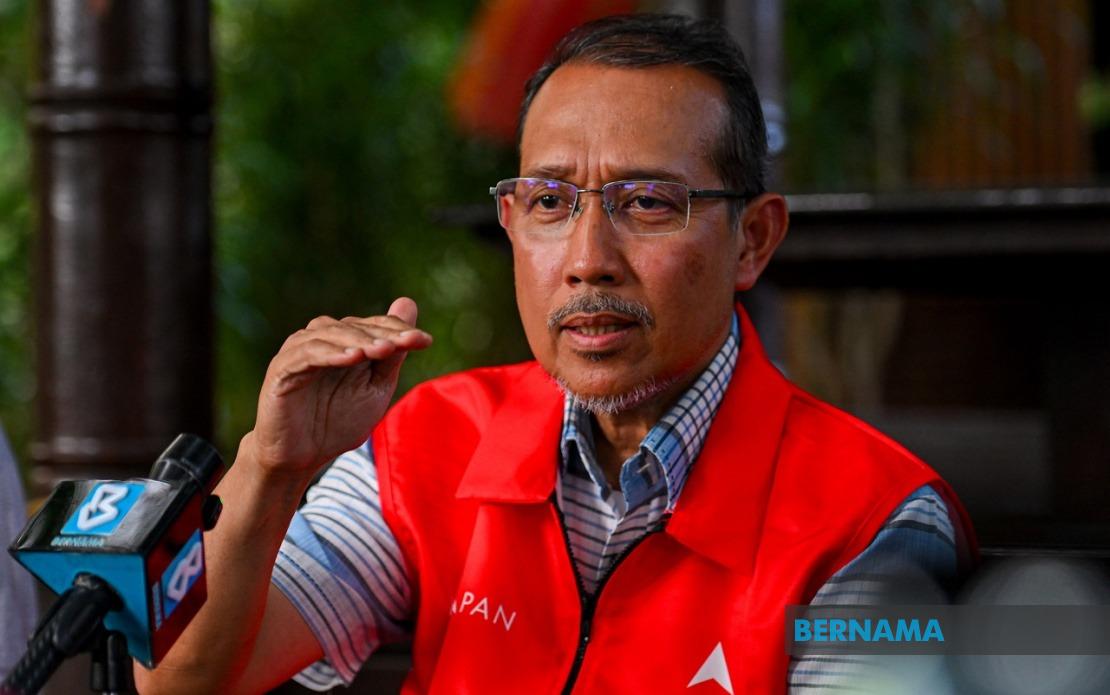
Seremban's Ampangan state seat will become a focal point of economic development and improved living standards should Pakatan Harapan candidate Datuk Muhammad Nazri Kassim secure the mandate in the Negeri Sembilan state election. Addressing campaign supporters in Seremban on July 22, he outlined a vision centred on transforming the central Seremban constituency into a thriving township that balances infrastructure quality with commercial opportunity. The Ampangan seat, with 21,336 registered voters, will face a three-cornered contest when Negeri Sembilan goes to the polls on August 1, with early voting beginning July 28.
Infrastructure maintenance emerges as Muhammad Nazri's foundational priority, reflecting lingering community concerns about drainage systems and flood resilience. The 2021 major flooding incidents that devastated parts of Ampangan demonstrated vulnerability in basic maintenance regimes across roads, drains, ditches and waterways. His emphasis on preventative infrastructure upkeep signals acknowledgment of how poor maintenance compounds seasonal risks. The candidate points to recent collaborative river management efforts undertaken by the Negeri Sembilan government as a model that has demonstrably reduced severe flooding incidents over the preceding three to four years, suggesting that sustained institutional coordination can produce tangible results for resident safety.
Beyond flood prevention, Muhammad Nazri recognises that properly maintained rivers present dormant recreational and lifestyle potential currently underutilised by the constituency. The vision encompasses transforming these waterways into active spaces for jogging, cycling, and organised sports activities, aligning with broader Southeast Asian trends toward integrating public health infrastructure with community gathering spaces. This approach ties environmental stewardship directly to quality-of-life improvements, framing infrastructure spending not as mere maintenance but as foundation for social wellbeing.
The economic revitalisation strategy centres on Ampangan's strategic geographic position within Seremban's commercial heart. Muhammad Nazri proposes rejuvenating the Benteng area as a focal point for visitor attraction and commerce, recognising that many Malaysian state capitals underutilise their central constituencies for locally-driven economic activity. By creating conditions that draw visitors through improved aesthetics and functional infrastructure, the plan aims to generate income opportunities for small traders and local entrepreneurs who currently operate in less optimal conditions. This bottom-up economic approach prioritises grassroots business development rather than large-scale commercial intervention.
The candidate's environmental framing—clean surroundings, attractive landscaping, well-maintained drainage—represents recognition that aesthetic quality directly influences commercial viability in Malaysia's competitive retail and hospitality landscape. Traders establish businesses in locations perceived as clean, organised, and maintained; conversely, visible disrepair deters customers and suppresses entrepreneurial confidence. By positioning infrastructure investment as economic enablement, Muhammad Nazri connects resident quality of life directly to income generation opportunities, suggesting that public maintenance expenditure yields measurable private economic returns.
His campaign methodology emphasises direct constituent engagement through house-to-house visits rather than mass rallies or media-centric approaches. This granular contact strategy reportedly enables candidates to identify specific resident concerns and formulate responsive solutions rather than applying generic policy templates. In Malaysian electoral contexts where local issues frequently outweigh national narratives, such targeted engagement can prove decisive, particularly among communities with established relationships with incumbent representatives or where multiple candidates compete for similar voter demographics.
The three-cornered contest between Muhammad Nazri of Pakatan Harapan, Datuk Dr Mohamad Rafie Malek representing Perikatan Nasional, and Noor'azah Harun of Parti Pribumi Bersatu Malaysia reflects fragmentation within Malaysia's opposition and Malay-Muslim political landscape. Ampangan's 21,336 registered voters will determine outcomes among candidates representing different coalitional arrangements, suggesting that local economic messaging and infrastructural track records may prove more decisive than national political positioning.
Muhammad Nazri's participation in campaign events alongside Prime Minister Datuk Seri Anwar Ibrahim, the Pakatan Harapan chairman, indicates central party investment in this Negeri Sembilan contest. Such high-level engagement signals either competitive difficulty or strategic importance to national PH positioning in the state. Negeri Sembilan has historically represented a battleground state where coalition strength fluctuates based on state-level personalities and local economic conditions rather than exclusively on national political trends.
The Ampangan constituency's location within the Seremban parliamentary seat creates layered electoral interdependencies where state and federal representation intersect. Voters' economic concerns—employment, small business viability, tourism potential—operate simultaneously at state and national policy levels. Muhammad Nazri's infrastructure focus addresses immediate state-level service delivery while implicitly positioning Ampangan as constituency deserving proportionate state-level resource allocation and state government attention.
For Malaysian voters broadly and Negeri Sembilan residents specifically, the Ampangan contest illustrates how contemporary electoral competition increasingly centres on deliverable, observable infrastructure outcomes rather than abstract ideological positioning. The emphasis on flood prevention, river maintenance, tourism development, and small trader support reflects pragmatic constituent expectations for visible governmental performance. As Negeri Sembilan's August 1 election approaches, such locally-grounded economic visions likely influence voting patterns more substantially than national coalition alignments.

