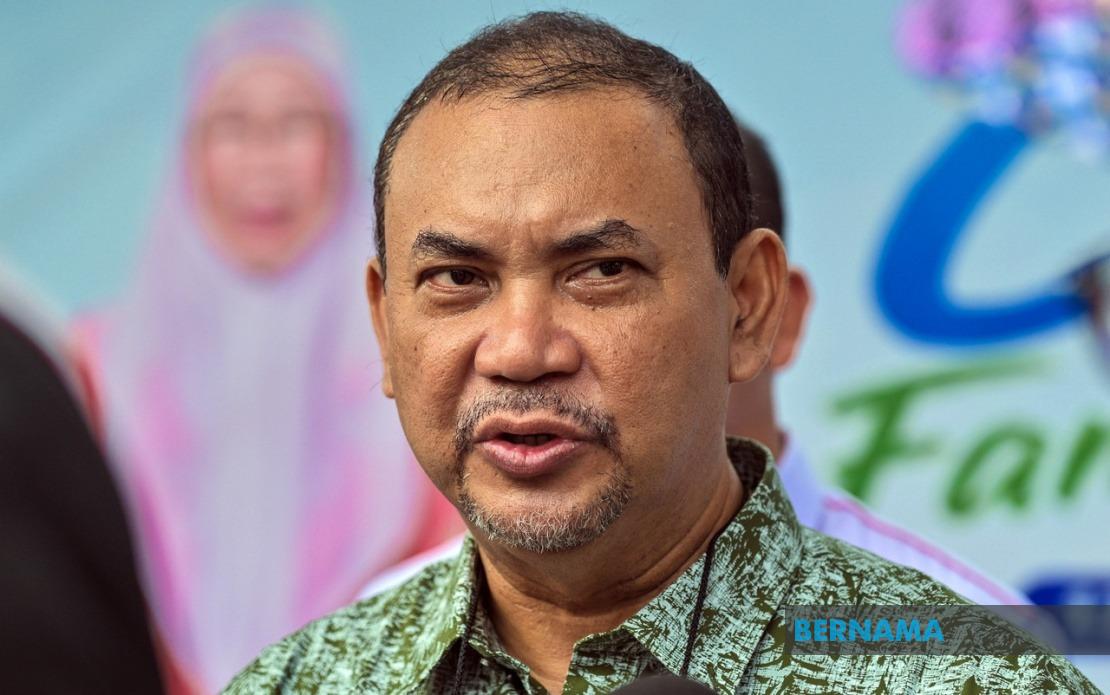
Datuk Azman Abidin, who serves as Prime Minister's Political Secretary and has been tasked as Ampang Parliamentary Constituency Coordinator, has made a comprehensive commitment to enhance how residents receive government support. Following his appointment by Prime Minister Datuk Seri Anwar Ibrahim, Abidin outlined a structured approach designed to ensure assistance programmes reach beneficiaries more effectively and with greater transparency.
The coordination framework that Abidin intends to establish represents a significant shift towards centralising welfare applications and support requests. Rather than residents navigating multiple government channels, applications related to Ampang constituents will be directed to the Office of the Prime Minister's Political Secretary, which will then facilitate the necessary processing and distribution. This consolidation reflects a broader government objective to reduce bureaucratic friction and ensure that assistance reaches intended recipients without unnecessary delays.
Abidin's strategy involves close partnership with the Implementation Coordination Unit within the Prime Minister's Department, an agency tasked with monitoring government programme delivery. By integrating this unit into the welfare coordination system, the approach aims to create accountability checkpoints that verify assistance is being distributed according to policy guidelines. This collaboration between the political secretary's office and JPM's operational unit establishes dual oversight that could reduce administrative gaps.
The coordination extends beyond government agencies to encompass local representation and community structures. Abidin emphasised that assemblymen within the Ampang parliamentary constituency, together with community leaders and relevant stakeholders, will be brought into the distribution network. This multi-tiered approach recognises that elected representatives and grassroots leaders possess on-the-ground knowledge about resident needs and can facilitate more targeted, contextually appropriate support allocation.
For Malaysian residents familiar with welfare application processes, the centralised access point offers practical advantages. Previously, constituents seeking assistance might have encountered difficulty determining which agency handled specific support categories or where to submit applications. By funnelling requests through the Political Secretary's office, the system creates a single point of contact while maintaining backend coordination across different government departments and agencies responsible for distinct welfare programmes.
The emphasis on professionalism, integrity and accountability that Abidin highlighted addresses longstanding public concerns about how welfare assistance is administered. These commitments, if implemented rigorously, could help establish clearer criteria for eligibility, more transparent decision-making processes, and better record-keeping that demonstrates how public resources are allocated. Such measures matter particularly in constituencies where demographic diversity and varied socioeconomic conditions mean residents have different support needs.
Ampang, as a constituency encompassing parts of Kuala Lumpur and Selangor, represents significant urban and semi-urban populations whose welfare needs span employment assistance, housing support, healthcare subsidies, and education grants. The coordination framework Abidin proposes must accommodate this complexity while maintaining efficiency. The involvement of multiple tiers of government and local structures provides mechanisms to address both standardised assistance programmes and locally-specific interventions.
From a broader governance perspective, the appointment of a dedicated coordinator signals priority placement of Ampang within the Prime Minister's Office framework. This positioning potentially gives the constituency direct access to higher levels of decision-making compared to standard ministry-level welfare administration. Residents and stakeholders can escalate issues through this enhanced channel, though effectiveness will ultimately depend on how the political secretary's office allocates resources and attention across its various responsibilities.
The implementation of such a system also requires clear communication with residents about how the new process functions and what documentation constituents should prepare when submitting assistance applications. Success depends not only on government coordination but equally on public awareness and understanding of the streamlined pathway. Community leaders who serve as intermediaries must themselves be informed and equipped to guide constituents through the system.
Abidin's commitment to ongoing coordination with community leaders and elected representatives suggests recognition that top-down government administration, without regular consultation with those closest to residents, risks missing genuine on-the-ground concerns. Regular engagement between the political secretary's office and local representatives could generate feedback about which assistance programmes are functioning effectively and where bottlenecks or gaps persist.
The broader context for this constituency-level coordination initiative reflects government efforts to make welfare delivery more responsive and efficient across Malaysia. As federal and state welfare programmes have expanded, concerns about duplication, gaps, and accessibility have grown. Appointing dedicated coordinators at the constituency level represents one approach to addressing these challenges, though it requires coordination across multiple government levels and agencies with different administrative cultures and capacity.
Moving forward, measuring the success of Abidin's initiative will require tracking how efficiently applications are processed, what percentage of requests result in successful assistance provision, and whether constituents perceive genuine improvements in accessibility. Transparency about outcomes will be essential for maintaining public confidence that the system serves genuine welfare purposes rather than functioning primarily as a political patronage mechanism. The principles of accountability Abidin articulated must translate into publicly demonstrable results.

