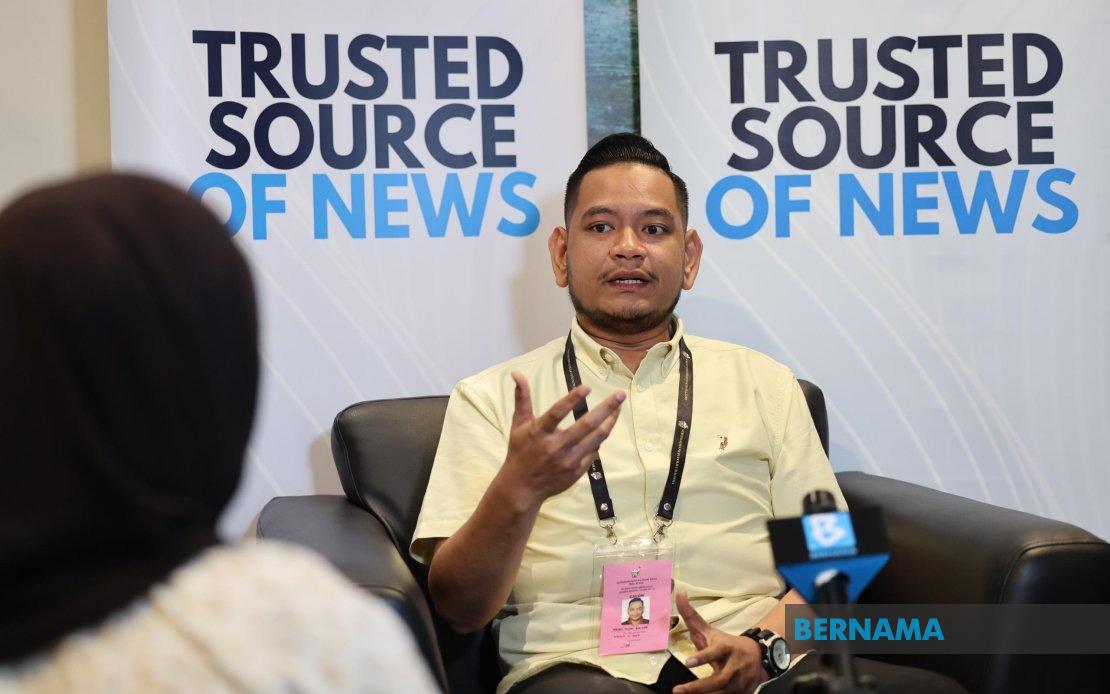
The Johor state election on July 11 will test whether voters in the rural Sedili constituency embrace generational change. Amirul Huzni Onn, the 29-year-old Parti Amanah Negara candidate fielded by the Pakatan Harapan coalition, enters the race as the youngest contender in a triangular contest against two considerably more seasoned political operators. Rather than viewing his lack of political experience as a liability, he has positioned it as a defining strength, arguing that his status as a relative newcomer to electoral politics offers Sedili voters something distinctly different from the incumbent and opposing candidates.
Sedili has long been regarded as a Barisan Nasional stronghold, making this contest an uphill climb for the PH-backed candidate. His opponents include Muszaide Makmor, the sitting BN representative, and Rasman Ithnain, a veteran assemblyman who previously held the seat for three consecutive terms and now represents Perikatan Nasional. These rivals collectively bring decades of legislative experience and established networks within the constituency. Yet Amirul Huzni has reframed this disparity in political capital as an opportunity rather than a constraint, suggesting that fresh approaches and unburdened perspectives may resonate with constituents fatigued by traditional politics.
In an interview with Bernama, the Amanah Youth chief articulated his campaign strategy around the concept of political neutrality and generational renewal. He likened younger candidates to blank canvases, unencumbered by the accumulated failures and unfulfilled promises that sometimes haunt longer-serving politicians. While acknowledging that he lacks the traditional sources of influence and patronage networks that typically advantage established candidates, he contended that electoral contests ultimately reduce to a simple binary outcome, and that every generation must have the opportunity to demonstrate its capacity for leadership and service. This framing appeals to a specific demographic of voters who may view conventional political structures with skepticism.
Amirul Huzni's campaign platform deliberately avoids grandiose pledges that stretch credibility or exceed achievable deliverables. Instead, his focus narrows to tangible, locally-rooted concerns that directly impact residents' daily lives. This approach reflects a broader shift among younger political candidates across Southeast Asia who prioritize pragmatism and specificity over sweeping ideological manifestos. His signature policy initiative centers on completing the long-delayed construction of a petrol station within Sedili, a facility that local fishermen, boat operators, and recreational anglers have awaited for years. The candidate emphasizes that essential groundwork has already occurred—the site has been identified and the land cleared for over a year—yet the project remains stalled. For a coastal constituency dependent on maritime activities, reliable fuel access represents a genuine practical concern rather than abstract policy rhetoric.
This focus on concrete infrastructure also reveals something about how younger political aspirants in Malaysia are calibrating their messaging to constituent expectations. Rather than promising transformative policy or criticizing opponents at length, Amirul Huzni concentrates on removing specific bureaucratic obstacles that have thwarted development. Such an approach may prove particularly persuasive among working-class voters in rural constituencies, who often prioritize immediate, visible improvements over complex political restructuring. The petrol station becomes a symbol of effective representation—evidence that their elected representative can actually execute promises and navigate governmental systems to deliver results.
Regarding campaign conduct, Amirul Huzni has emphasized the importance of maintaining dignity, mutual respect, and maturity throughout the election period. He has explicitly committed to civil engagement with his opponents and endeavored to preserve social cohesion within Sedili by avoiding acrimonious rhetoric or personal attacks. This stance reflects both a pragmatic recognition that harsh campaigning could alienate swing voters in a tight race and a philosophical commitment to democratic norms. In Malaysian state elections, where constituencies often comprise interconnected communities where rivals remain neighbors after polling concludes, candidates who campaign respectfully frequently build goodwill that extends beyond election day. Amirul Huzni's self-positioning as a candidate who campaigns in healthy competitive spirit rather than combat mode may hold particular appeal for voters fatigued by polarizing rhetoric.
The Sedili contest sits within the broader context of the sixteenth Johor state election, representing one among dozens of individual races that collectively determine the state's political direction. Early voting will occur on July 7, with the main polling day scheduled for July 11. For PH, reclaiming or substantially improving its performance in BN strongholds like Sedili would signal renewed competitiveness in one of Malaysia's most politically significant states. Johor's electoral landscape has shifted considerably in recent years, with voters increasingly willing to split tickets and shift allegiances based on local issues and candidate quality rather than rigid party loyalty. This fluidity creates genuine opportunities for challengers who can articulate compelling local narratives.
Amirul Huzni's candidacy also reflects broader demographic changes within Malaysia's political system. Younger candidates without entrenched factional ties sometimes enjoy unexpected advantages in primary elections and can attract voters seeking alternatives to aging political establishments. His Amanah affiliation positions him within the progressive wing of the PH coalition, appealing to voters concerned with institutional reform, anti-corruption measures, and younger generational perspectives. However, converting youthful appeal into actual electoral victory requires mobilizing supporters who actually participate in voting—a particular challenge in state elections where turnout tends to decline compared to federal contests.
The material conditions within Sedili itself will substantially influence the contest's outcome. As a coastal constituency with significant fishing communities, the electorate likely prioritizes practical concerns around livelihood support, port facilities, market access, and resource security over abstract ideological appeals. Amirul Huzni's emphasis on the petrol station demonstrates awareness of these economic realities. His campaign appears designed to demonstrate that he understands the specific circumstances of his constituents' lives and possesses realistic solutions rather than merely occupying a vacant slot on a ballot. In constituencies where electoral margins often prove narrow, such targeted local focus frequently proves decisive.
For Malaysia's broader political evolution, the outcome in Sedili and similar contests involving young PH candidates will indicate whether the electorate remains receptive to generational change within competitive party systems. Amirul Huzni's willingness to contest despite facing experienced opponents in an opposition-challenging stronghold itself represents a form of political courage. Whether voters ultimately endorse his message that youth, fresh perspective, and earnest commitment to local improvement outweigh his opponents' accumulated experience remains the central question as July 11 approaches.

