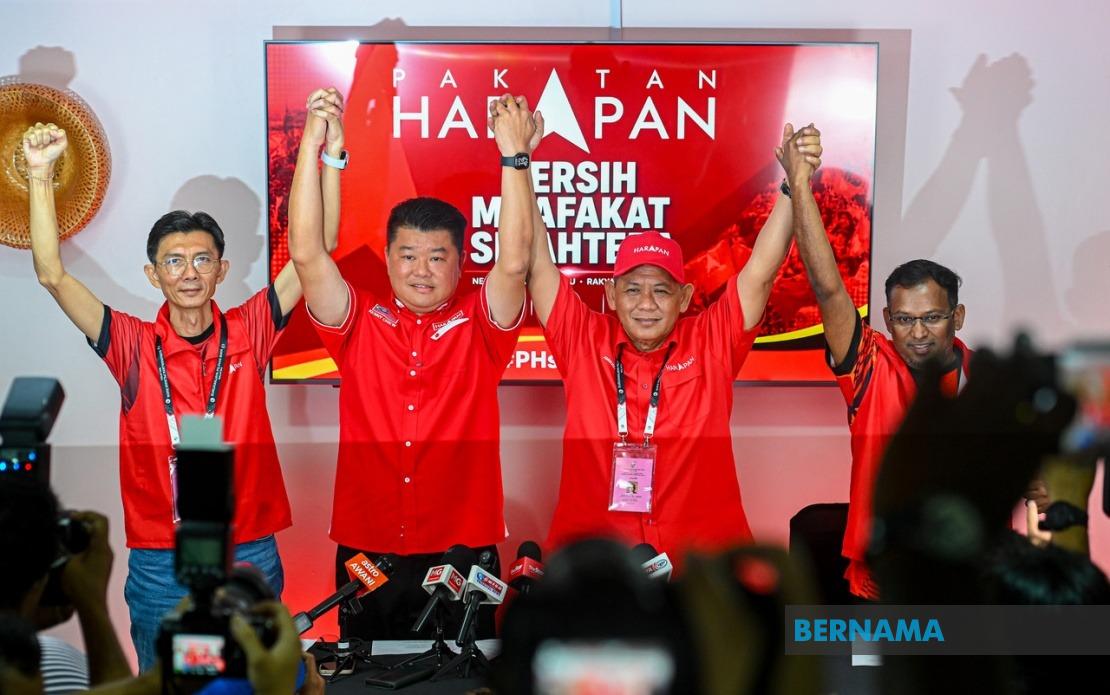
Datuk Seri Aminuddin Harun, the Negeri Sembilan Pakatan Harapan chairman and menteri besar, has moved to quell speculation of discord within the opposition coalition's upper ranks and campaign structures, particularly across the five state constituencies that fall under the Port Dickson parliamentary seat. Speaking at a press conference in Port Dickson on July 20, Aminuddin rejected suggestions that the coalition's machinery was fractured or that senior figures disagreed on electoral strategy, asserting instead that party officials and campaign operatives were working cohesively to deliver victories for PH-backed candidates across the region.
The leadership's unity statement carries particular weight given brewing concerns about internal tensions involving Port Dickson PKR deputy division chief Datuk Kenny Chiew Chi Kin, a figure whose exclusion from the candidate slate had generated discussion across social media platforms. Aminuddin, who also heads the PKR's state-level organisation, acknowledged that the matter surrounding the renomination of Chuah incumbent Datuk Yew Boon Lye had surfaced in public discourse but insisted all disagreements had been settled through internal party processes. The resolution, according to the menteri besar, demonstrated the coalition's capacity to manage leadership disputes without allowing them to undermine electoral preparation.
Aminuddin's characterisation of Chiew's position within the party hierarchy suggested an attempt to reposition the deputy division chief as a committed organisational member despite his non-selection as a candidate. The menteri besar indicated that Chiew had communicated his unreserved backing for all PH candidates contesting the state election, framing the deputy chief's commitment as evidence of mature party discipline. By highlighting Chiew's contributions to strengthening the Port Dickson division and his willingness to support the broader coalition effort, Aminuddin sought to neutralise potential grievances and demonstrate that internal disagreement over candidacy could be compartmentalised without poisoning relationships between party figures.
The Port Dickson MP, who himself is contesting the Linggi state seat as PH's candidate, further suggested that external actors were deliberately amplifying speculation about coalition tensions to damage PH's public standing ahead of voting. This characterisation of negative commentary as orchestrated propaganda—rather than reflecting genuine organisational concerns—reflected a common political defensive posture, one designed to dismiss criticism as lacking authentic grounding within the party structure. By attributing the speculation to unnamed quarters seeking to portray Pakatan Harapan unfavourably, Aminuddin deflected focus from the substantive fact that candidate selection processes had generated sufficient internal discussion to merit public clarification.
The Chuah constituency presents a meaningful test of PH's electoral viability in this region. During the 2023 state election cycle, Yew Boon Lye secured the seat with a commanding majority of 6,298 votes, defeating Perikatan Nasional candidate Tang Jay Son. The incumbent's renomination for the upcoming contest suggests PH's confidence in Yew's local standing, though the fact that his nomination required explicit internal negotiation and subsequent public reassurance indicates the selection was not universally uncontested within party circles. In the current election, Yew faces competition from Barisan Nasional's Pau Jeou Ching, positioning the race as part of a broader three-way contest between Pakatan Harapan, Perikatan Nasional, and the ruling Barisan coalition.
The five constituencies under discussion—Chuah, Lukut, Sri Tanjung, Bagan Pinang, and Linggi—collectively determine whether PH can maintain or expand its presence within the Port Dickson parliamentary division. Aminuddin's emphasis on the need for coordinated campaigning across these five state seats reflects an understanding that fragmented messaging or visible internal disagreement could jeopardise what the coalition perceives as winnable ground. The menteri besar's public endorsement of unified campaign machinery serves a dual purpose: it reassures grassroots party members and supporters that leadership conflicts have not weakened the organisation, while simultaneously signalling to potential voters that PH presents a coherent alternative to Barisan and Perikatan.
For Malaysian observers tracking opposition coalition dynamics, the timing of Aminuddin's statement—approximately one week before early voting and slightly more than a week before general polling—underscores the critical nature of this election window. Any perception of internal discord could depress voter turnout or create openings for Barisan and Perikatan to exploit, particularly in constituencies where margins are expected to be narrow. The menteri besar's decision to address speculation directly rather than allowing it to circulate unchallenged suggests PH strategists recognised the potential reputational damage of allowing questions about leadership unity to persist uncontested in the information environment.
The episode also illustrates broader challenges facing opposition coalitions in Malaysia, where different parties maintain distinct organisational identities and sometimes divergent interests despite formal alliance arrangements. PKR, Democratic Action Party, and other PH components must continuously negotiate candidate distributions, leadership roles, and campaign priorities, and these negotiations occasionally become visible to the public. Aminuddin's characterisation of the Chiew situation as a resolved internal matter reflected an effort to normalise such negotiations as routine party business rather than symptomatic of fundamental coalition dysfunction. Whether this framing proves persuasive to voters will become clearer following the election cycle.
The electoral calendar itself concentrates attention on execution in the immediate term. Early voting was scheduled for July 28, with general polling set for August 1. This compressed timeframe means that campaign momentum established in the final two weeks preceding polling day carries outsized importance, and any narrative suggesting that a coalition's internal coherence is questionable could influence voting calculations among swing voters or those still undecided between competing coalitions. Aminuddin's proactive intervention in the narrative space attempted to stabilise PH's public positioning by asserting unambiguous support for all candidates from the party leadership level downward.
For Negeri Sembilan voters evaluating their choices across these five constituencies, the broader question concerns whether Pakatan Harapan's vision and governance approach offer more compelling alternatives than the incumbency claims of Barisan Nasional or the reform messaging of Perikatan Nasional. Aminuddin's emphasis on leadership unity and coordinated campaign effort positioned PH as the organised, cohesive option. The eventual outcomes in Chuah, Lukut, Sri Tanjung, Bagan Pinang, and Linggi will test whether voters found that positioning credible and whether internal party processes around candidate selection ultimately mattered to their voting decisions. The menteri besar's public reassurance of coalition stability represents an investment in maintaining voter confidence during a period when multiple political forces are competing intensely for support across the Port Dickson parliamentary division.

