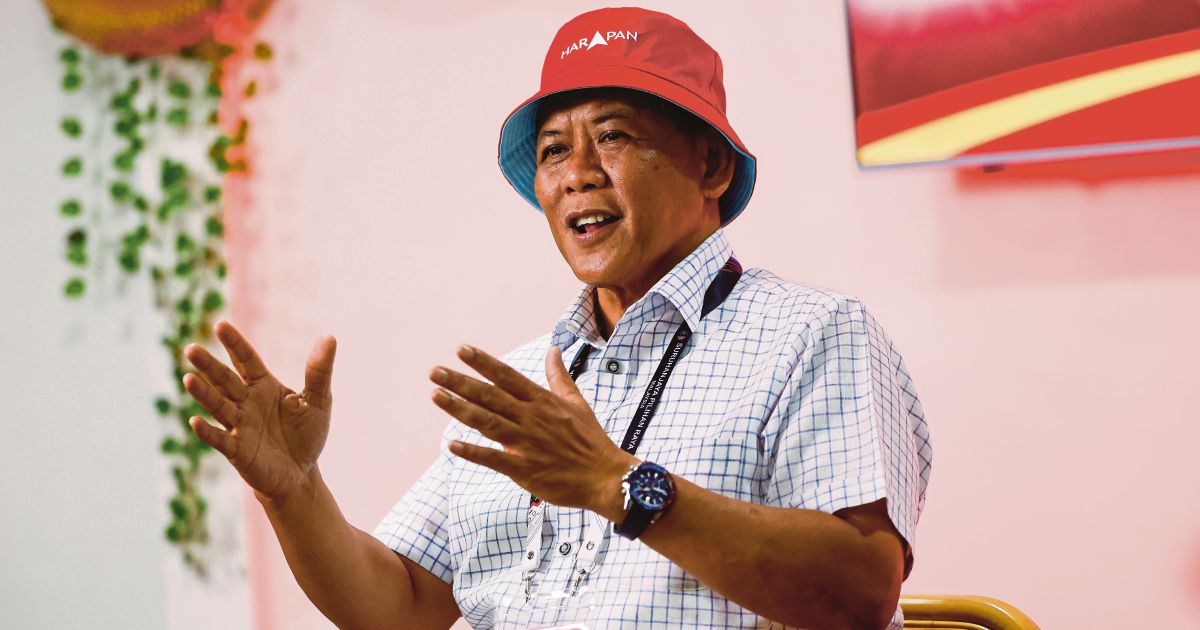
Datuk Seri Aminuddin Harun, who carries the dual responsibility of leading Negri Sembilan as caretaker Menteri Besar, is banking on his government's demonstrated achievements to retain his grip on the Linggi constituency in the state's upcoming 16th election. The seasoned administrator has publicly articulated confidence that voters will recognise and reward the administration's policy implementation and infrastructure development across their electoral district.
The Linggi constituency, strategically positioned within Port Dickson's broader electoral landscape, represents a crucial battleground in Negri Sembilan's state-level contest. As a sitting representative, Aminuddin carries the institutional advantage of incumbency, allowing him to highlight tangible outcomes from government programmes and resource allocation directed towards the constituency. The dynamics of this particular seat carry implications beyond local representation, as the result will contribute meaningfully to the overall composition of the state assembly.
Aminuddin's campaign strategy centres on a performance-based appeal to voters, emphasizing concrete deliverables rather than promises. This approach reflects a calculated assessment that Linggi residents will prioritise demonstrated competence and effective governance over rhetorical commitments. The positioning allows him to draw distinctions with opposition narratives by pointing to implemented policies and completed or ongoing development projects that directly benefit constituents.
The broader context of Negri Sembilan's political trajectory shapes this electoral contest. The state has experienced its own political evolution, with governance priorities shifting in response to demographic and economic pressures. Aminuddin's tenure as Menteri Besar has established a particular administrative style and policy direction that voters must evaluate in the upcoming election. His willingness to highlight this record suggests confidence that the electorate will reward continuity and proven competence.
Infrastructure development typically features prominently in such appeals. Voters in constituencies like Linggi assess their quality of life through access to roads, utilities, healthcare facilities, education amenities, and commercial opportunities. If Aminuddin's administration has successfully delivered in these domains, the messaging becomes naturally compelling without requiring exaggeration. The caretaker government's resource allocation patterns and project completion timelines therefore constitute the factual foundation for this electoral pitch.
Economic management represents another dimension of the governance narrative. Negri Sembilan's economy encompasses manufacturing, agriculture, and service sectors, with Port Dickson serving as a significant commercial and industrial node. Aminuddin's administration would point to economic indicators, employment generation, and investment attraction as measurable outcomes of their stewardship. For Linggi voters engaged in commerce, manufacturing, or dependent sectors, these metrics carry tangible relevance to their livelihoods and family prosperity.
The timing of state elections creates particular dynamics for caretaker administrations. Aminuddin operates within constraints that distinguish his position from an elected government with a fresh mandate. Voters must weigh whether they wish to repose confidence in proven leadership continuity or whether they prefer political change. This choice becomes particularly acute in constituencies where the incumbent has maintained relatively high public visibility and consistent engagement with constituents throughout the tenure.
Opposition challenges in Linggi will likely emphasise alternative visions and critique aspects of the sitting government's record. However, the burden of persuasion rests somewhat differently on challengers, who must articulate why change proves preferable to continuity and must often overcome the structural advantages of incumbency. Aminuddin's confidence in appealing to voters through the government's track record suggests he believes his achievements sufficiently outweigh any accumulated grievances or calls for change.
Local issues invariably dominate constituency-level campaigns regardless of broader state or national political currents. Linggi residents care fundamentally about their immediate environment, safety, services, and economic opportunities. If Aminuddin has successfully addressed pressing local concerns—whether rubbish collection, traffic management, school conditions, or business environment—these constitute powerful electoral arguments that transcend ideological positioning.
The polling arithmetic in Negri Sembilan state elections determines not only individual constituency outcomes but shapes overall government formation. A strong Linggi result for Aminuddin contributes to party or coalition strength statewide, while a defeat would undermine the broader campaign narrative and electoral prospects. This interconnection means that local contests carry ramifications extending well beyond their geographical boundaries.
Voter sentiment in marginal constituencies like Linggi often reflects pragmatic assessments of governance quality rather than tribal political loyalties. Residents in such seats operate in a genuine competitive environment where election results remain genuinely uncertain, motivating higher engagement from all contenders and potentially greater voter attentiveness to actual performance records versus mere promises. Aminuddin's strategy implicitly acknowledges this reality.
As the election approaches, the caretaker Menteri Besar's confidence rests on the assumption that his administration's development initiatives, policy effectiveness, and constituent services have created sufficient goodwill and satisfaction to overcome any desire for political change. Whether this calculation proves accurate will become evident through the voting patterns in Linggi and across Negri Sembilan.

