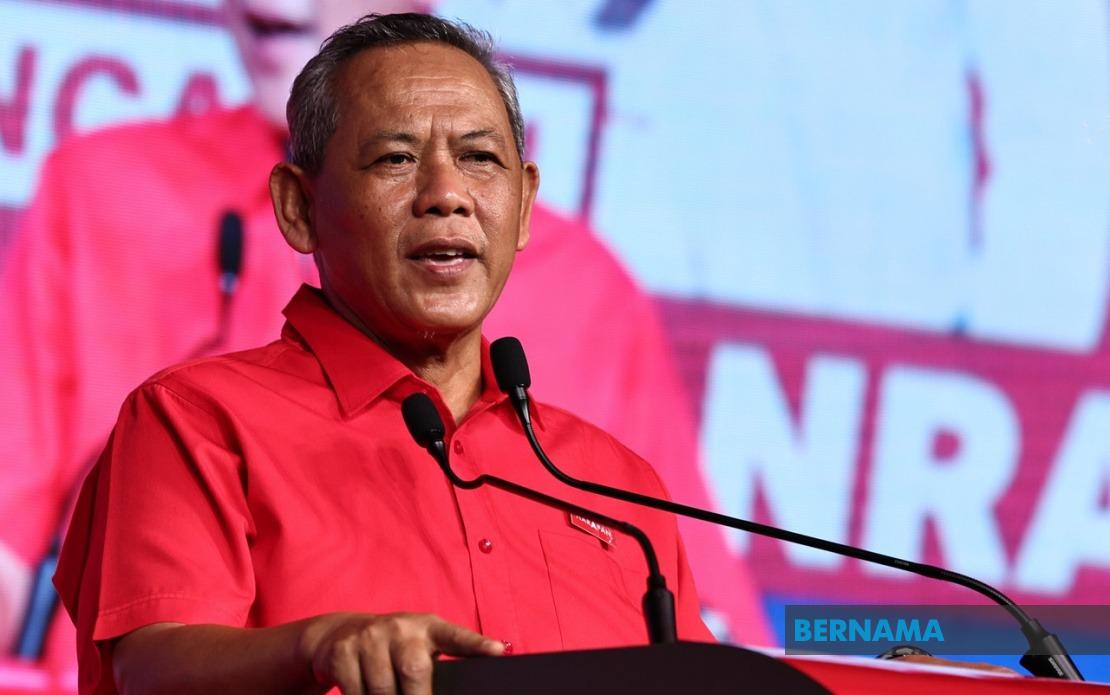
Menteri Besar Datuk Seri Aminuddin Harun has moved to quash speculation that his decision to contest the Linggi state seat in the forthcoming Negeri Sembilan election amounts to a calculated dodge of his incumbent Sikamat constituency. Speaking from Seremban, the Pakatan Harapan (PH) political veteran characterised the transition as entirely his own choice, rejecting the narrative that he is retreating from a defensive position that has become untenable.
The Negeri Sembilan PH chairman articulated his commitment to the Linggi electorate with language mirroring his historical positioning. He expressed confidence that should voters return him to office, he would channel the same energy and passion for constituent service that characterised his four consecutive terms representing Sikamat. The framing of continuity rather than departure underscores his effort to reposition the move as an expansion of his political footprint rather than a withdrawal from troubled ground.
Aminuddin's retrospective account of his Sikamat journey reveals the arc of a political operator navigating Malaysia's shifting landscape over two decades. His recollection of operating from cramped premises above a shopfront, constrained by minimal budgetary allocations during opposition years, constructs a narrative of struggle-turned-success. This historical grounding serves a rhetorical purpose: it reminds constituents of his sacrificial earlier years whilst simultaneously normalising his departure as the natural progression of a maturing political career. The anecdote functions as both gratitude and justification.
The structural reality underpinning his move deserves scrutiny in the Malaysian electoral context. Linggi, represented by incumbent Barisan Nasional (BN) assemblyman Datuk Mohd Faizal Ramli, represents a conquest challenge rather than a consolidation task. By reframing his political repositioning as an opportunity to extend his influence and service footprint, Aminuddin transforms what might otherwise appear as electoral calculation into statesmanlike ambition. This rhetorical manoeuvre carries weight in Negeri Sembilan's political culture, where perceptions of leadership dynamism often outweigh questions of tactical motivation.
The succession arrangement in Sikamat further contextualises the debate. The designation of Nor Azman Mohamad as Aminuddin's replacement carries implicit confidence messaging—suggesting that the constituency will remain in capable hands aligned with PH's broader strategy. Aminuddin's public expression of hope for Nor Azman's success represents more than courtesy; it signals to Sikamat voters that their political investment remains secure despite their representative's departure. For PH strategists, the move theoretically redistributes the party's heavyweight representation across geographically strategic constituencies.
The electoral calendar intensifies the stakes. With nominations scheduled for Saturday and polling day set for August 1, the window for counter-narrative development remains narrow. The contest against Faizal Ramli will likely centre on developmental records and ground-level governance rather than philosophical positioning. Aminuddin's track record of constituent mobilisation and resource procurement will face direct comparison against Ramli's incumbent performance in Linggi—a constituency with distinct demographic and economic profiles compared to Sikamat.
For Malaysian political observers, the broader pattern reflects tensions within Pakatan Harapan's operational calculus. The coalition's difficulty in simultaneously defending marginal seats whilst pursuing territorial expansion creates internal pressure. Aminuddin's movement from a defensible constituency to a contested one suggests PH confidence in alternative candidates whilst acknowledging that concentration of senior leadership in electorally marginal areas carries risks. This rebalancing reflects lessons from Malaysia's recent electoral volatility, where local administrative competence and perceived stability increasingly influence voting behaviour.
The Sikamat-to-Linggi transition also illuminates intra-coalition dynamics within Negeri Sembilan. Aminuddin's four-term incumbency in Sikamat had established him as a particularly embedded figure in that constituency. His departure creates opportunity for new leadership emergence—potentially refreshing the party's local structures. Simultaneously, his movement to Linggi signals PH's determination to expand its representation in constituencies previously held comfortably by BN, suggesting confidence in incremental seat gains across the state.
Regional implications extend beyond Negeri Sembilan's borders. The state election occurs within a broader Southeast Asian context of reassessing coalition politics. Malaysia's Pakatan Harapan continues experimenting with strategic repositioning of senior figures—a tactic observable across Thailand, Indonesia, and the Philippines where experienced politicians frequently shift constituencies. Aminuddin's explicit framing of his choice as autonomous reflects broader democratic expectations that political mobility should be justified through competence narratives rather than purely administrative convenience.
The early voting scheduled for July 28 and main polling on August 1 will provide empirical resolution to the speculation surrounding Aminuddin's motivations. Voter response in both Linggi and Sikamat will reveal whether his narrative of voluntary expansion resonates or whether alternatives prove persuasive. His margin of victory—or potentially defeat—in Linggi will carry implications extending beyond immediate electoral outcomes, shaping perceptions of his political judgment and PH's strategic coherence heading toward future national-level competitions.

