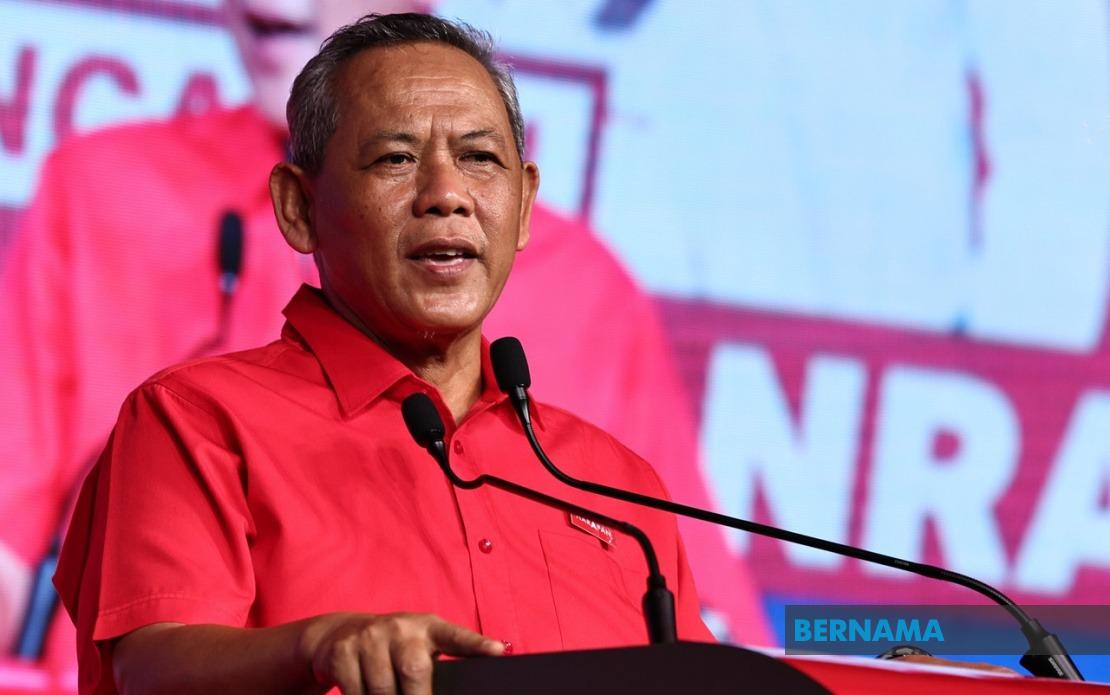
Negeri Sembilan Menteri Besar Datuk Seri Aminuddin Harun has made a direct appeal to voters in the Linggi state constituency to base their electoral decision on the government's tangible work to resolve decades of flooding, rather than permitting what he characterises as opportunistic political exploitation of the issue. Speaking after Friday prayers in Seremban on July 17, Aminuddin, who stands as the Pakatan Harapan (PH) candidate for the seat, sought to reframe the narrative around Linggi's chronic water management problems as a matter requiring serious infrastructure investment and technical competence, not rhetorical posturing.
The appeal comes as the flooding problem has gained renewed traction on social media platforms, with claims circulating that Linggi becomes submerged regularly whenever Seremban experiences sustained heavy rainfall. This resurgence of public discussion about the vulnerability of the constituency carries obvious electoral implications, with the 16th Negeri Sembilan state election scheduled for August 1. For a political figure defending the government's track record, such viral narratives can prove damaging if left unchallenged, particularly when voters may struggle to see visible progress on long-standing infrastructure gaps.
Aminuddin emphasised that the state and federal governments have already secured approval for two dedicated flood mitigation projects targeting the Linggi area, with implementation currently underway through a collaborative framework between these two tiers. The Menteri Besar appears to be banking on the notion that voters will recognise the difference between genuine effort constrained by real-world timelines and mere political grandstanding. Large-scale infrastructure projects, particularly those involving drainage systems and flood defence mechanisms, typically require extended periods for planning, land acquisition, tender processes, and construction—realities that rarely align with electoral cycles.
The government's argument, as articulated by Aminuddin, hinges on the premise that resolving a deeply ingrained problem like chronic flooding cannot be accomplished through hasty measures or symbolic gestures. By emphasising that the projects are already approved and being executed, rather than remaining at the proposal stage, he attempts to demonstrate administrative momentum and concrete progress. However, this strategy also implicitly acknowledges that solutions remain incomplete and ongoing—a posture that carries its own political vulnerability if opponents can credibly argue that the problem should have been solved years ago.
Aminuddin's remarks reveal a deliberate strategic choice by the PH-led state administration: to position itself as the mature, technocratic alternative to what it views as opposition exploitation of public grievances. Rather than engaging in direct confrontation with opposition narratives about flooding, the Menteri Besar frames the choice before voters as one between sound governance grounded in proper planning and infrastructure delivery, versus political tactics designed merely to capitalise on citizen frustration. This rhetorical positioning reflects broader confidence in PH's administrative record across Negeri Sembilan, though it also suggests that the government recognises the electoral potency of the flood issue.
The Negeri Sembilan PH chairman stated explicitly that the coalition intends to present its proven administrative track record and ongoing development initiatives as its primary offering to voters. By contrast, he suggested that opposition strategies should be left to public scrutiny and assessment. This framing allows Aminuddin to occupy what he likely perceives as the higher moral ground—focusing on delivery rather than blame—while simultaneously suggesting that opponents lack substantive alternatives and resort instead to political opportunism. Whether such a positioning resonates with voters depends significantly on their perception of whether existing projects will genuinely alleviate the flooding problem.
For Malaysian and Southeast Asian observers, the Linggi flooding issue exemplifies a broader challenge facing elected governments across the region: the intersection of chronic infrastructure problems with electoral competition. Many constituencies, districts, and municipalities throughout Malaysia, Thailand, Indonesia, and other nations face similar water management challenges rooted in rapid urbanisation, inadequate drainage planning, and climate variability. When such problems become electoral flashpoints, governments must balance the reality that solutions require time against the political imperative to demonstrate progress before voting day.
The timing of Aminuddin's statement, mere days before nomination day for the state election, underscores the strategic importance of the Linggi narrative. By publicly framing the flooding issue as already-addressed through approved projects, the government attempts to reset expectations and remind voters of commitments being honoured. Yet the fact that the Menteri Besar felt compelled to address the issue publicly suggests that viral social media discourse had created sufficient political noise to warrant a direct response—itself an acknowledgment that the problem remains salient in constituent consciousness.
The Election Commission's schedule, with nomination day set for July 18, early voting on July 28, and polling day on August 1, means that the narrow window for campaigning requires parties and candidates to crystallise their core messages quickly. For the PH coalition in Negeri Sembilan, that core message apparently emphasises proven administrative competence and ongoing infrastructure investment. For Linggi specifically, the argument centres on concrete action already underway rather than promises of future relief. This approach reflects confidence in the government's record but also suggests awareness that voter sentiment on the flooding issue cannot be taken for granted.
The broader implications for Negeri Sembilan's electoral outcome remain uncertain, though Aminuddin's framing suggests that the state administration believes it can defend its seat through emphasis on delivery and planning rigour. Whether voters in Linggi and across the state ultimately reward or punish PH based on flood management records—alongside other governance considerations—will provide important signals about how Malaysian electorates evaluate infrastructure performance and long-term planning against opposition critiques and promises. The flood mitigation projects now underway will likely continue regardless of the electoral outcome, though their eventual effectiveness will shape both public satisfaction and political narratives for years to come.

