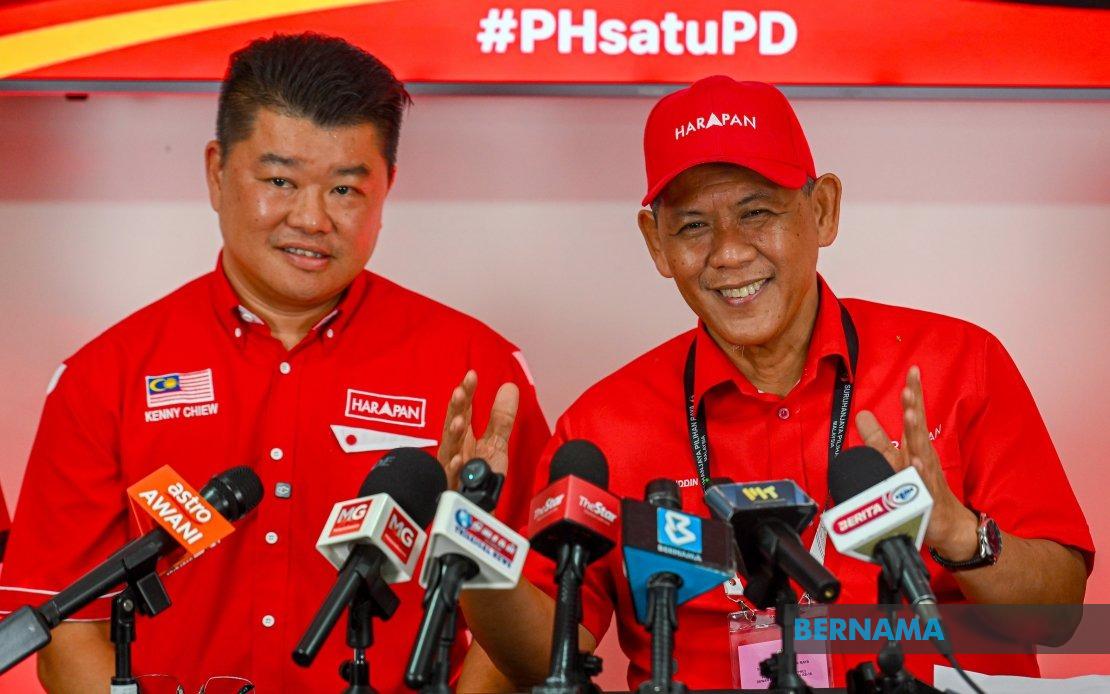
Negeri Sembilan Menteri Besar Datuk Seri Aminuddin Harun has appealed to political parties across the state to maintain high standards of conduct during campaigning for the 16th state election, emphasising that destructive acts have no legitimacy in a mature democratic society. Speaking while campaigning for his Linggi state seat, Aminuddin stressed that deliberate damage to campaign materials undermines the principle of fair electoral competition and sends the wrong signal about political maturity in the state.
The call from the Pakatan Harapan (PH) candidate comes against a backdrop of escalating campaign disruptions. The PH coalition's operations centre documented multiple instances of sabotage during the early days of polling, signalling a troubling pattern that could escalate tensions between competing factions. The incidents ranged from acts of arson targeting party flags in Palong to deliberate destruction of infrastructure supporting campaign efforts in Chembong, suggesting a coordinated or at least widespread approach to intimidation tactics.
Aminuddin's framing of the issue as one of civilisational standards reflects a broader regional concern about maintaining democratic decorum. In an electoral environment where personality-driven politics and factional rivalries can easily spill into physical confrontation, his emphasis on legal compliance and mutual respect between contenders carries particular weight. The Menteri Besar positioned ethical campaigning not merely as a legal obligation but as a reflection of Negeri Sembilan's self-image as a developed and orderly jurisdiction.
The Negeri Sembilan Police Chief Datuk Alzafny Ahmad confirmed that law enforcement had independently documented vandalism complaints in Jempol, with inquiries into the Chembong incidents still underway. Police involvement signals official acknowledgment of the seriousness of these disruptions, though the relatively small number of confirmed cases so far suggests the breaches remain contained. However, the involvement of police and the coalition's own monitoring operation indicates heightened vigilance from institutional actors who understand that unchecked vandalism can quickly normalise more serious forms of electoral misconduct.
The timing of these incidents is significant within the electoral calendar. The state assembly dissolved on June 5, with early voting scheduled for July 28 and polling day set for August 1. At the midpoint of the campaign cycle, when visibility and momentum matter enormously for contenders, targeting campaign materials directly affects parties' ability to reach voters. This form of disruption proves particularly effective in rural constituencies where physical posters and flags serve as primary communication channels outside traditional media.
For Malaysian observers beyond Negeri Sembilan, the incident pattern warrants close attention. State elections serve as laboratories for understanding broader electoral dynamics and inter-party relationships. The emergence of vandalism during a relatively routine state election suggests that underlying tensions between political coalitions remain volatile, despite outward displays of normalcy at the national level. What occurs in Negeri Sembilan frequently presages dynamics that later manifest in other state contests or federal political developments.
Aminuddin's intervention represents a strategic balancing act. As both Menteri Besar and PH candidate, he occupies a position requiring him to defend his coalition's interests while simultaneously maintaining public order and institutional legitimacy. By publicly rebuking the vandalism while calling for universal respect for election laws, he attempts to position PH as the mature, responsible force in Negeri Sembilan politics. This approach appeals particularly to middle-class, urban voters who prioritise stable governance over partisan victory.
The coalition's decision to document and publicise the vandalism incidents through its Media Centre reveals sophisticated campaign management. Rather than allowing disruptions to pass unnoticed, PH ensured that voters became aware of the attacks on its campaign materials, implicitly framing their opponents as unruly and unprincipled. This counter-narrative strategy transforms potential setback into political opportunity by highlighting what the coalition portrays as dirty tactics by rivals.
Election Commission oversight and police investigation provide institutional checks on escalating misconduct. Both agencies retain the authority to impose sanctions on parties found responsible for vandalism, whether through fines, campaign restrictions, or candidate disqualifications in extreme cases. The mere presence of documented investigations creates deterrent effects, encouraging party operatives to consider the legal consequences of engaging in destructive activities. However, enforcement effectiveness depends heavily on speed and visibility of consequences—delayed investigations or lenient penalties risk signalling that violations carry minimal risk.
For Malaysian voters following the Negeri Sembilan contest, the campaign vandalism raises practical questions about the health of the electoral process. When parties cannot agree even on basic standards of campaign conduct, it suggests deeper fractures in political consensus. The need for a Menteri Besar to publicly lecture all parties about following election laws implies that such standards cannot be assumed as automatic or self-enforcing within certain political circles.
The broader significance of Aminuddin's remarks extends beyond Negeri Sembilan to Southeast Asia's wider democratic environment. Many regional democracies struggle with electoral violence and intimidation that extends far beyond property damage. By seeking to arrest a pattern of vandalism early and establishing rhetorical standards for acceptable conduct, Negeri Sembilan's political leadership attempts to maintain electoral integrity at an earlier point in the degradation cycle. Whether such appeals prove effective will depend partly on whether parties perceive genuine consequences for breaching the norms Aminuddin has articulated and partly on whether the underlying competitive dynamics driving the vandalism can be constructively redirected.

