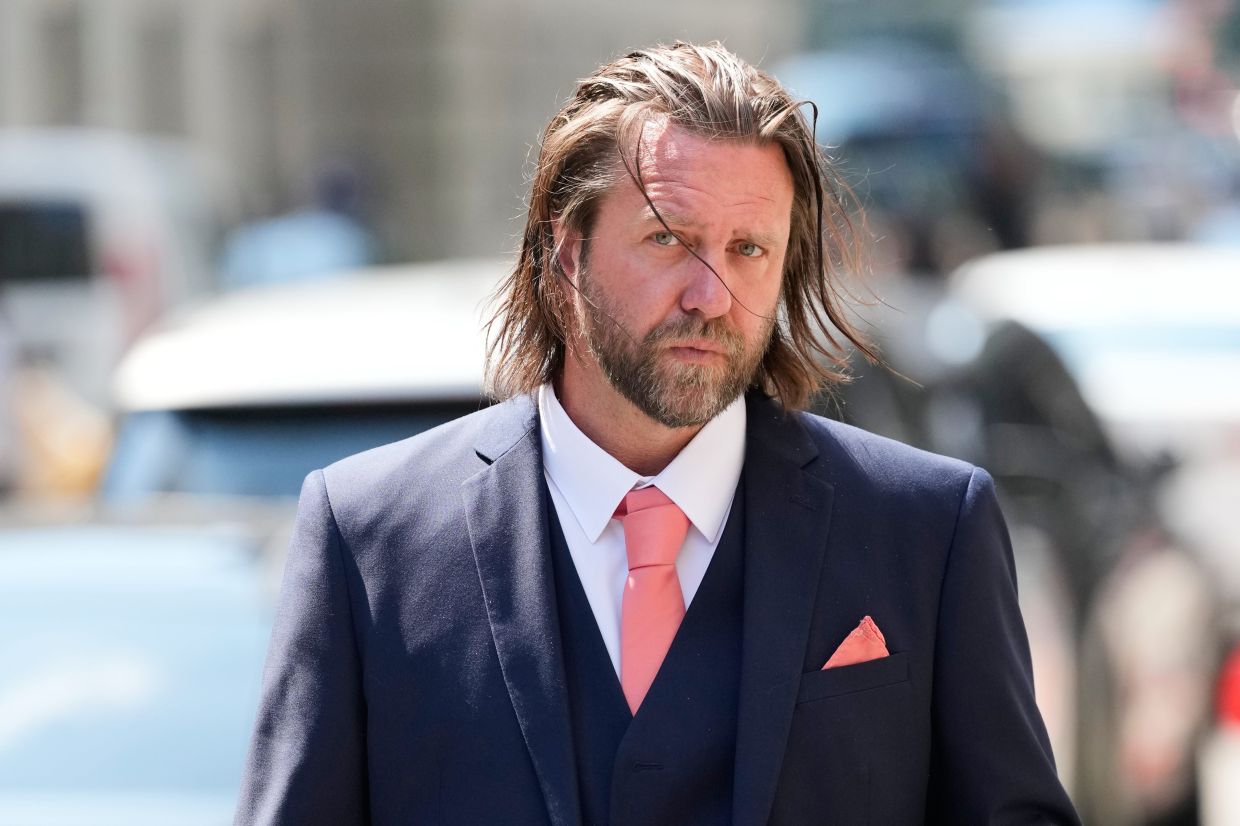
American film director Carl Rinsch has received a custodial sentence following his conviction on fraud charges related to a major production deal with streaming giant Netflix. The 48-year-old director was found guilty of misappropriating US$11 million that the platform provided in 2020 as funding for an ambitious science fiction series that was never completed.
Rinsch's scheme involved diverting substantial sums away from the intended television project into personal financial ventures and extravagant purchases. According to prosecutors from the United States Attorney's Office for the Southern District of New York, rather than allocating the money towards production costs, Rinsch engaged in speculative stock trading and cryptocurrency investments while simultaneously acquiring a collection of high-end luxury goods. His spending spree included an array of designer clothing and bespoke furniture, along with exotic automobiles—notably a red Ferrari and five Rolls-Royce vehicles purchased for personal use.
US Attorney Jay Clayton characterised the conduct as a calculated departure from the production agreement. "Instead of using the money to make the show, Rinsch made risky bets on highly speculative stock options and cryptocurrency, and spent millions of dollars on luxury goods for himself," Clayton stated in an official statement released following the verdict. The nature of these transactions painted a picture of someone who had abandoned professional responsibility in favour of personal enrichment and reckless financial experimentation.
Beyond imprisonment, the court imposed additional financial penalties on Rinsch, ordering him to surrender the full US$11 million that formed the basis of his conviction. This restitution requirement essentially means he must return the entire amount to Netflix, effectively erasing any gains he may have accumulated through his misuse of the funds. The combination of the prison sentence and forfeiture represents a substantial legal and financial consequence for the filmmaker.
During proceedings leading to sentencing, Rinsch's legal team mounted arguments in mitigation, seeking judicial mercy and a reduced sentence. His attorneys presented a defence focused on contextual circumstances, arguing that the financial misconduct occurred amid extraordinary professional pressures and concurrent personal difficulties. Specifically, they cited the strain of managing his directorial career during an intensely adversarial divorce proceeding, characterising the situation as having created an environment conducive to poor decision-making and self-destructive behaviour.
The television project at the centre of the dispute involved a sophisticated science fiction narrative with considerable production scope. According to court documents detailing the agreed-upon concept, the series was intended to chronicle the story of a scientist responsible for creating a faction of enhanced human beings—genetically engineered clones endowed with exceptional capabilities. The storyline placed these beings in a confined, walled urban zone within a Brazilian city, where they would progressively develop advanced technological systems whilst simultaneously navigating complex conflicts with unmodified humans and amongst themselves. The premise suggested an expensive, effects-heavy production requiring the substantial funding Netflix had allocated.
Rinsch brought considerable artistic credentials to the project. His career in feature film directing had established him as a recognised creative talent within the entertainment industry, lending credibility to Netflix's investment in his vision for the streaming series. However, the director's approach to managing the substantial budget revealed a fundamental disconnect between professional obligation and personal conduct.
The dispute between Rinsch and Netflix evolved beyond simple production delays into a matter of legal consequence. The company's involvement remained implicit rather than explicitly foregrounded in the prosecution narrative, yet court filings and background reporting clearly identified the streaming platform as the wronged party. The original series title underwent changes during the development process, reflecting the evolving nature of the project even as its funding remained fixed and unspent on its intended purpose.
Notably, celebrated filmmaker Keanu Reeves, who had previously collaborated with Rinsch on film projects, submitted correspondence to the sentencing judge appealing for lenient treatment. Reeves characterised his former director as an "exceptional artist" despite the fraud conviction, emphasising Rinsch's creative talents whilst acknowledging his personal vulnerabilities. The actor described Rinsch as prone to "self-sabotage," suggesting that the fraudulent conduct reflected deeper psychological patterns rather than calculated criminality. This intervention from an established Hollywood figure provided an alternative narrative perspective on Rinsch's character, though it ultimately did not dissuade the court from imposing its sentence.
The case resonates beyond individual criminal liability, raising broader questions about accountability within entertainment industry financing. When streaming platforms allocate millions to creative projects, they necessarily assume certain risks regarding production execution and fiscal responsibility. Rinsch's conviction demonstrates that fraud mechanisms—however sophisticated the financial instruments employed—remain subject to prosecution and punishment. The case also underscores vulnerabilities within production financing systems that permit significant capital to be redirected without immediate detection or intervention.
For Malaysian and Southeast Asian audiences, the case illustrates the scale of international film and television financing, the legal frameworks protecting major investments across borders, and the consequences of financial fraud in high-value entertainment contracts. As regional streaming services and production companies increasingly engage in substantial international co-productions, understanding how different jurisdictions prosecute financial misconduct in creative industries becomes increasingly relevant.

