With the Negeri Sembilan state election drawing closer, Parti Amanah Negara has adopted a campaign strategy centred on showcasing the Pakatan Harapan coalition's governance record rather than relying on rhetoric alone. The party's nine candidates, representing a third of the coalition's 36-seat slate in the 16th state election, are positioning themselves as experienced public servants committed to solving tangible community problems. This approach reflects a broader calculation within PH that in a state where the coalition currently holds a comfortable majority, emphasising stability and demonstrated competence may prove more persuasive than appeals for change.
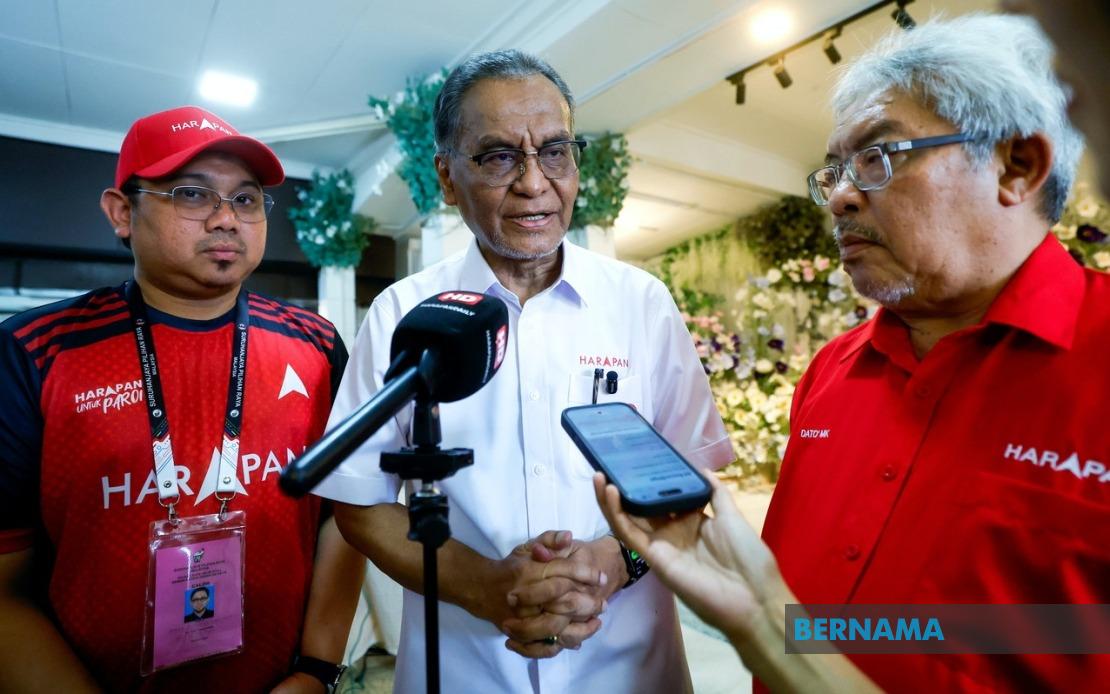
Amanah vice-president Datuk Seri Dr Dzulkefly Ahmad articulated this strategic vision during a campaign engagement in Seremban, arguing that the election hinges not on who campaigns with the greatest visibility but rather on which candidates can demonstrate genuine capacity to address voters' concerns. The framing suggests PH recognises that in incumbent-dominated elections, particularly in states where the government has governed reasonably effectively, the opposition's ability to articulate credible alternatives becomes the decisive factor. For Malaysian politics, where narratives of stability often triumph over promises of radical change, this positioning acknowledges the electorate's apparent preference for proven administrators over untested challengers.
The seat allocation across PH's three component parties reveals the delicate internal balance within the coalition. Amanah's nine seats, coupled with Parti Keadilan Rakyat's 16 and the Democratic Action Party's 11, represents a negotiated settlement that respects each party's organisational strength while maximising the coalition's competitive advantage in targeted constituencies. The 9-16-11 division suggests PKR maintains the largest footprint, likely reflecting its stronger presence in urban and semi-urban areas, while Amanah and the DAP concentrate in specific regional strongholds. This strategic deployment matters considerably for the overall election outcome and shapes how each party can leverage its distinct voter base and organisational capabilities.
Dzulkefly emphasised that all nine Amanah candidates bring substantive community engagement experience and established track records within their respective constituencies. Rather than presenting these candidates as fresh voices proposing revolutionary policy shifts, the party is casting them as seasoned operators familiar with local challenges and equipped with relationships across government agencies necessary to translate voter grievances into administrative action. This positioning reflects a pragmatic understanding that in Malaysian state elections, constituents often prioritise access to effective representatives who can navigate bureaucracy on their behalf over ideological positioning or generational renewal.
The campaign methodology outlined by Amanah leadership reveals an attempt to build voter confidence through intimate, sustained engagement rather than mass mobilisation events. Small-group discussions, house-to-house canvassing, and targeted social media communication are designed to create space for identifying specific community concerns before directing them to appropriate government departments for resolution. This ground-level approach, while labour-intensive, allows candidates to demonstrate responsiveness and build individual relationships that may transcend broader political calculations. For voters frequently frustrated by unresponsive bureaucracies, the promise of a representative willing to shepherd their concerns through official channels holds considerable appeal.
In the Paroi constituency, where over 65,000 voters reside across a population of approximately 140,000, PH candidate Ahmad Shahir Mohd Shah is emphasising economic empowerment for small-scale traders as a priority agenda. His proposed initiatives, including streamlined licensing procedures and enhanced business infrastructure in partnership with local authorities, address a constituency demographic often squeezed between large retailers and bureaucratic obstacles. The specific focus on trader concerns suggests PH has conducted detailed demographic analysis and identified economic anxiety as a salient issue that can be translated into policy commitments. For a state where the middle and working classes have experienced economic pressures, addressing small business viability represents substantive engagement with material concerns rather than abstract political messaging.
Amanah's candidate slate includes incumbent Datuk Bakri Sawir defending the Klawang seat, alongside Yaacob Mahmood in Serting, Zarrina Abu Zarin in Lenggeng, Mohd Hanis Alimin in Senaling, Mohd Zailan Mohd Munawar in Johol, Muhammad Allif Ibrahim in Kota, Nasir Raman in Bagan Pinang, and Abd Latif A. Tambi in Gemencheh. The inclusion of Bakri as an incumbent suggests Amanah has consolidated its position in at least one state seat and is confident in defending it. The distribution of other candidates across different constituencies indicates the party's ambition to expand beyond its strongholds, though success will depend on whether the service-oriented campaign narrative resonates in constituencies where Amanah lacks entrenched organisational presence.
The previous 2023 election results provide context for PH's current strategy. The coalition secured 17 seats compared to Barisan Nasional's 14 and Perikatan Nasional's five, giving PH control of the state assembly with a workable majority. This advantage means PH faces a defensive election rather than a comeback narrative. In such circumstances, the coalition's emphasis on governance record and administrative competence serves a strategic purpose: to depict the current arrangement as functioning adequately while portraying an opposition victory as introducing unnecessary instability. Voters inclined toward continuity, particularly those prioritising economic predictability over political change, may find this messaging persuasive.
The election timeline, with early voting scheduled for July 28 and general polling on August 1, compressed into a brief campaign period, favours parties with established ground machinery and voter familiarity. PH's emphasis on sustained community engagement through house-to-house contact and small meetings, rather than large rallies or expensive media saturation, reflects an acknowledgment that in a short campaign window, consistent visibility and personal voter contact matter more than flash campaigns. This approach also potentially reduces campaign expenditure, allowing resources to concentrate on mobilisation in marginal constituencies rather than expensive statewide visibility initiatives.
For Malaysian voters and political observers, this election exemplifies a broader trend in contemporary Malaysian politics where performance legitimacy increasingly competes with both ideological appeals and opposition promises of reform. As the electorate becomes more experienced with multiple changes of government at state level, voters appear to discriminate between parties based on demonstrable governance outcomes rather than abstract commitments. Amanah and the broader PH coalition's strategy essentially accepts this reality, choosing to fight on grounds where they possess empirical evidence of competent administration rather than on terrain where opposition parties might claim moral superiority or revolutionary vision.
The fundamental question animating this election concerns whether voters in Negeri Sembilan value continuity and demonstrated competence sufficiently to return the incumbent coalition, or whether they perceive grounds for change and wish to experiment with alternative leadership. PH's campaign strategy suggests confidence that governance performance, properly articulated and reinforced through sustained community engagement, provides a solid foundation for retaining power. The effectiveness of this approach will become apparent as the campaign develops and opposition parties articulate their counter-narratives and alternative visions for the state's future development.

