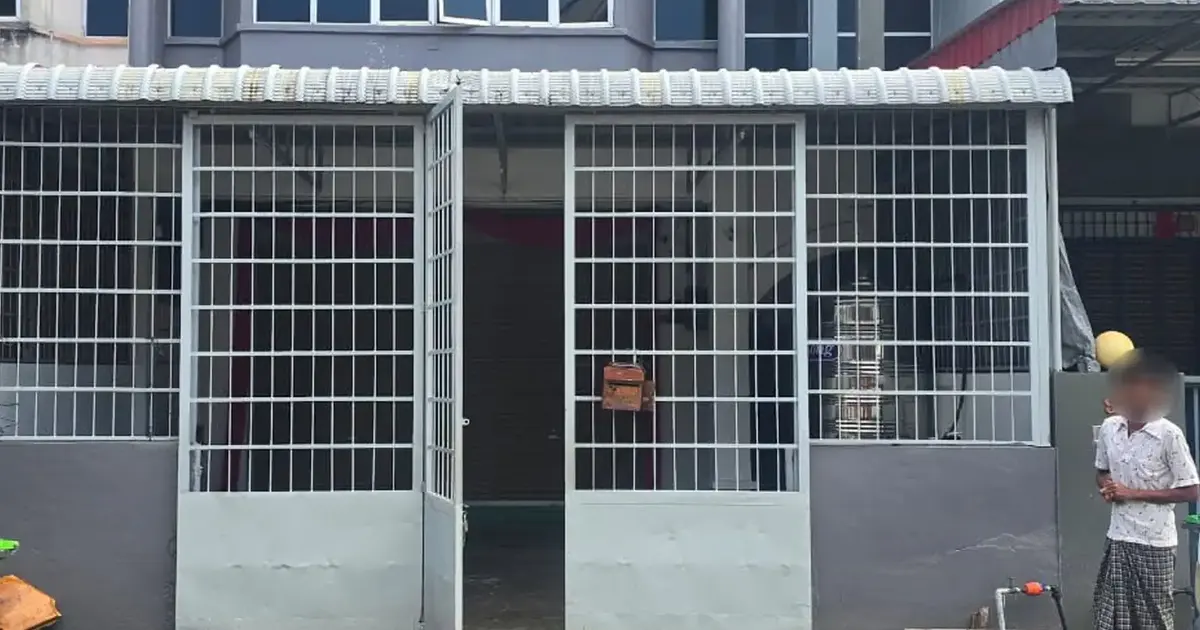
Municipal authorities in Alor Setar have conducted a raid on an industrial property being operated as a school serving Rohingya children, triggering investigations into multiple regulatory violations including improper use of zoned commercial space and unauthorised educational operations. The discovery underscores persistent challenges surrounding informal education provision for migrant communities across Malaysia, particularly Rohingya populations who have settled in various states over the past decade.
The raid represents a convergence of planning enforcement and educational regulation concerns that characterise the broader regulatory landscape governing informal institutions across Malaysia. Municipal councils across the country maintain strict zoning classifications that designate certain areas exclusively for industrial, commercial, or residential use, with educational facilities typically requiring specific planning approval and ministerial recognition. The operation of a school facility within an industrial zone violates these established protocols, exposing both the proprietors and potentially the local authority to administrative liability.
Beyond the zoning issue lies the question of educational authorisation and quality assurance. Malaysia's education system is governed by the Ministry of Education, which maintains oversight of all formal and most informal educational institutions operating within national boundaries. Schools operating without ministry recognition fall outside quality assurance frameworks, inspections, and curriculum standards, creating potential gaps in educational quality and student welfare protections. The unauthorised nature of this facility means there has been no evaluation of teaching credentials, curriculum appropriateness, safety standards, or educational outcomes.
The Rohingya community in Malaysia faces persistent access barriers to formal education despite constitutional protections and international obligations regarding children's rights. Many Rohingya families, living with precarious legal status and limited documentation, encounter practical difficulties enrolling children in government schools. Some states have implemented localised policies permitting limited access, while others maintain restrictive practices. This educational gap has spawned informal learning arrangements, including community-run classes and unregistered schools that operate in legal ambiguity, seeking to provide basic instruction to children otherwise excluded from formal systems.
Alor Setar's discovery of this facility reflects growing municipal attention to informal operations that circumvent regulatory frameworks. Local authorities, mandated to enforce town planning and building regulations, frequently discover unauthorised activities during routine inspections or following community complaints. While enforcement actions target regulatory breaches, they simultaneously disrupt whatever educational provision—however informal and non-standard—has been operating for vulnerable populations with limited alternatives.
The investigation initiated by Alor Setar council will likely examine multiple dimensions of the operation: the property lease or ownership arrangements, whether building permits were obtained for educational use, the qualifications and backgrounds of personnel conducting instruction, financial records indicating fee collection, the number of children enrolled, and duration of operation. These findings will determine whether prosecutions proceed under relevant legislation governing land use and educational provision, and whether civil penalties or criminal charges apply.
For the broader Rohingya community in Kedah and elsewhere, such enforcement actions create cascading difficulties. Children currently attending the facility face educational disruption without clarity regarding alternative enrolment pathways. Parents must navigate formal school registration processes that remain complicated by documentation requirements and residency verification. Educators operating the facility, while technically operating illegally, have been providing instruction services that government systems have not made universally accessible to this population. The removal of such provision, without simultaneous expansion of formal access, effectively reduces educational opportunity rather than elevating it.
The situation reflects deeper policy tensions in Malaysia regarding migrant education access. The government has made rhetorical commitments to ensuring all children, regardless of status, can access basic education in accordance with international conventions. However, operational implementation remains inconsistent across states, and formal systems have not expanded sufficiently to absorb demand from undocumented populations. This gap permits informal educational markets to persist, attracting both genuinely committed educators and those seeking to exploit vulnerable families.
Regulatory authorities face genuine dilemmas in these circumstances. Strict enforcement of zoning and education licensing laws protects legitimate institutions from unfair competition and maintains standards for mainstream students. Yet identical enforcement against informal providers, when alternative provision remains unavailable, effectively criminalises attempts to educate excluded children. Some jurisdictions internationally have adopted hybrid approaches, including provisional registration for transitional informal institutions meeting minimum standards, though Malaysia has not widely adopted such frameworks.
Moving forward, resolution requires coordinated policy development between municipal authorities overseeing land use, the Ministry of Education responsible for institutional standards, the Ministry of Home Affairs managing migrant populations, and state governments determining residency-based access policies. Without clarity on whether Rohingya children should have systematic access to formal education, and under what conditions, municipal enforcement actions will continue removing informal provision without creating formal alternatives. The Alor Setar case thus represents not merely a regulatory violation requiring correction, but a symptom of broader policy incoherence regarding migrant children's educational rights and government responsibilities.

