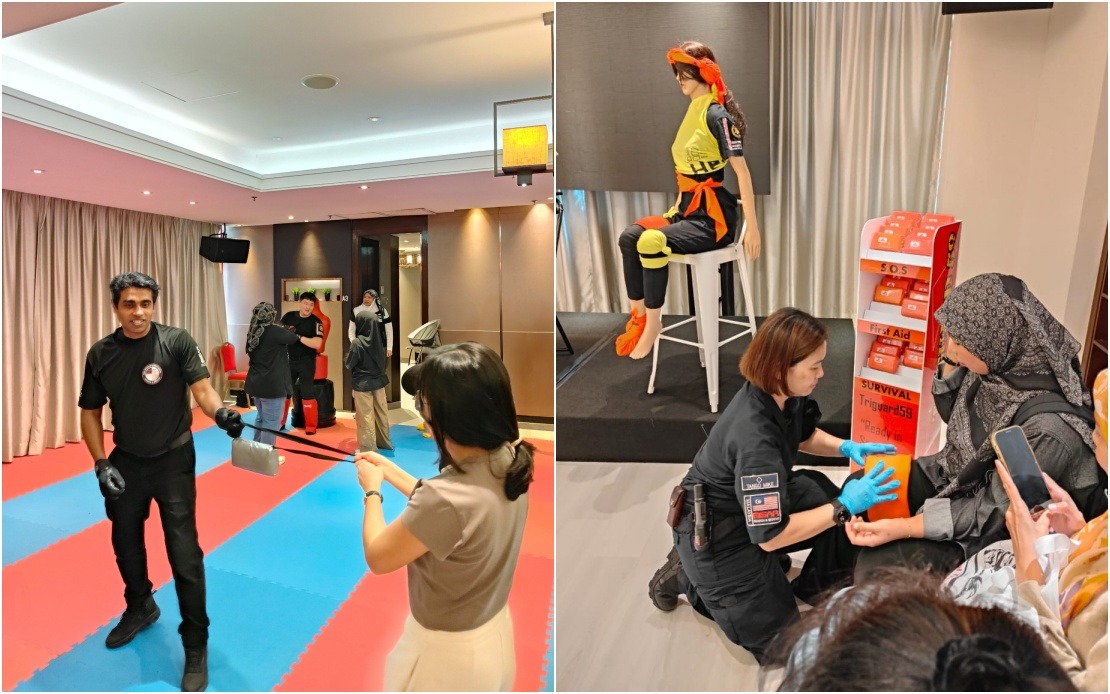
Insurance provider Allianz Malaysia has partnered with Kelab Marshal Keselamatan Jalan Raya Kuala Lumpur (RSMC), a road safety organisation, to deliver the ninth iteration of a women-focused crime awareness programme. Held at Wisma Huazong YTL Hall in Seri Kembangan, Selangor, the initiative attracted 200 female participants aged 16 and above, aiming to equip them with practical knowledge and skills to navigate safety risks in their daily lives while fostering a culture of community-wide security consciousness.
The programme represented an expansion of the companies' longstanding collaboration, demonstrating corporate commitment to addressing street crime—a persistent concern affecting women across urban Malaysia. By combining educational sessions with hands-on demonstrations, organisers sought to translate abstract safety concepts into actionable strategies that participants could immediately apply in domestic and public settings. The curriculum deliberately targeted female-specific vulnerabilities, recognising that women often face distinct criminal threats ranging from theft to harassment.
Training modules covered an expansive range of practical scenarios. Participants engaged with instruction on preventing home intrusions, responding to handbag theft, identifying and avoiding road-based scams, recognising stalking behaviour, protecting against carjacking, managing accident situations and executing basic self-defence techniques. This comprehensive approach reflected an understanding that personal safety extends beyond single threat categories; women require multifaceted knowledge to navigate environments where risks accumulate unpredictably.
A notable innovation for this year's campaign was the introduction of structured dialogue sessions enabling participants to raise concerns directly with RSMC specialists. Rather than maintaining a unidirectional information flow, the format encouraged interactive exchange, permitting attendees to discuss real-world experiences and receive customised guidance addressing their specific circumstances. This departure from purely didactic training acknowledged that effective safety education requires responsiveness to individual anxiety and contextual complexity.
Allianz Malaysia chief executive Sean Wang emphasised that programme success should not be measured solely by immediate participant numbers. Instead, the true impact emerges when knowledge permeates beyond the event venue into family units and neighbourhood networks. Wang noted that community leaders attending the session had expressed interest in replicating the initiative within their own areas—a development suggesting organic expansion potential and indicating that the training resonated sufficiently to motivate grassroots implementation.
This multiplier effect represents a strategic advantage for safety awareness campaigns. By converting participants into advocates, organisations leverage social influence and peer networks to extend protective knowledge through channels more credible than institutional messaging. Families discussing safety protocols over dinner, neighbours sharing self-defence tips, and community groups organising localised training sessions all amplify the original intervention's reach exponentially.
RSMC founder and president Captain K. Balasupramaniam framed street crime awareness as fundamentally about empowerment—furnishing individuals with cognitive tools and practical competencies to exercise agency when confronting uncertain situations. Safety, from this perspective, is not merely avoiding victimisation but developing confidence to make informed decisions under pressure. This psychological dimension proves crucial; fear-based messaging often paralyses rather than protects, whereas competency-focused training generates the self-assurance necessary for decisive action.
The programme's design reflects evolving understanding of crime prevention in Southeast Asia, where rapid urbanisation and digital connectivity have transformed traditional threat landscapes. Online-facilitated scams, vehicle-related crime, and harassment increasingly intertwine with conventional offences, requiring contemporary responses calibrated to modern realities. Allianz Malaysia and RSMC's curriculum acknowledges this evolution, ensuring that instruction addresses both established dangers and emerging vulnerabilities.
For Malaysian women navigating metropolitan environments, such initiatives address genuine gaps in formal safety education. School curricula rarely include practical crime prevention instruction, and public awareness campaigns often lack the structured, interactive depth required for genuine skill acquisition. Private sector-led programmes therefore fill essential voids, though their sustainability and equity of access remain ongoing considerations. Extending such training to underserved communities—rural areas, lower-income urban neighbourhoods—remains a challenge requiring institutional coordination and adequate resourcing.
The enthusiastic community response noted by organisers suggests receptiveness to safety initiatives, particularly when framed constructively and delivered through organisations with perceived credibility. Allianz Malaysia's involvement lends corporate legitimacy, while RSMC's specialisation provides technical authority. This combination evidently generated sufficient trust for participants to engage earnestly with sensitive topics.
Moving forward, the challenge lies in sustaining momentum and ensuring that awareness translates into behavioural change. Knowledge acquisition represents a necessary but insufficient condition for safety improvement; translating understanding into habitual practice requires reinforcement, regular engagement, and cultural normalisation of safety consciousness. Successful programmes must therefore extend beyond single-session training toward ongoing community dialogue and skills consolidation.
The 9th iteration of this campaign underscores the importance of structured, responsive safety education for Malaysian women. As urban crime patterns continue evolving and communities grapple with multifaceted security challenges, collaborative initiatives combining private sector resources, specialist expertise, and community participation offer promising frameworks for building resilience and collective wellbeing.

