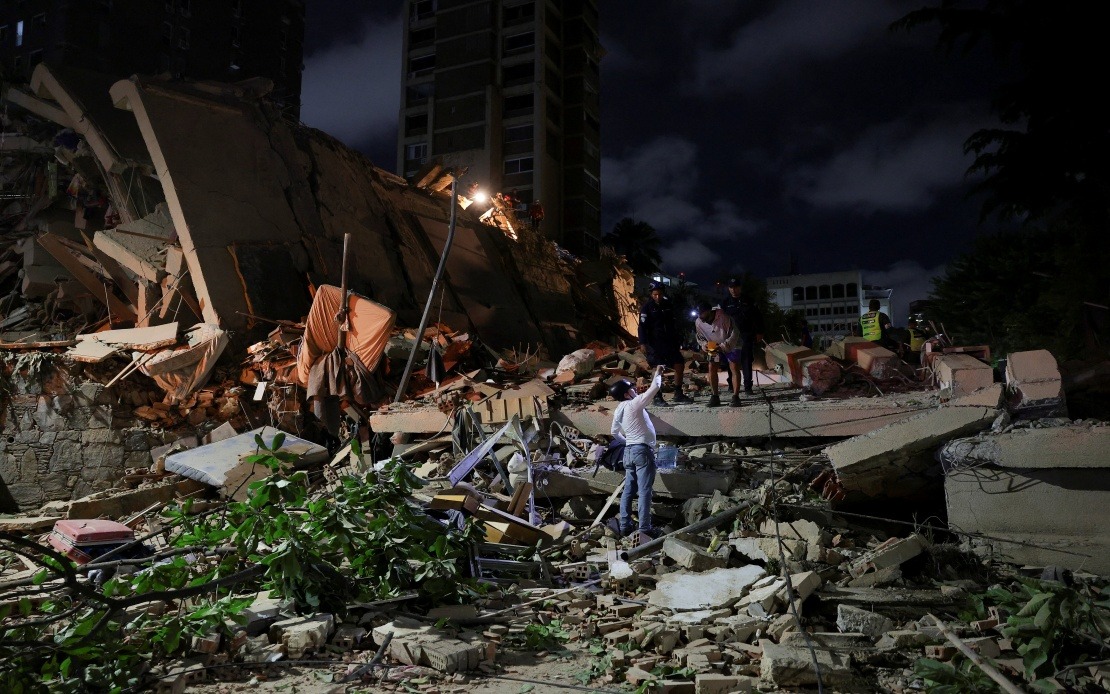
The Foreign Ministry confirmed on Thursday that all registered Malaysian nationals in Venezuela have been accounted for and are safe following two devastating earthquakes that struck the South American nation on Wednesday. The seismic events, which measured 7.2 and 7.5 on the Richter scale, triggered significant damage across central Venezuela, though Venezuelan authorities are still in the early stages of assessing the full scope of the disaster and determining casualty figures.
The tremors occurred approximately 21 kilometres from Moron and 168 kilometres west of Caracas, the capital city, but their effects rippled across a vast area. The earthquakes were felt throughout the country, including in Caracas and the surrounding states of Trujillo, Carabobo, Miranda, and La Guaira. Initial reports indicate that structural damage has been extensive, with multiple buildings collapsing under the force of the seismic activity. The affected region represents a densely populated area of Venezuela, raising concerns about the potential humanitarian impact of the disaster.
Wisma Putra, as Malaysia's Foreign Ministry is commonly known, has established itself as the primary coordination point for Malaysians seeking assistance or information about the situation. The embassy in Caracas remains in continuous contact with local Venezuelan authorities, enabling real-time monitoring of developments as the situation unfolds. The ministry's swift response reflects standard protocols for managing consular crises affecting Malaysian citizens abroad, ensuring that the government maintains an active presence during periods of regional instability.
However, the confirmation of safety for registered nationals carries an implicit caveat: it applies only to those who have formally notified the government of their presence in Venezuela. The Foreign Ministry has issued a strong appeal to all Malaysian citizens who have not yet registered their whereabouts to do so immediately through the e-Konsular online portal at https://ekonsular.kln.gov.my. This registration system serves as a critical tool for the government to track and assist citizens during emergencies, and its use is particularly important in countries prone to natural disasters or other crises.
For Malaysian nationals currently in affected areas, the Foreign Ministry has issued explicit guidance emphasising the need for heightened caution and strict adherence to safety instructions issued by Venezuelan emergency services. The earthquakes, particularly those of such magnitude, often trigger aftershocks and secondary hazards including landslides, infrastructure failures, and disruptions to essential services. Malaysians are advised to remain vigilant, monitor official communications, and follow evacuation orders or shelter-in-place directives as circumstances warrant.
The embassy has established dedicated contact channels for Malaysians requiring immediate consular assistance or seeking to report information about fellow citizens who may be in the affected zones. The primary contact numbers are (+58-212) 720 4257 and (+58-424) 222 1338, with an additional email address [email protected] available for written inquiries. These communication lines represent the frontline of consular support, and Malaysian citizens should not hesitate to use them if they face difficulties accessing food, water, medical care, or safe accommodation in the aftermath of the earthquakes.
The timing of these earthquakes underscores the ongoing vulnerability of certain regions to seismic activity. Venezuela sits within a geologically active zone, and major earthquakes of this magnitude, occurring in quick succession, can have cascading effects on infrastructure, healthcare systems, and public safety. For Malaysia, which has a small but significant diaspora in Latin America, such events serve as reminders of the unpredictability of natural disasters and the importance of maintaining robust consular infrastructure and emergency response protocols.
From a broader perspective, the safety of Malaysian citizens abroad depends significantly on the quality of pre-event preparedness and post-event coordination between the Foreign Ministry, local authorities, and community leaders. The Venezuelan government's ongoing damage assessment will determine whether international humanitarian assistance becomes necessary, and whether Malaysia may be called upon to contribute to regional relief efforts. The ministry's statement that it will continue providing updates suggests that officials are treating this as an evolving situation requiring sustained attention and transparency.
Malaysians planning to travel to Venezuela or currently residing there should monitor official government communications and exercise heightened awareness of seismic risks. While the confirmation that registered nationals are safe is reassuring, the broader picture—with Venezuelan authorities still assessing casualties and damage—indicates that the full impact of these earthquakes may not be immediately apparent. The Foreign Ministry's proactive approach to consular notification and assistance represents best practice in crisis management, offering a model that reflects Malaysia's commitment to protecting its citizens worldwide, regardless of geographical distance or regional complexity.

