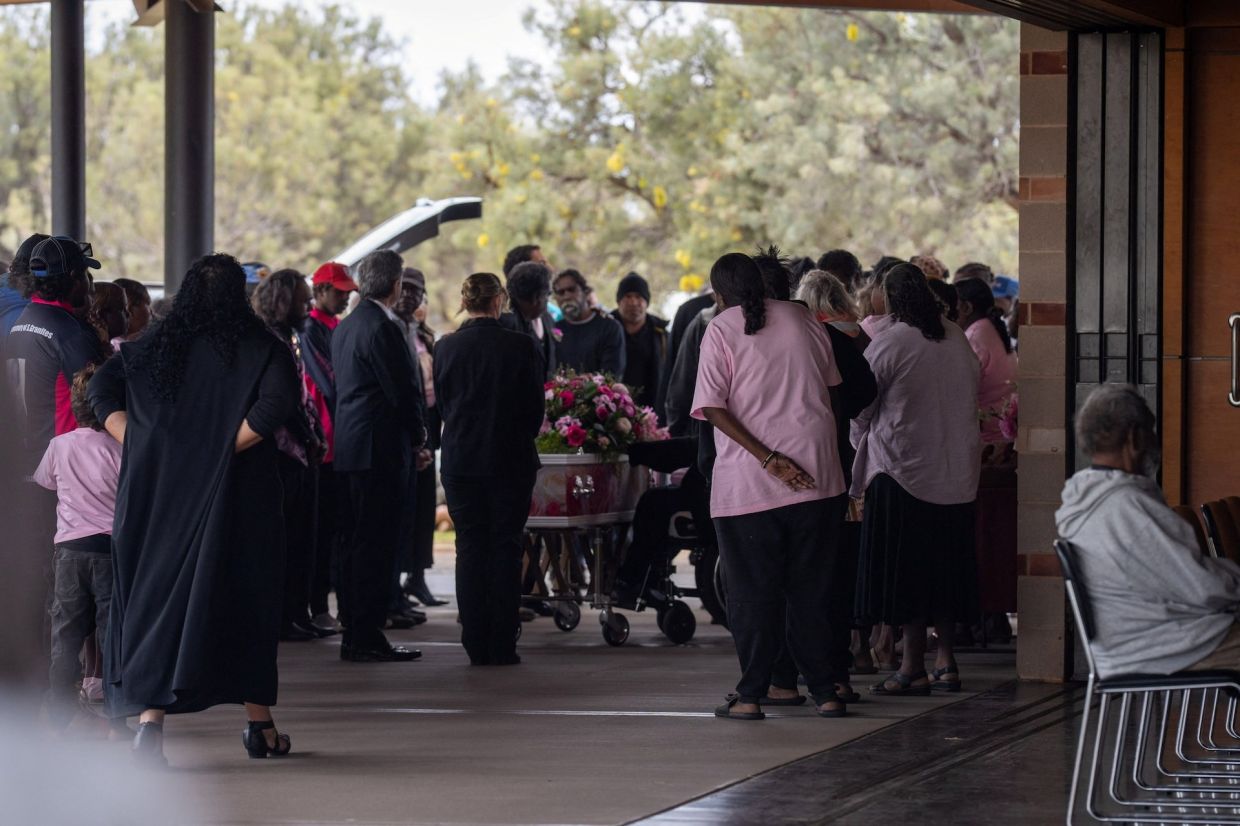
Hundreds of mourners descended on Alice Springs' Garden Cemetery on Saturday to attend the funeral of Kumanjayi Little Baby, a five-year-old Indigenous girl whose death in April became a flashpoint for community unrest across the remote Northern Territory town. The solemn gathering marked a turning point in the town's grieving process, as the local Indigenous community formally observed the culturally significant mourning period known as "sorry business" — a collection of rituals and practices that govern how Indigenous Australians honour their deceased.
The death of Kumanjayi Little Baby, identified by her community name in accordance with Indigenous custom, sent shockwaves through Alice Springs and beyond. The incident did not merely mourn a lost child; it exposed deep fractures within the town of 25,000 residents, located approximately 1,250 kilometres south of Darwin. When local residents discovered the circumstances surrounding the girl's death, violent clashes erupted across the community, with residents taking matters into their own hands and assaulting the suspect before law enforcement intervened. The riots underscored the raw emotions and frustrations simmering beneath the surface of this isolated outback settlement.
According to footage captured by the Australian Broadcasting Corporation, attendees at Saturday's service made a poignant symbolic choice by wearing pink, the young girl's favourite colour. The visible expression of community solidarity through this colour choice reflected the deep connection residents felt to the victim and their shared desire to honour her memory in a meaningful way. The ceremony itself drew substantial numbers, with hundreds gathering as the flower-covered coffin arrived in a black hearse, transforming the usually quiet cemetery into a site of collective mourning and remembrance.
The broader context surrounding this tragedy reveals systemic challenges that have long plagued Alice Springs' Indigenous population. Approximately one-fifth of the town's residents identify as Indigenous, yet many live in inadequate camp communities on the town's periphery. These settlements, where thousands of Indigenous people and their families reside, suffer from chronic housing shortages and insufficient service provision. The gap between conditions in the town centre and those in the camps represents a stark illustration of the socioeconomic disparities that characterise many Australian Indigenous communities. These conditions have created an environment where frustration and desperation can quickly ignite into conflict.
The tragedy has elevated scrutiny of territorial authorities' response to Indigenous welfare. Prime Minister Anthony Albanese publicly called for urgent improvements to living conditions in the camps in the days following the killing, signalling that the incident had attracted attention at the highest levels of government. His intervention suggested that the federal government recognised the connection between poor living standards and the social instability that erupted in Alice Springs. However, questions remain about whether such statements will translate into concrete policy changes and increased investment in Indigenous housing and services.
Jefferson Lewis, aged 47, has been charged with the girl's murder alongside two additional offences that cannot be disclosed publicly due to legal constraints surrounding ongoing proceedings. His arrest and subsequent charging marked the beginning of the formal justice process, yet for the community, the legal proceedings represent only one dimension of a much larger conversation about safety, accountability, and systemic neglect. The case has intensified debate about how the justice system serves remote Indigenous communities and whether conventional approaches adequately address the underlying grievances that contributed to the violent response.
The "sorry business" period that Alice Springs has been observing since the girl's death represents a critical time for the community to process trauma and reinforce cultural bonds. For Indigenous Australians, this mourning process carries spiritual and communal significance that extends beyond conventional Western expressions of grief. The funeral service on Saturday embodied this tradition, bringing together community members to collectively acknowledge loss and recommit to cultural practices that have sustained Indigenous peoples for generations. The participation of hundreds at the cemetery demonstrated that despite the divisions and challenges facing Alice Springs, the community retains a capacity for solidarity and shared purpose.
The incident has also prompted broader reflection on the circumstances that enable violence against vulnerable populations in remote settings. The death of a five-year-old child represents a catastrophic failure of child protection systems and community safety mechanisms. Investigators and policymakers will likely examine what warning signs may have been missed and what interventions might have prevented this tragedy. For Malaysian observers monitoring Indigenous rights issues globally, the Alice Springs case offers a cautionary example of how inequality, isolation, and inadequate services can converge to create dangerous situations for vulnerable populations, particularly children.
Looking forward, the funeral marks a transition point where the community must grapple with how to move forward while maintaining focus on the systemic issues that the tragedy has exposed. Whether this moment becomes a genuine catalyst for policy reform or fades from public consciousness remains uncertain. What is clear is that the residents of Alice Springs, particularly the Indigenous families living in the surrounding camps, face ongoing challenges that demand sustained attention and substantial investment. The memory of Kumanjayi Little Baby and the community's response to her death will likely influence discussions about Indigenous affairs in Australia for months to come, potentially reshaping approaches to remote community development and child welfare services across the Northern Territory.

