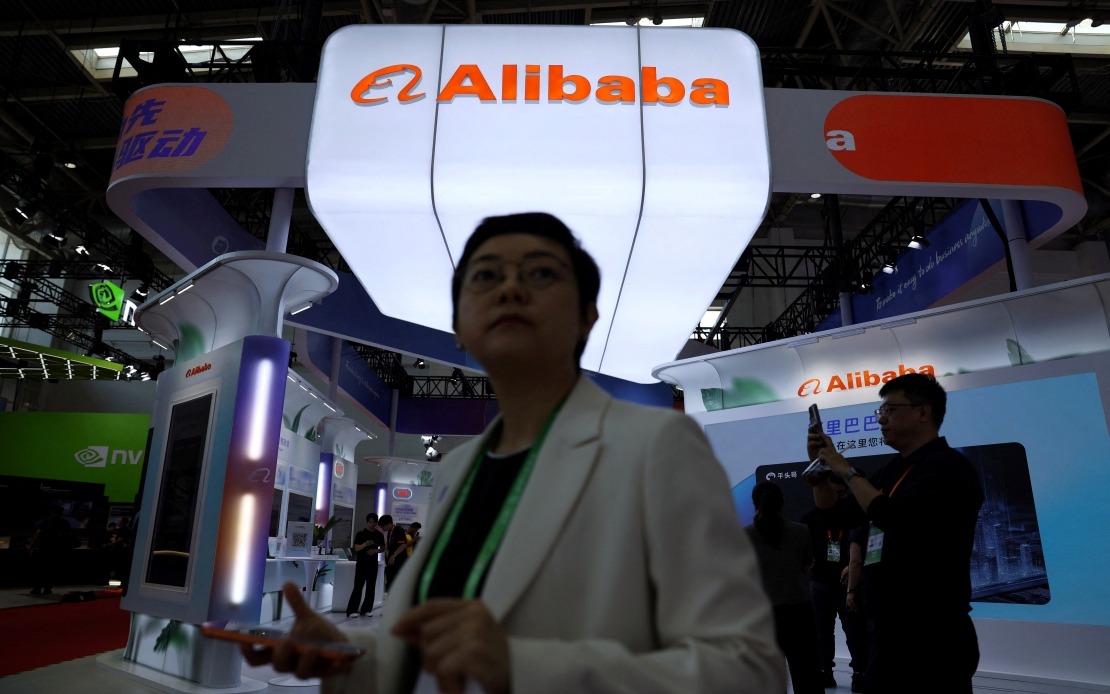
Alibaba, China's dominant e-commerce and cloud computing conglomerate, has formally challenged its designation as a military-affiliated company by filing suit against the United States Department of Defense. The court filing, released on Tuesday and disclosed by Sputnik/RIA Novosti, represents the company's effort to overturn a Pentagon classification that has profound implications for its ability to conduct business with American partners and access critical technologies.
The designation came as part of a sweeping Pentagon announcement in June that added 188 Chinese companies to its register of entities deemed connected to China's military-industrial complex. The list, which includes industry titans Tencent and battery manufacturer BYD alongside Alibaba, marked an escalation in the Trump administration's strategy to restrict American investment in and dealings with Chinese firms believed to have military connections or applications. This classification carries significant weight, as it signals to American investors, partners, and regulators that these firms present national security concerns.
Alibaba's legal challenge contests the Pentagon's determination on multiple fronts. In its filing, the company asserts there is neither factual nor legal foundation for its military company designation. The core argument centres on governance and operational structure: Alibaba maintains that its board of directors operates independently with no military affiliations whatsoever. This claim addresses the Pentagon's implicit logic that Chinese state involvement or military ties would be evident in corporate leadership and control structures.
Beyond governance, Alibaba emphasizes the civilian nature of its business portfolio. The company states unequivocally that its products and services are designed exclusively for commercial purposes spanning retail operations, logistics networks, and enterprise-level information technology solutions. These sectors, Alibaba argues, serve thousands of businesses and millions of consumers globally with no conceivable military application. The distinction matters legally and commercially, as it challenges the Pentagon's presumption that civilian technology companies can be presumed to have dual-use potential for military purposes.
The company's compliance architecture forms another pillar of its defence. Alibaba points to explicit contractual provisions and stated policies that categorically prohibit military use of its services and infrastructure. These contractual safeguards, the company contends, represent meaningful legal barriers that would prevent any military application even if one were technically feasible. Furthermore, Alibaba emphasizes that it possesses neither military certifications nor the specialized licences that would typically accompany legitimate military contractor status in regulated defence industries.
The lawsuit arrives at a critical juncture for Chinese technology companies navigating American regulatory pressure. The Pentagon's military company list functions as a powerful economic weapon, making it difficult for affected firms to secure American venture capital, access necessary semiconductor suppliers subject to export controls, or participate in transactions involving American technology. For Alibaba specifically, the designation complicates its cloud computing business, which relies on American-origin semiconductor technology and competes directly with American firms like Amazon Web Services and Microsoft Azure for enterprise contracts globally.
Malaysian and Southeast Asian businesses face indirect consequences from this dispute. Many regional companies utilize Alibaba's platforms for B2B commerce, supply chain management, and cloud services. If Alibaba faces operational constraints or regulatory isolation in the United States, it could affect service reliability, investment priorities, and the company's ability to maintain competitive pricing and innovation in Asian markets. The broader implications touch on the region's digital infrastructure choices as geopolitical competition intensifies between the United States and China.
The Pentagon's rationale for including Alibaba remains undisclosed publicly, creating interpretive challenges for the company's legal team. Unlike traditional defence contractors subject to transparent procurement rules and security clearances, Chinese technology firms face opaque evaluation criteria. The military company list conflates different concepts: firms with direct defence contracts, companies with majority state ownership, and businesses producing technology with potential dual-use applications. Alibaba's lawsuit attempts to force clarity on which category applies and what evidence supports the determination.
Historically, the Pentagon's military company designations have reflected broader geopolitical tensions rather than narrow national security analysis. The timing of the June announcement, amid escalating US-China trade disputes, suggests political considerations influenced inclusion decisions. However, courts have generally deferred to executive branch security determinations, making Alibaba's legal path uncertain. The company must overcome substantial judicial deference while arguing that the Pentagon acted arbitrarily and capriciously.
The outcome will establish precedent for how American courts examine military company designations. If Alibaba succeeds, other Chinese firms facing similar classifications might pursue comparable challenges. Conversely, a judicial affirmation of Pentagon discretion would reinforce the executive branch's power to unilaterally restrict American engagement with Chinese technology companies based on asserted but unproven military connections. This tension between security concerns and due process protections will likely define technology policy disputes throughout the remainder of the decade.
For Malaysian policymakers and business leaders, the Alibaba case underscores broader questions about navigating US-China technological competition. Southeast Asian nations seeking to develop indigenous technology capabilities while maintaining American security partnerships must carefully evaluate which Chinese platforms and services pose genuine risks versus which simply face designation as part of strategic competition. The case also highlights the costs of regulatory opacity, as companies and allied nations cannot fully assess the legitimacy of American security determinations made without public evidence or transparent criteria.