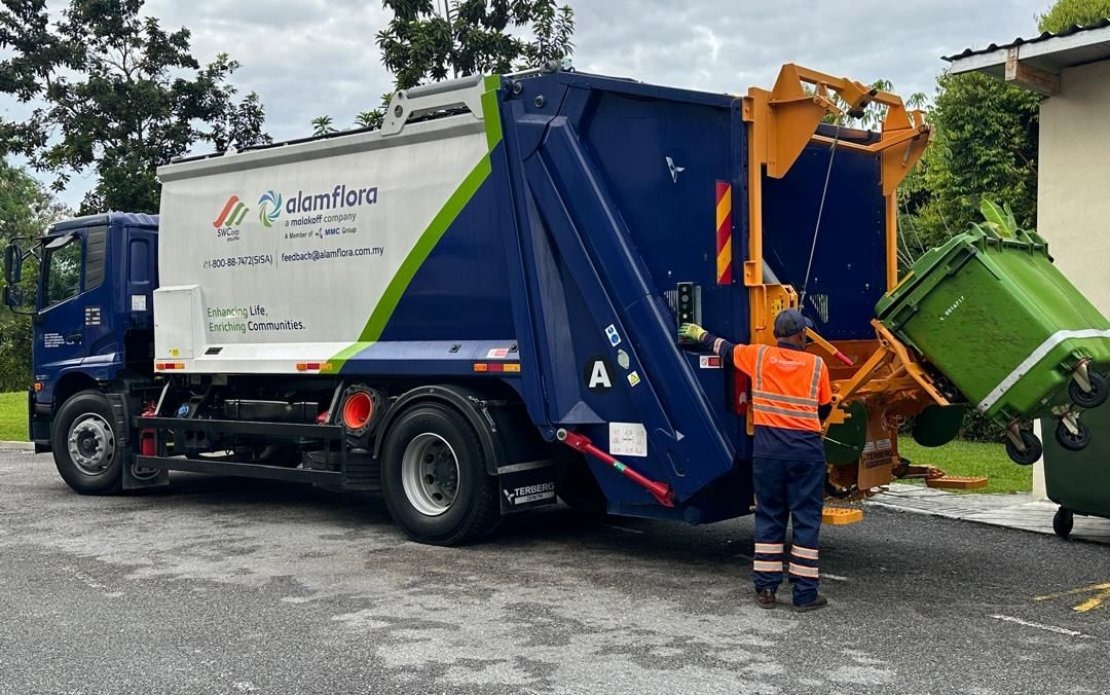
Alam Flora, Malaysia's leading waste management service provider, has committed itself to full cooperation with authorities investigating a serious accident involving one of its compactor garbage lorries that occurred along Jalan Pantai Murni 1 in the Pantai Hillpark residential area of Kuala Lumpur. The company's swift response underscores growing corporate accountability expectations in Malaysia's waste management sector, a critical infrastructure area affecting millions of urban residents daily.
The incident, which took place in the early morning hours, appears to have stemmed from brake failure, with the vehicle subsequently losing control before colliding with the perimeter wall of a nearby condominium. This type of accident raises important questions about vehicle maintenance protocols within the waste collection industry, where heavy compactor lorries operate continuously in densely populated urban environments and residential areas where pedestrian activity is common.
In its official statement, Alam Flora indicated that the damaged vehicle will be forwarded to the Computerised Vehicle Inspection Centre (Puspakom) for comprehensive technical examination. This inspection process will help establish the precise mechanical or technical factors that contributed to the loss of control, providing crucial evidence for the ongoing investigation and potentially informing industry safety improvements.
The company has emphasised that worker safety, contractor welfare, and public security represent core operational values. This positioning reflects not merely corporate responsibility language but also acknowledges the genuine risks faced by sanitation workers who operate heavy machinery in traffic-prone conditions, often working unsociable hours when roads are more chaotic and visibility is reduced.
Authorities have already conducted preliminary investigations at the scene. The driver involved has filed an official report with the Kuala Lumpur Traffic Police Station, and a breathalyser test administered by police confirmed the driver had not consumed alcohol. This finding quickly eliminated impairment as a contributing factor, allowing investigators to focus on mechanical and operational elements.
The case is being formally investigated under Section 43(1) of the Road Transport Act 1987, which governs vehicle-related incidents on Malaysian roads. This legal framework provides the structure for determining liability and establishing whether any regulatory violations or negligence occurred in vehicle maintenance or operation. The involvement of specific statutory provisions indicates authorities are treating the matter with appropriate seriousness.
For Malaysian readers, this incident reflects broader concerns about infrastructure safety in rapidly urbanising areas. Kuala Lumpur's waste management requires coordinated operation of hundreds of heavy vehicles daily, navigating congested residential streets and commercial zones. Any failure in this system can quickly create public safety hazards, making the incident a reminder of the often-invisible risks inherent in maintaining urban cleanliness and sanitation.
Alam Flora's commitment to follow investigation findings with corrective actions signals an industry moving toward enhanced preventive maintenance practices. The waste management sector in Malaysia has gradually professionalized, but recurring mechanical failures still occur. This accident provides an opportunity for sector-wide review of inspection protocols, maintenance scheduling, and driver training standards, particularly given the heavy-duty nature of compactor lorries.
The residential community affected by the crash has legitimate concerns about recurring safety risks in their neighbourhood. While single incidents do not necessarily indicate systemic failure, they do prompt residents and authorities to examine whether proper safeguards are in place for equipment operation in proximity to homes and families. The damage to condominium property further emphasises the tangible consequences of equipment failure in built-up areas.
Industry observers will be monitoring how thoroughly Puspakom's technical examination addresses potential systemic issues versus isolated mechanical failure. Malaysia's vehicle inspection regime has faced periodic criticism for inconsistent enforcement, making this case particularly relevant for assessing inspection centre standards and whether maintenance certification processes adequately catch deteriorating safety conditions before accidents occur.
Alam Flora's immediate and transparent response may help preserve public confidence in waste management services, but sustained trust depends on demonstrable improvements emerging from the investigation. Whether findings reveal isolated failure or broader maintenance inadequacies will shape industry practices going forward and potentially influence regulatory oversight of the sector.
For Southeast Asian waste management operators more broadly, incidents like this underscore the importance of rigorous preventive maintenance cultures and continuous safety investment. As urbanisation accelerates across the region, ensuring that essential services like waste collection operate with maximum safety becomes increasingly critical to liveable cities.

