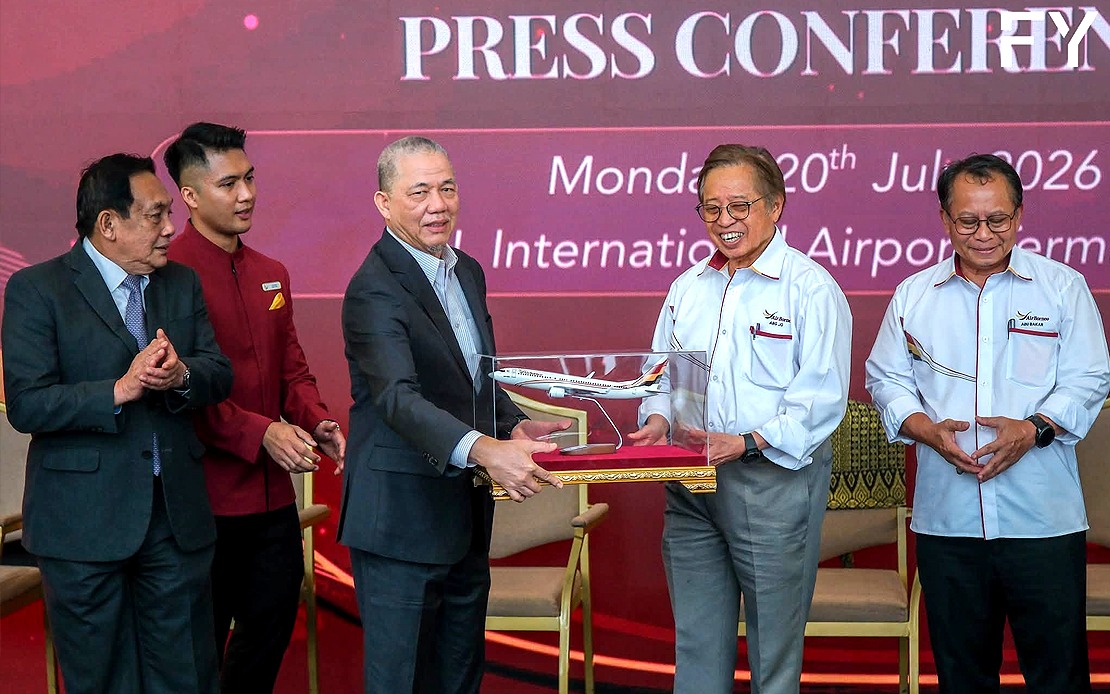
Deputy Prime Minister Datuk Seri Fadillah Yusof has underscored the strategic importance of AirBorneo Airways, Sarawak's newly established state-owned carrier, positioning it as a solution to the persistent complaints about flight ticket prices that have long affected residents across the Malaysian state. The airline's inaugural service between Kuching and Kuala Lumpur International Airport Terminal 1 commenced on July 20, marking a pivotal development in Sarawak's economic infrastructure and transport connectivity strategy.
Fadillah's vision for the carrier extends beyond simply reducing fares. He has articulated a broader commitment to delivering air services that are not only more competitively priced but also characterised by greater transparency and passenger-centric operations, while maintaining standards of service quality that customers expect from a regional carrier. This positioning suggests the airline intends to differentiate itself in Malaysia's increasingly competitive aviation market through operational excellence rather than cost-cutting alone.
The timing of AirBorneo's launch carries symbolic weight for Sarawak's political leadership. Occurring just two days before Sarawak Day on July 22, the inaugural flight has been framed as emblematic of the state's capacity for self-determination and economic advancement. Sarawak Premier Tan Sri Abang Johari Tun Openg has characterised the venture as a strategic investment designed to fortify the state's economic prospects, suggesting this initiative reflects deeper ambitions about Sarawak's role within Malaysia's federal structure and its ability to pursue independent economic development pathways.
Beyond the immediate question of airfare affordability, AirBorneo represents a potential catalyst for broader economic transformation across Sarawak. The enhanced air connectivity that the airline is expected to facilitate could unlock opportunities spanning the tourism sector, inter-regional trade, foreign investment attraction, and developmental initiatives throughout the state. For Malaysian policymakers and regional observers, this underscores a strategic recognition that transport infrastructure—particularly air networks—functions as foundational to economic competitiveness in Southeast Asia's dispersed geography.
The establishment of a state-owned airline also reflects Sarawak's aspirations for greater autonomy over its own transport networks. This is particularly significant for peripheral regions and rural communities, where commercial airline operators often provide limited service due to thin profit margins. By maintaining state ownership and control, Sarawak can theoretically prioritise universal access to air connectivity, ensuring that isolated communities retain reliable linkages to major urban and economic centres without relying on commercial operators' market-based decisions.
The aviation sector in Malaysia has been marked by ongoing debates about route rationalisation and service coverage in less densely populated regions. Budget carriers have revolutionised air travel accessibility across the country, yet still concentrate flights on lucrative trunk routes. AirBorneo's capacity to subsidise or maintain services to rural airports represents a potential policy innovation for addressing equity in regional transport access—a challenge that extends beyond Sarawak to other Malaysian states with significant geographic dispersion and lower population density.
For Malaysia's broader economy and ASEAN connectivity agenda, Sarawak's move carries implications worth examining. The state occupies a strategically important position within Southeast Asia, bordering Indonesia and Brunei, with substantial natural resources and tourism potential. Improved air connectivity under Sarawakian stewardship could facilitate cross-border trade, tourism development, and regional integration initiatives that benefit multiple economies. This aligns with wider ASEAN frameworks promoting seamless intra-regional movement of goods, services, and people.
The financial sustainability of state-owned carriers remains a perennial challenge across the region and globally. While AirBorneo enters the market with clear policy objectives and government backing, its long-term viability will depend on balancing commercial discipline with public service obligations. The carrier must navigate competitive pressures from established Malaysian airlines, budget carriers, and potentially new regional entrants while meeting government expectations regarding affordability and rural service provision. This tension between commercial and social objectives will likely shape AirBorneo's operational trajectory over coming years.
Fadillah's framing of AirBorneo as a catalyst for progress and prosperity positions the carrier within Sarawak's broader developmental narrative. Beyond transporting passengers and cargo, the airline symbolises state capacity for innovation in economic policy and self-directed development. Whether this symbolic significance translates into sustained competitive performance and genuine improvements in aviation access for ordinary Sarawakians will ultimately determine the venture's success. The airline's performance will also provide insights into whether state-owned carriers can effectively address market failures and equity concerns in Malaysia's aviation sector—lessons potentially applicable across ASEAN as countries grapple with ensuring equitable transport access alongside commercial viability.

