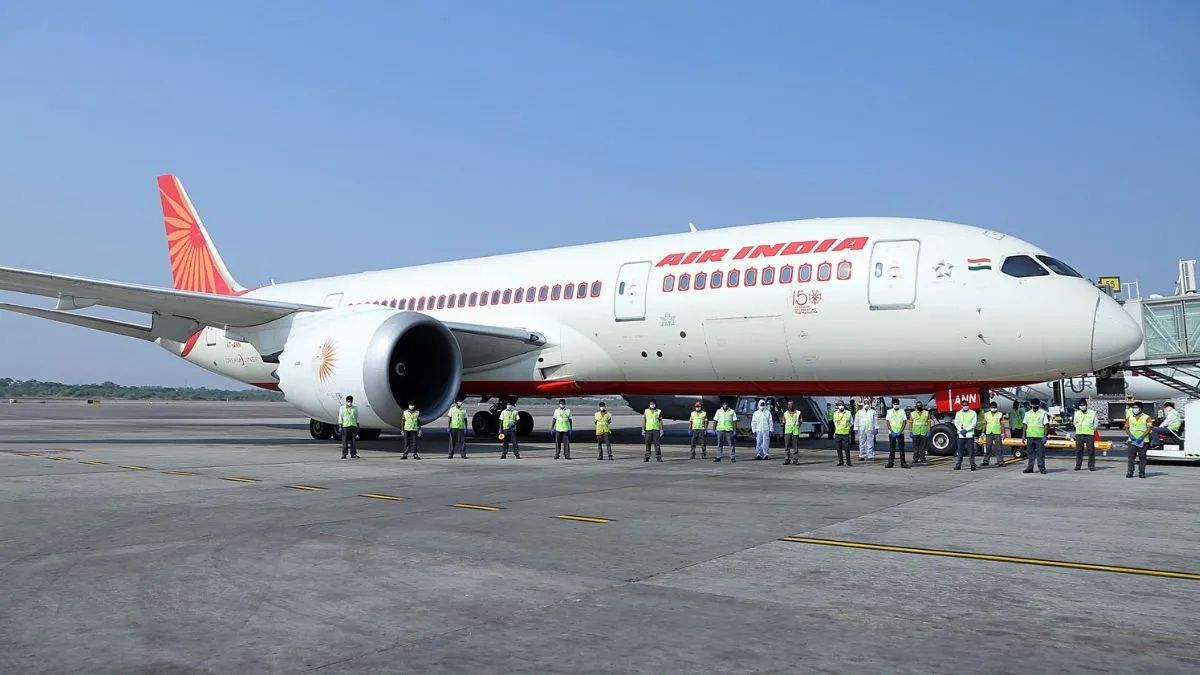
An Air India aircraft carrying passengers on the Delhi-Amritsar route inadvertently crossed into Pakistani airspace on the evening of June 22 after suffering a malfunction in its navigation systems, aviation authorities confirmed this week. The Airbus A321, designated as Flight AI-463, had departed from Delhi's Indira Gandhi International Airport at 9:18pm and was in its initial climb phase when the technical problem disrupted its directional guidance. The westward drift brought the aircraft across the International Border, triggering alerts from Pakistani air traffic control, which swiftly communicated the breach to the flight crew and guided them back across the demarcation line into Indian territory.
The incident underscores the critical role played by coordination between neighbouring countries' aviation authorities in managing airspace safety. Pakistani Air Traffic Control identified the deviation promptly and contacted the flight crew without delay, enabling pilots to immediately correct their heading and restore the aircraft to its intended flight path over Indian airspace. Senior airport officials characterized the response as textbook procedure, with all parties responding according to established protocols for cross-border airspace breaches. The crew's rapid corrective action prevented what could have become a more serious diplomatic incident, particularly given the sensitivities surrounding military and civilian aviation operations in the subcontinent.
However, the aircraft's troubles were far from over once it returned to Indian airspace. As the Airbus approached its intended destination of Sri Guru Ram Dass Jee International Airport in Amritsar around 10:30pm, air traffic controllers informed the flight that congestion at the airport prevented an immediate landing. The combination of the earlier navigation system failure and the need to establish its position with absolute certainty likely contributed to the decision to keep the aircraft airborne rather than attempt a rushed approach. With no available slot to land safely, controllers made the operational decision to divert the flight back to Delhi, where a full technical inspection could be conducted and the source of the malfunction diagnosed.
The return journey to the capital proved necessary for ensuring the aircraft's airworthiness before continuing to Amritsar. Once on the ground at Indira Gandhi International Airport, maintenance teams conducted a comprehensive evaluation of the navigation system and other potentially affected equipment. The technical inspection and subsequent clearance procedures consumed several additional hours, contributing significantly to the overall delay experienced by passengers. Only after receiving formal approval from air traffic authorities to return to service did the aircraft depart Delhi once again for Amritsar, finally touching down at approximately 2:20am on June 23—nearly four hours behind its original scheduled arrival time.
The navigation system failure that triggered the entire sequence of events remains under investigation by India's civil aviation regulator, the Directorate General of Civil Aviation, though the specific nature of the malfunction has not yet been disclosed publicly. Such technical issues are not uncommon in modern aircraft, and the Airbus A321 is a widely operated narrow-body jet with an established safety record across commercial aviation worldwide. However, the particular circumstances of this failure—its impact on the aircraft's ability to maintain its assigned flight path—suggest either a primary navigation system problem or a related issue affecting the flight management system's integration of navigation data.
The incident echoes a similar occurrence from a month prior, when a Pakistan International Airlines flight briefly entered Indian airspace due to adverse weather conditions. In that case, Indian air traffic controllers successfully guided the aircraft back to its proper route, demonstrating that such cross-border incursions, while serious, are manageable through established communication channels and professional coordination. The frequency of these incidents, however minimal, highlights the importance of maintaining robust dialogue and clear procedures between Indian and Pakistani aviation authorities, particularly given the geographical proximity of major flight corridors and the potential for unintended airspace violations.
For Malaysian and Southeast Asian aviation observers, the incident carries broader implications regarding airspace management in densely populated regions with complex geopolitical considerations. Countries operating in areas with multiple flight information regions and international borders must invest in redundant navigation systems and robust protocols to prevent unintended airspace violations. The coordination demonstrated between Indian and Pakistani controllers in this instance—despite the countries' broader geopolitical tensions—reflects the professionalism of civil aviation professionals who prioritize safety and procedural adherence above political considerations.
The incident also raises questions about the adequacy of navigation system redundancy on commercial aircraft and the robustness of flight management systems in preventing large-scale route deviations. Modern aircraft are equipped with multiple independent navigation sources, including GPS, inertial navigation systems, and ground-based radio aids, yet a single-point failure apparently caused sufficient disruption to push the aircraft westward across an international border. Investigators will likely examine whether all available backup systems were functioning properly and whether crew alerting systems provided timely notification of the navigation anomaly.
For Air India, the incident represents an operational challenge but not necessarily a safety failure, given that the aircraft returned to Indian airspace safely and eventually reached its destination without incident. The airline and the DGCA have yet to issue detailed statements regarding the technical findings or any corrective actions implemented fleet-wide. Transparency regarding such incidents is crucial for maintaining public confidence in aviation safety systems and for ensuring that lessons learned contribute to industry-wide improvements.
The broader context of aviation safety in South Asia suggests that infrastructure investments and technological upgrades remain priorities for the region's carriers and airport operators. As air traffic continues to grow across India, Pakistan, and neighbouring countries, the margin for error in navigation and air traffic control must continue to narrow through enhanced training, equipment modernization, and sustained inter-country cooperation on safety matters.