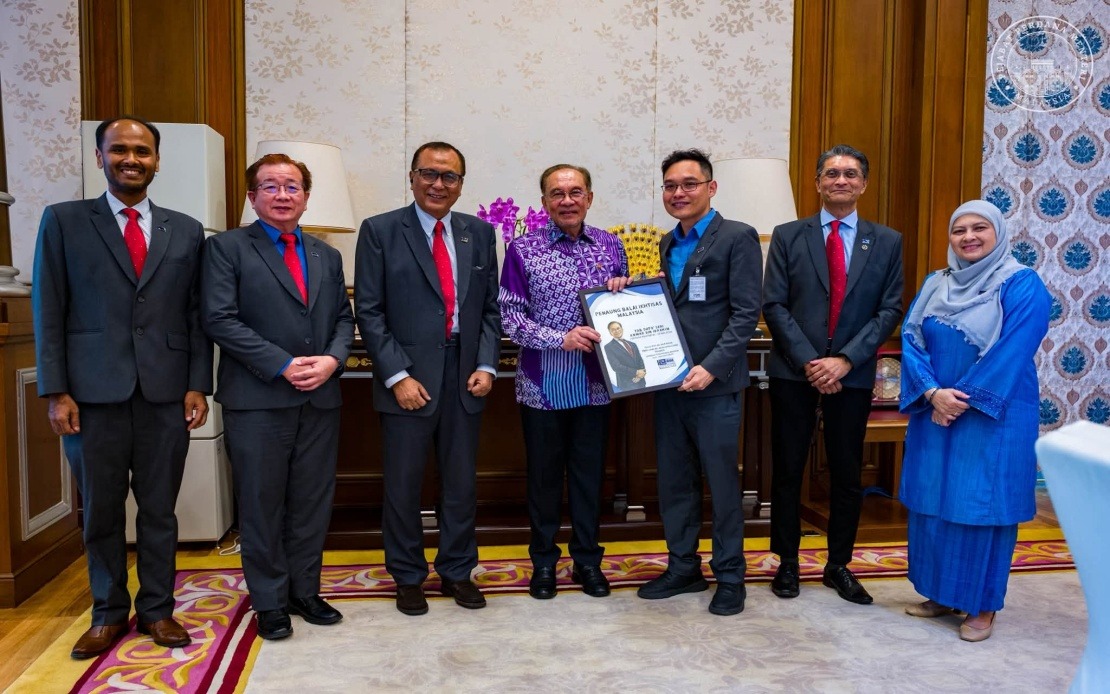
Prime Minister Datuk Seri Anwar Ibrahim has placed artificial intelligence capability and professional talent development at the centre of Malaysia's ambitions to establish itself as a regional hub for professional excellence, following a courtesy visit from Balai Ikhtisas Malaysia (BIM), the Malaysian Professional Centre.
The discussions, which saw BIM delegation president Prof ChM Dr Juan Joon Ching lead the contingent to meet the Prime Minister, underscore the government's recognition that Malaysia's competitive edge in Southeast Asia increasingly depends on equipping its professional workforce with cutting-edge skills and forward-looking expertise. Anwar's public acknowledgement of these topics signals a strategic shift in how the government views the relationship between professional development and national economic advancement.
The emphasis on artificial intelligence readiness is particularly significant given the technology's transformative impact across multiple sectors. As nations across the region race to position themselves as hubs for AI innovation and deployment, Malaysia's government appears determined to ensure its professionals are not merely consumers of AI solutions but active participants in developing and implementing these technologies. This approach aligns with broader Southeast Asian trends where countries from Singapore to Vietnam are investing heavily in AI talent pipelines and digital literacy programmes.
Anwar framed professionals as strategic partners whose contributions extend beyond their individual sectors, viewing them as essential drivers of innovation and national competitiveness. This repositioning reflects an understanding that Malaysia's future prosperity depends on leveraging the expertise of its highly educated workforce to tackle complex challenges ranging from digital transformation to green energy transition. The Prime Minister's comments suggest the government intends to create more collaborative frameworks where professional bodies have direct input into policy formulation and implementation.
The MADANI agenda, the government's overarching development framework, appears to serve as an umbrella under which these professional priorities are nestled. By connecting talent development and AI readiness to broader wellbeing objectives, the Prime Minister has signalled that these are not merely technical concerns but integral to improving living standards and creating meaningful economic opportunities for Malaysians across different income levels.
Anwar's acceptance of the invitation to Hari Ikhtisas Malaysia, an annual event celebrating the professional community's contributions to national development, demonstrates formal government endorsement of the professional sector's significance. Such symbolic gestures matter in Malaysia's political culture, as they signal priority and commitment. The event provides a platform for the government to articulate its vision for professional development while allowing practitioners to showcase their achievements and voice concerns about barriers to excellence.
The emphasis on nurturing talent with integrity and competitiveness addresses a concern that has gained prominence in Malaysian professional discourse. As competition for top talent intensifies regionally, Malaysia must not only attract skilled individuals but ensure they operate within frameworks that value ethical practices and professional standards. The government's focus on integrity suggests awareness that Malaysia's reputation as a professional hub depends on the quality and trustworthiness of its practitioners.
The timing of these discussions also reflects broader regional economic dynamics. With automation and artificial intelligence reshaping labour markets across Southeast Asia, professionals who can adapt and evolve their expertise stand to benefit significantly. Malaysia's government appears positioned to support this transition, potentially through revised educational curricula, professional licensing frameworks, and incentives for continuous learning and development.
Stronger government-professional sector ties could yield tangible outcomes in several areas. Enhanced collaboration might lead to revised policies affecting professional regulation, clearer pathways for talent recognition and mobility within the ASEAN region, and greater investment in professional development infrastructure. These developments would have immediate implications for Malaysian professionals seeking advancement and for organisations struggling to find adequately skilled personnel.
The dialogue also positions Malaysia differently within ASEAN's competitive landscape. While Singapore has long been established as a professional services hub, Malaysia is signalling ambitions to develop its own distinct positioning, particularly in emerging areas like AI and green technology. Success would require sustained commitment beyond high-level meetings, encompassing funding mechanisms, regulatory reforms, and international partnerships that facilitate knowledge exchange and professional mobility.
Looking forward, the substance of these commitments will be measured through concrete policy changes and resource allocation. Malaysian professionals and the organisations that employ them will be watching closely for signals regarding government support for continuous learning initiatives, investments in professional infrastructure, and policy reforms that reduce barriers to excellence and international competitiveness.

