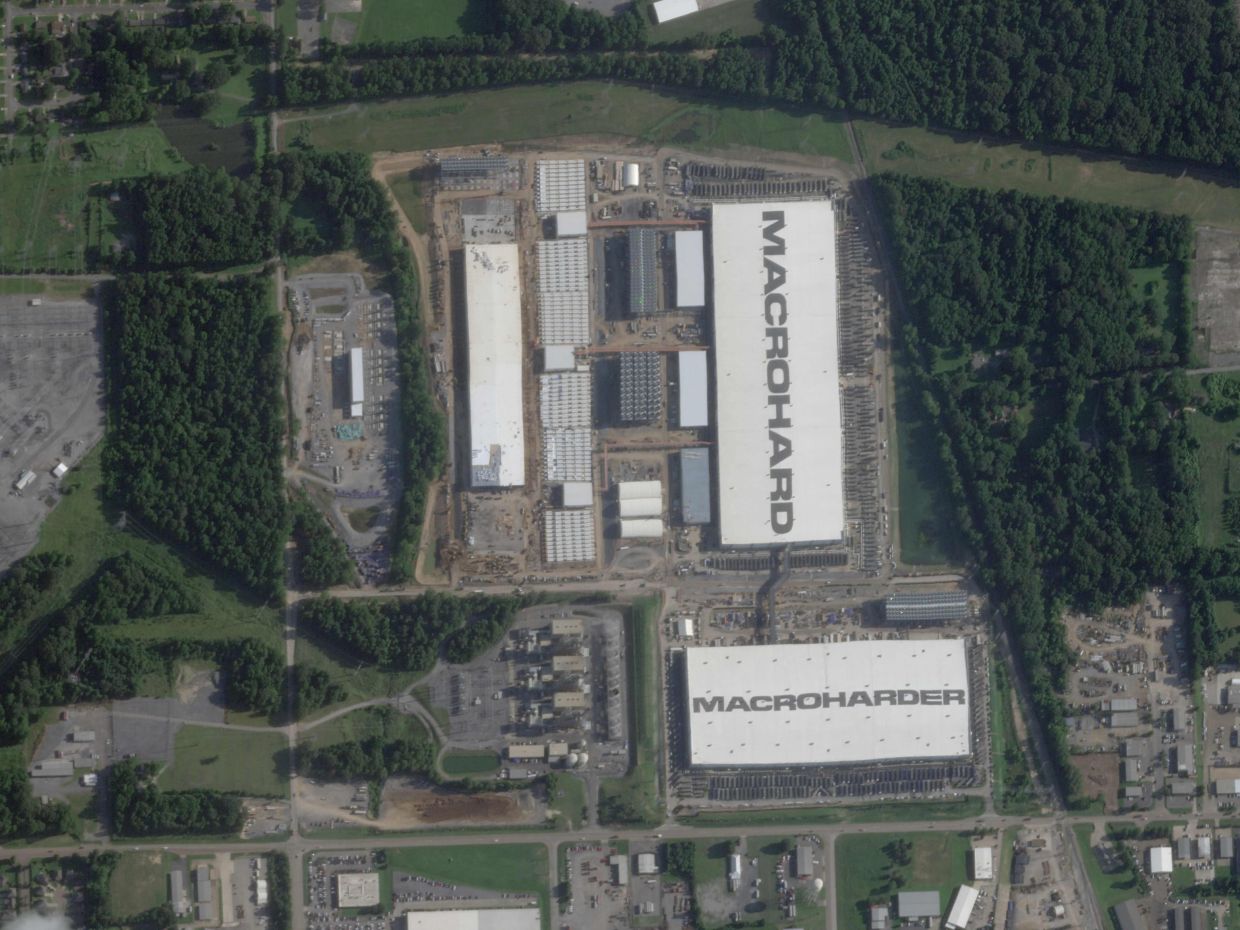
The explosive growth of artificial intelligence infrastructure is colliding headlong with environmental justice concerns across the United States, nowhere more visibly than in South Memphis, where SpaceXAI's Colossus I facility has become a flashpoint for questions about who bears the cost of technological progress. Built in just four months to power computing demands, this mega supercomputer installation sits at the edge of Boxtown and South Memphis—communities already burdened by generations of industrial pollution and now facing fresh threats from gas turbines and massive water extraction.
For 17-year-old Jasmine Bernard, the personal toll of living adjacent to the facility has crystallised a broader historical grievance. She has spent two years campaigning against the gas turbines that emit pollutants continuously into the air above her neighbourhood, one of the oldest continuously occupied Black settlements in the city, founded by freed slaves following the Emancipation Proclamation of 1863. The statistics underscore her concerns: cancer rates in this area run four times higher than the national average, a disparity that reflects decades of deliberate zoning decisions that funnelled industrial activity into Black neighbourhoods while shielding wealthier, predominantly white areas. Bernard's articulate framing of the issue—connecting it explicitly to the historical pattern of environmental racism—has made her a voice for thousands facing similar circumstances across the American industrial belt.
KeShaun Pearson, co-founder of Memphis Community Against Pollution, has become a national advocate for the dangers posed by unregulated data centre expansion. He characterises Colossus I as a textbook demonstration of how elected officials promise economic development while ignoring the communities that must absorb the environmental and health consequences. The facility generates substantial tax revenue—US$12 million in 2026 alone—but Pearson argues that local representatives never genuinely consulted affected residents or incorporated their concerns into planning decisions. This pattern reflects broader frustrations in the region, where development benefits accrue to corporations and municipal coffers while residential neighbourhoods absorb pollution, noise, and depleted water resources.
The air quality issue, while serious, represents only one dimension of the environmental challenge. Colossus I withdraws 1.2 million gallons of groundwater daily from the aquifer that supplies Memphis's drinking water for cooling purposes, a staggering volume that raises long-term sustainability questions. Sarah Houston of Protect Our Aquifer has warned extensively about this extraction rate and its implications for the region's water security. SpaceXAI initially committed to building a water reuse facility that would have mitigated this impact, but that project has been indefinitely suspended, leaving affected communities to wonder whether corporate commitments will materialise or be quietly abandoned once facilities are operational.
The governance failures surrounding Colossus I extend to its very construction. The company erected the turbines without obtaining required permits or conducting meaningful public consultation, effectively skirting the Clean Air Act—legislation designed precisely to protect surrounding communities before industrial construction begins. By labelling the turbines as temporary, SpaceXAI attempted to circumvent environmental review processes and compress timelines that normally require extensive regulatory scrutiny. Laura Thoms from Earthjustice, representing the NAACP in a lawsuit against SpaceXAI, articulates the legal principle clearly: companies must secure health and safety permits before construction, ensuring community protection is embedded in project design rather than retrofitted afterwards, if at all. The approach taken here inverted this logic entirely.
Responding to legal pressure, SpaceXAI acknowledged in late July that it would dismantle the temporary turbines and replace them with a code-compliant power plant. However, the agreement—negotiated in what critics describe as closed-door sessions with municipal officials—extends the deadline to July 2027, effectively granting the company a three-year window to maintain non-compliant operations. This arrangement epitomises what opponents consider a classic regulatory capture scenario, where local officials prioritise short-term tax revenue and job-creation claims over their obligation to protect constituents from ongoing pollution exposure. The Justice Department further complicated matters by requesting dismissal of the NAACP complaint on national security grounds, a controversial move that has amplified concerns about whether competitive pressures in the AI race are overriding environmental and civil rights protections.
The challenge extends beyond Colossus I itself. A second facility, Colossus II, operates across the Mississippi border in Southaven, housing 69 gas turbines that continuously power SpaceXAI's Grok AI assistant. Krystal Polk, a multi-generational resident whose family has owned property in the area for decades, describes the unrelenting noise as reminiscent of perpetual jet engine sounds—a 24/7 assault that causes nausea and vibration-related physical symptoms. The pine trees that once provided acoustic buffers offer no protection against this industrial-scale operation, and residents report receiving no advance notice regarding how the facility would be powered or maintained. A third data centre has already been constructed nearby, with a fourth still under construction, yet community members remain uninformed about their power sources and environmental management plans.
Memphis Mayor Paul Young has attempted to address some grievances through a redistribution mechanism, announcing that US$3.35 million from the tax revenue generated by Colossus I would be redirected toward affected communities. While this gesture acknowledges that existing neighbourhoods should benefit from development occurring on their doorstep, it also implicitly accepts the premise that pollution and environmental degradation are negotiable trade-offs rather than preventable harms. The amount represents less than 28 percent of the annual tax revenue generated, leaving a significant portion flowing to municipal and state coffers while affected residents continue breathing polluted air and drinking increasingly precious water resources.
For regional observers and policymakers across Southeast Asia, the Memphis situation offers instructive lessons about AI infrastructure placement and environmental governance. As artificial intelligence adoption accelerates globally, the computing power required for training and operating large language models must be housed somewhere, creating powerful incentives for companies to site facilities in locations with cheap land, minimal environmental enforcement, and politically marginalised populations with limited capacity for resistance. South Memphis and Southaven both fit this profile, selected not despite their existing environmental burden but partly because of the political weakness of existing residents and the historical pattern of treating these areas as industrial dumping grounds.
The legal frameworks purporting to protect these communities—the Clean Air Act and various permitting requirements—have proven insufficient when corporations proceed first and seek forgiveness rather than permission. SpaceXAI's strategy of erecting illegal turbines and requesting retroactive compliance represents a calculated bet that fines and eventual remediation costs will be absorbed as a business expense, smaller than the profit generated by avoiding regulatory delays. Residents lack the resources for immediate legal intervention, and government agencies struggle with regulatory capacity and political will to enforce existing rules against technologically advanced companies positioned as national economic priorities.
For Malaysian and Southeast Asian readers, this trajectory deserves close attention as technology companies and governments across the region evaluate data centre expansion. The question is not whether AI infrastructure will locate in the region—it almost certainly will—but whether policies can be established now that prevent repeating Memphis's mistakes. This means requiring environmental impact assessments and community consultation before construction, not afterwards; maintaining permanent rather than temporary compliance standards; and ensuring that tax revenues from data centres genuinely benefit affected communities rather than becoming political bargaining chips. The residents of South Memphis have demonstrated remarkable persistence in documenting harms and pursuing legal remedies, but they should not have been forced into defensive positions after facilities were already operational. Neighbouring countries can learn from their experience and implement preventive governance structures that balance technological development with genuine protection for vulnerable populations.

