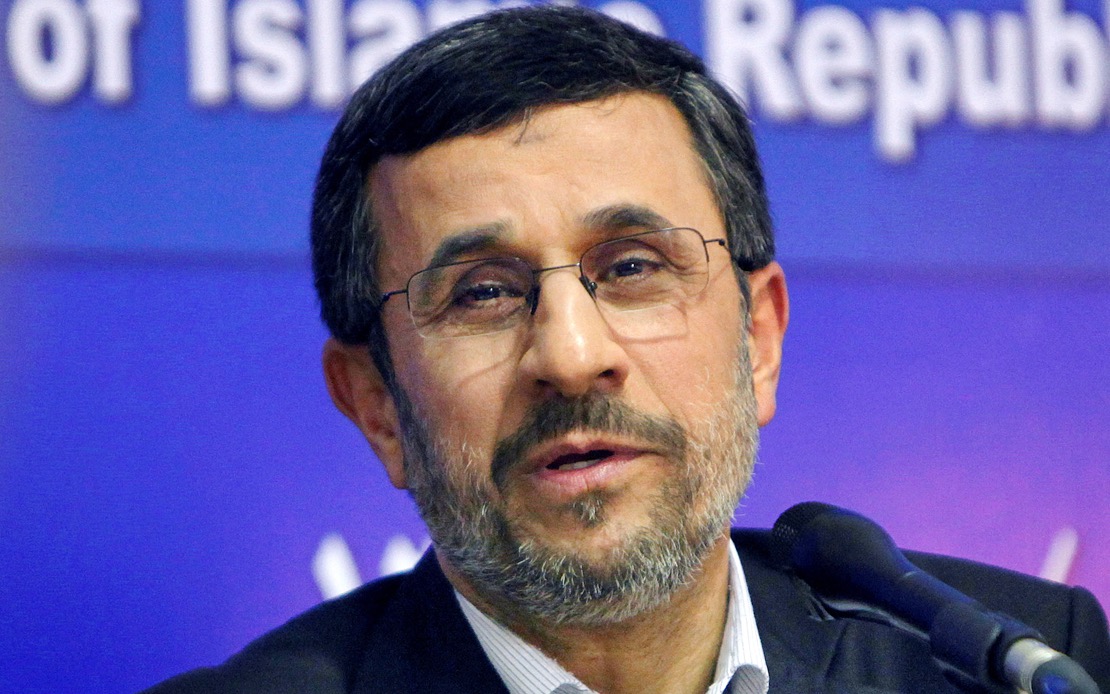
Former Iranian President Mahmoud Ahmadinejad has issued a categorical denial of allegations published by The New York Times claiming that Israel's Mossad intelligence service had pursued him for cooperation and that he is currently confined to his residence. In a statement released through his office on Tuesday, Ahmadinejad described the newspaper's reporting as completely false and accused the publication of deliberately fabricating information to distort public opinion and create rifts within Iran's political establishment.
The controversy centres on a New York Times investigation published Monday, which alleged that Mossad had made multiple attempts in recent years to cultivate Ahmadinejad as an intelligence asset and potential alternative leader for Iran. According to the newspaper's account, Israeli operatives met with the former president on various occasions abroad, including in Budapest, and that Israel had provided financial support for his housing and travel expenses. The reporting suggested these contacts formed part of a wider Israeli strategy aimed at engineering a change of government in Tehran following initial military operations against senior Iranian officials.
The most dramatic claim in the Times account involved events in late February, when the newspaper alleged that Israeli intelligence attempted to extract Ahmadinejad from the Iranian capital as part of a scheme to destabilise the government and position him as a replacement leader. According to the report, an Israeli airstrike on February 28 struck a facility housing his security personnel and damaged an armoured vehicle. The newspaper cited four senior Iranian officials as sources for the claim that a black Peugeot subsequently collected Ahmadinejad from the scene and transported him to a concealed location within Iran, with the vehicle allegedly operated by Mossad operatives.
Ahmadinejad's office categorically rejected all components of this narrative, emphasising that the allegations lack any factual foundation. The statement characterised the New York Times reporting as part of a pattern of misinformation designed to undermine Iran's stability and credibility. The office specifically contested the assertion that the former president is under house arrest, framing this claim as fabricated specifically to lend false credibility to what it termed the newspaper's fundamentally absurd allegations.
The timing of these denials carries particular significance given the broader regional tensions. Ahmadinejad had not made a public appearance for some months until last week, when he attended the funeral of late Iranian Supreme Leader Ali Khamenei, marking his first visible emergence since the commencement of US-Israeli military operations against Iran. His reappearance at such a high-profile state occasion lent weight to his office's assertion that reports of his confinement are inaccurate, though it also intensified scrutiny of his current status and any potential restrictions on his movement or activities.
The allegations carry significant implications for understanding Israeli strategic thinking regarding Iran's political landscape. The New York Times report, sourced to American and Iranian officials, suggested that Israeli intelligence viewed Ahmadinejad, who served as Iran's president from 2005 to 2013, as a figure whose cooperation or leadership might facilitate broader foreign policy objectives. This assessment would reflect a view of Ahmadinejad as potentially malleable compared to current hardline elements within Iran's power structure, though his office's response indicates he categorically rejects any such characterisation.
For Southeast Asian observers monitoring Middle Eastern developments, these allegations and denials illustrate the complex intelligence operations and political manoeuvring that characterise contemporary Iranian-Israeli relations. The region's strategic importance as a transit route for global commerce means that intensifying Iran-Israel tensions directly affect shipping lanes, energy markets, and investment patterns that matter profoundly to Malaysia and other nations in the area. The credibility of intelligence agencies and the accuracy of international reporting on such sensitive matters therefore extends beyond regional politics to influence economic calculations throughout Asia.
The dispute also underscores broader questions about media credibility and the weaponisation of intelligence narratives in geopolitical conflicts. Ahmadinejad's office accused a major international newspaper of deliberately spreading falsehoods, a charge that reflects wider global tensions regarding whose accounts of classified intelligence operations should command belief. In an environment where multiple actors claim access to secret information and competing narratives circulate rapidly through international media, distinguishing between substantiated reporting and propaganda becomes increasingly challenging for readers assessing international developments.
Ahmadinejad's public re-emergence at Khamenei's funeral also suggests that any restrictions on his movements, if they exist, remain sufficiently flexible to permit attendance at major state functions. His participation in this significant event without apparent incident contradicts more restrictive interpretations of his status, though it remains possible that his activities outside such ceremonial occasions remain constrained. The opacity surrounding his actual circumstances reflects the broader difficulty in obtaining reliable information about internal Iranian politics and security arrangements.
The allegation that Israel secretly funded Ahmadinejad's expenses represents a particularly serious charge, as it would constitute evidence of what Iran considers treasonous collaboration with the Jewish state. His categorical denial of any such arrangement underscores how such allegations, whether true or false, carry grave implications for the implicated individual within Iran's political and legal framework. The rejection of these claims thus functions as both a factual statement and a necessary protective measure against potential domestic consequences.
Moving forward, resolving these competing narratives will likely depend on the emergence of additional evidence from independent sources, although the classified nature of intelligence operations suggests that definitive public clarification may never materialise. The controversy illustrates how allegations involving covert operations inevitably generate uncertainty and contestation, with interested parties maintaining contradictory positions that cannot be easily reconciled through public statements alone. For international observers including those in Malaysia assessing developments in Iran, the episode serves as a reminder of the fundamental limitations in verifying claims about secret intelligence activities conducted across international borders.

