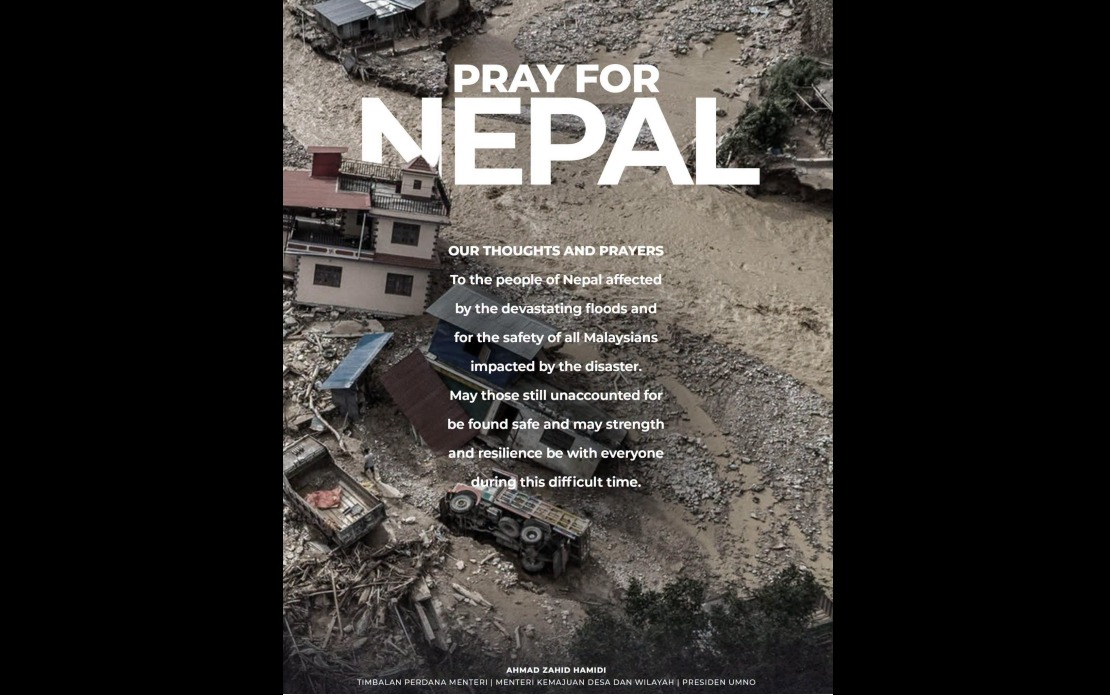
Deputy Prime Minister Datuk Seri Dr Ahmad Zahid Hamidi has voiced serious concern regarding the welfare and security of Malaysian nationals affected by the catastrophic flooding that has engulfed Nepal, stating his fervent hope that those missing will be located and reunited with their families. The sentiment reflects growing anxiety among Malaysian authorities as the scale of the disaster becomes increasingly apparent, with the scale of human loss prompting official statements of support and solidarity from Kuala Lumpur's highest offices.
In a Facebook statement released on Wednesday, Ahmad Zahid conveyed his heartfelt sympathies to families who have suffered bereavement in the disaster, while simultaneously demonstrating Malaysia's solidarity with the Nepalese nation during its hour of crisis. The message underscores the diplomatic importance Malaysia places on maintaining supportive relations with neighbouring regional nations and protecting its citizens abroad during humanitarian emergencies.
The Deputy Prime Minister articulated the gravity of the situation by describing the flash floods as devastating and expressing profound sadness at the loss of life and the displacement of families. His remarks highlighted the widespread destruction that has rippled through communities across Nepal, emphasizing the human dimension of the disaster beyond mere statistics. The statement reflected an understanding that such catastrophes extend far beyond borders, affecting not only local populations but also foreign nationals present in the country.
Ahmad Zahid's public utterances focused significantly on the ongoing search and rescue operations, calling for their acceleration and expressing hope that personnel engaged in these efforts would successfully retrieve those in danger. This emphasis on active rescue work demonstrates Malaysia's engagement with the immediate crisis response phase, acknowledging that survival chances diminish with each passing hour in flood conditions where people remain missing or trapped.
The statement also included prayers and wishes for affected families to find strength during the traumatic aftermath of the disaster. Such sentiment, while appearing ceremonial, carries weight in conveying official recognition of the psychological and emotional toll that such catastrophes impose on survivors and bereaved families. The Deputy Prime Minister's invocation of resilience speaks to the longer-term recovery process that Nepal will face in the weeks and months following this disaster.
According to data compiled by Nepal's tourism board as of Thursday evening at 5:30 pm local time (7:45 pm Malaysian time), the confirmed death toll from the devastating floods had climbed to 359 individuals. This figure represents a significant humanitarian crisis, placing the incident among the more severe natural disasters to strike South Asia in recent years. The scale of fatalities underscores the ferocity of the flash flood waters and the challenges faced by rescue and recovery teams operating in difficult terrain and weather conditions.
For Malaysia, such disasters abroad trigger concern at multiple levels. Beyond the human tragedy unfolding in Nepal, there exists specific worry regarding the welfare of Malaysian nationals who may have been in the country during the flooding. Tourist destinations, educational institutions, and business operations throughout Nepal employ or attract Malaysian workers and visitors, creating potential exposure for Malaysian citizens to the disaster's effects. The Deputy Prime Minister's statement directly acknowledges this dimension by expressing particular concern for affected Malaysians.
The official response from Malaysia's senior leadership signals the government's commitment to monitoring the situation and providing assistance where possible. While the primary responsibility for disaster response rests with Nepalese authorities, neighbouring countries typically activate diplomatic channels and mobilize resources to support search and rescue operations and to assist their own nationals. Such international cooperation becomes particularly important in mountainous and remote regions where terrain and infrastructure damage compound the difficulty of reaching victims.
Nepal has faced considerable challenges in responding to the flooding due to geographical constraints and the monsoon season's impact on accessibility to affected areas. The country's steep terrain and monsoon-dependent climate create conditions where flash flooding occurs with frightening regularity, yet each occurrence strains available resources and rescue capabilities. International expressions of solidarity and practical assistance from countries like Malaysia can meaningfully contribute to the response effort.
The Deputy Prime Minister's statement also carries implicit diplomatic weight, reinforcing Malaysia's position as a responsible regional partner concerned with humanitarian outcomes and the welfare of all people affected by natural disasters. Such public pronouncements help frame Malaysia within international discourse as a nation that values human life and maintains principled positions during crises, regardless of national boundaries.
As information about the true scale of the disaster continues to emerge, Malaysian authorities are likely conducting assessments of any nationals present in flood-affected regions. The Foreign Ministry and other relevant agencies typically activate protocols to locate and assist Malaysian citizens in distress abroad, coordinate with local authorities, and facilitate evacuations where necessary. The public statement from the Deputy Prime Minister essentially signals that Malaysia is engaged in these efforts at the official level.
The Nepal floods represent a stark reminder of the vulnerability of communities to natural disasters and the importance of international solidarity during humanitarian emergencies. For Malaysia, which faces its own flood-related challenges during the monsoon seasons, the disaster in Nepal offers both a cautionary tale and an opportunity to demonstrate the mutual assistance that binds regional neighbours together during times of crisis.

