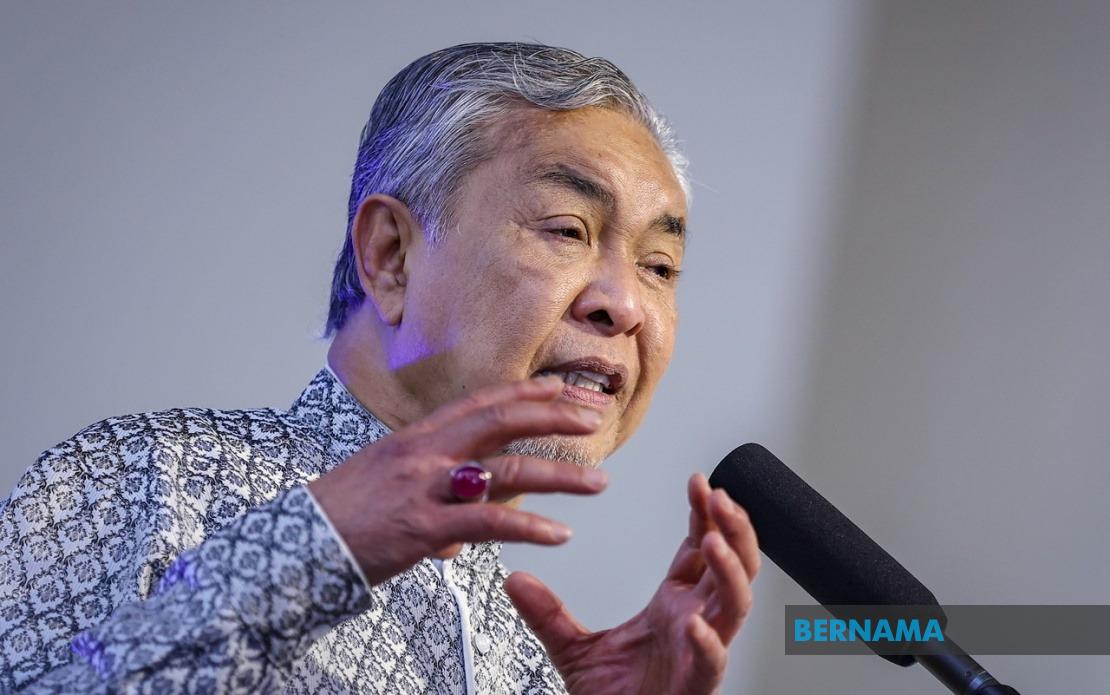
Barisan Nasional chairman Datuk Seri Dr Ahmad Zahid Hamidi has appealed to political parties involved in the Johor state election to abandon discussions of longstanding controversies that bear no relevance to the state's development agenda, calling instead for a campaign environment characterized by mature discourse and mutual respect. Speaking after attending a community engagement event in the Kempas constituency on July 3, the Deputy Prime Minister stressed that competing parties should base their appeals to voters on the merits and capabilities of their candidates, together with concrete policy proposals that address voter needs.
The timing of Ahmad Zahid's remarks carries particular significance given that several political organizations participating in the Johor contest also serve together in the federal government. This unusual arrangement—where coalition partners simultaneously compete at the state level while maintaining ministerial partnerships at the national level—creates an inherent tension that Ahmad Zahid appeared intent on managing through an appeal to institutional restraint. He expressed concern that the airing of historical disputes during the campaign could create uncomfortable dynamics when these same leaders reconvene at Cabinet meetings, where collaborative governance is essential to the administration's functioning.
Ahmad Zahid explicitly acknowledged that certain individuals within competing parties have launched attacks against UMNO and BN using what he characterized as outdated allegations and grievances. Rather than responding in kind or dwelling on such criticisms, he signaled that BN would maintain a higher standard of political conduct throughout the campaign period. This positioning reflects a strategic calculation that BN's electoral prospects are better served by steering the conversation toward prospective development plans rather than allowing the campaign narrative to become mired in historical controversies.
Contrary to perceptions that BN enters the election as the overwhelming favourite, Ahmad Zahid insisted that the coalition views itself as an underdog given the dramatic shifts in Johor's political landscape in recent years. He pointed to structural changes in the state's electorate—particularly the growing proportion of young voters—as a factor that necessitates rigorous campaign work and cannot be taken for granted. BN's performance in the previous state election, when it secured 40 seats, represents a baseline that party leadership acknowledges must be improved upon to ensure continued control of the state assembly.
The Menteri Besar Datuk Onn Hafiz Ghazi's manifesto, which Ahmad Zahid highlighted as central to BN's campaign platform, places considerable emphasis on addressing the concerns and aspirations of younger voters. This demographic shift has become increasingly important to Johor's political calculus, reflecting broader patterns across Malaysia where youth participation in elections has grown significantly. The manifesto specifically identifies job creation and skills enhancement through Technical and Vocational Education and Training programmes as key policy pillars, recognizing that young people require not merely employment opportunities but access to roles that offer competitive remuneration and genuine career advancement prospects.
Ahmad Zahid, who also serves as Minister of Rural and Regional Development, pointed to recent improvements in Malaysia's unemployment figures as evidence that economic conditions are moving in a positive direction. The national unemployment rate has declined to 2.9 per cent, a figure he presented as an encouraging indicator of labour market health. However, he acknowledged that statistical improvement in overall employment does not automatically translate into meaningful economic opportunity for young people seeking stable, well-compensated positions. The challenge, as he framed it, lies in channeling available job creation toward premium-wage opportunities that require specialized skills and training.
The focus on technical and vocational training represents a deliberate positioning by BN to address what party strategists recognize as a critical gap between job availability and job quality. Malaysia's economy, like many regional counterparts, faces a mismatch between the skill sets that young people acquire through traditional secondary and tertiary education and the specialized competencies demanded by growing sectors of the economy. By emphasizing training programmes that bridge this gap, BN seeks to demonstrate responsiveness to a concrete concern affecting the material prospects of younger voters, who polls suggest comprise more than half of Johor's electoral base.
Ahmad Zahid's appeal to young voters in Johor to support BN candidates was framed explicitly around the coalition's track record and future commitments in skills development and employment creation. This approach reflects recognition that generational messaging requires substantive policy content rather than mere rhetorical appeals to youth. The emphasis on technical training also aligns with regional economic development patterns, as Southeast Asian economies increasingly compete for positioning in higher-value manufacturing and services sectors that demand a technically skilled workforce.
The 16th Johor state election will determine the composition of a 56-seat state assembly, with BN contesting all available seats. The electoral contest carries implications beyond Johor itself, as the state has historically served as a bellwether of broader political sentiment in peninsular Malaysia. Early voting is scheduled for July 7, with general polling taking place on July 11. The campaign period between Ahmad Zahid's July 3 remarks and polling day provides a relatively compressed timeframe within which competing parties must communicate their respective platforms to voters.
Ahmad Zahid's comments also reflect broader challenges facing BN as a coalition encompassing parties with divergent interests and, at times, competing agendas. The call for campaign civility and policy focus implicitly acknowledges the risk that internal coalition tensions could become visible during the campaign, potentially undermining public confidence in BN's ability to govern cohesively. By establishing early expectations regarding the tone and substance of acceptable campaign discourse, BN leadership sought to establish parameters that would allow the election to proceed without inflaming relationships that BN depends upon to function as a governing entity at the federal level.
The election occurs against a backdrop of shifting voter preferences and demographic change that has reshaped Malaysian politics over the past decade. Johor, which has long represented a BN stronghold, has experienced political volatility that makes no result inevitable. Ahmad Zahid's characterization of BN as an underdog, while partly tactical rhetoric designed to mobilize supporters, reflects genuine uncertainty about how younger voters will respond to competing platforms and which coalition will ultimately succeed in framing the election narrative in terms most favourable to its electoral performance.

