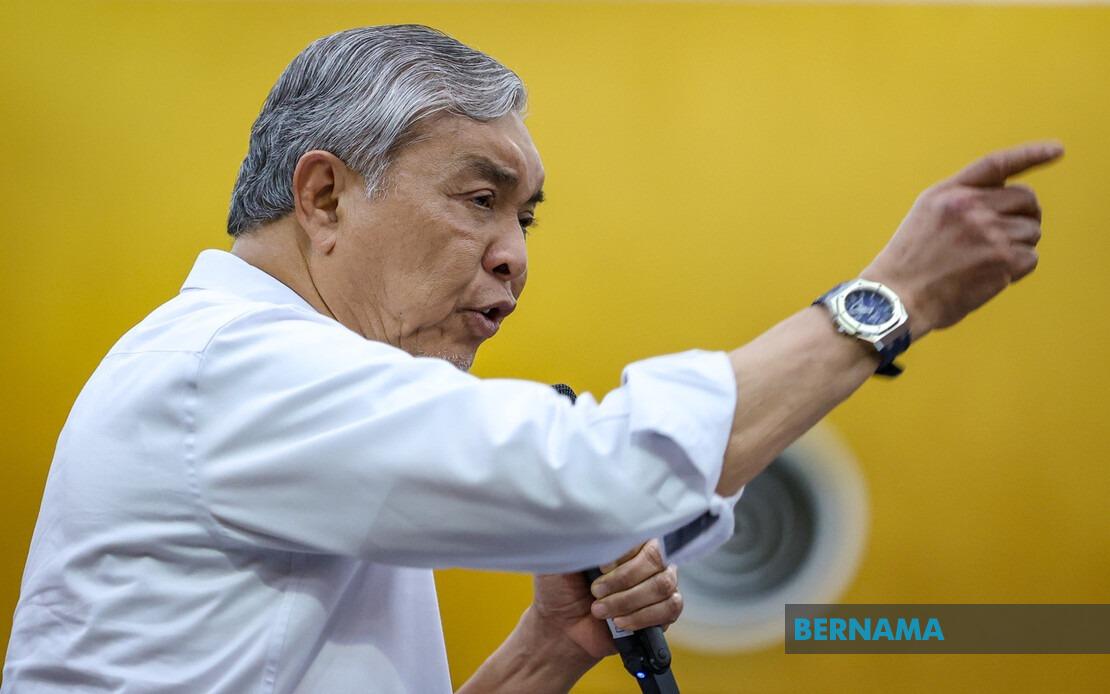
Deputy Prime Minister Datuk Seri Dr Ahmad Zahid Hamidi has thrown his weight behind a proposal to introduce structured leadership and political education programmes for Student Representative Councils (MPP) operating across Malaysia's universities and colleges. Speaking in Johor Bahru on July 9, the Barisan Nasional chairman argued that such courses would deepen young leaders' grasp of democratic principles and the broader political environment shaping the nation.
The rationale behind the proposal rests on Ahmad Zahid's conviction that campus-based student leaders require deeper exposure to political realities and governance challenges in order to mature into informed citizens capable of contributing meaningfully to Malaysia's future. Rather than viewing student leadership as merely administrative roles, the deputy prime minister presented the initiative as part of a deliberate strategy to equip the next generation with the intellectual tools necessary to understand and engage with complex national issues. This framing reflects a broader concern within Malaysia's political establishment about youth political literacy and informed electoral participation.
Crucially, Ahmad Zahid indicated that the federal government stands ready to shoulder the financial burden of these educational programmes. The proposal would require approval from Higher Education Minister Datuk Seri Dr Zambry Abd Kadir, but the deputy prime minister's strong backing suggests the initiative carries significant backing from the highest levels of the executive branch. This willingness to commit public funds underscores the perceived importance of investing in the political education of student leaders, who often exercise considerable influence over their peers on campuses nationwide.
The proposed curriculum would expose student leaders to the functioning of the political arena while simultaneously building their capacity to influence Malaysia's emerging political trajectory. Ahmad Zahid described the courses as vehicles for equipping young leaders with understanding of how political systems operate, how decisions are made at various levels of government, and what role individual citizens and organisations play in shaping these outcomes. This educational approach differs from traditional civic education by placing student leaders at the centre of the learning experience and treating them as potential political agents rather than passive recipients of information.
Importantly, Ahmad Zahid made clear that the initiative does not aim to push young people into active politics, a distinction that carries weight in Malaysia's sometimes contentious landscape of student activism and institutional autonomy. He acknowledged that eighteen-year-old voters and first-time participants in elections need not pursue political careers or join political parties to benefit from such education. Nevertheless, he emphasised that political awareness remains essential regardless of whether individuals choose active involvement. Drawing on his own experience as a student leader at Universiti Malaya, Ahmad Zahid presented political engagement during the university years as a natural stepping stone for those inclined toward such paths.
The deputy prime minister's insistence on the distinction between political literacy and political activism reflects sensitivities around university governance and the autonomy of student organisations. Malaysian universities have long occupied a complex position where student bodies serve administrative functions within institutional structures while simultaneously serving as forums for political discourse and sometimes activism. By framing the proposal as educational rather than mobilisational, Ahmad Zahid sought to position the courses as enhancing institutional governance rather than transforming campus politics.
Ahmad Zahid stressed that young voters bear responsibility for exercising their franchise thoughtfully and strategically. He argued that voting should never be treated as a casual act or obligation discharged without consideration, since individual ballots collectively determine which leaders assume power and which directions political parties pursue. This emphasis on the consequentiality of youth voting speaks to concerns within Malaysia's political establishment about voter turnout among younger demographics and the quality of electoral decision-making across age cohorts. The deputy prime minister presented informed voting as a civic duty complementary to but distinct from active party membership or campaign involvement.
The timing of these remarks carries particular significance given that Johor was preparing for state elections scheduled for the Saturday following the deputy prime minister's statement. With fifty-six state assembly seats up for contestation, the Johor election represented a major political test for the ruling coalition. Ahmad Zahid's intervention in the discussion of youth political education coincided with this significant electoral moment, potentially reflecting broader concerns about youth mobilisation and engagement in what was shaping up as a competitive contest for state control.
For Malaysian higher education institutions, the proposal potentially signals a shift in how government views the role of student leadership structures. Rather than confining Student Representative Councils to administrative and welfare functions, the proposed courses would formally integrate political education into the institutional framework. This could reshape expectations around what campus leaders are meant to understand and articulate, extending beyond representation of student interests to encompassing broader geopolitical literacy.
The initiative also reflects evolving thinking within Barisan Nasional about how to maintain political relevance among younger voters in an environment where trust in traditional institutions faces mounting challenges. By investing in the political education of student leaders positioned to influence substantial peer networks, the ruling coalition appears to be taking a longer-term approach to political sustainment rather than relying solely on short-term mobilisation during election campaigns.
For Malaysia's broader political landscape, the proposal underscores recognition that the next generation of voters and potential leaders will require more sophisticated understanding of governance, political economy, and democratic processes than curricula traditionally provide. Whether such initiatives ultimately prove effective in strengthening Malaysian democracy or reshaping youth political engagement remains to be seen, but Ahmad Zahid's public commitment suggests the government intends to move forward with implementation of the programme.

