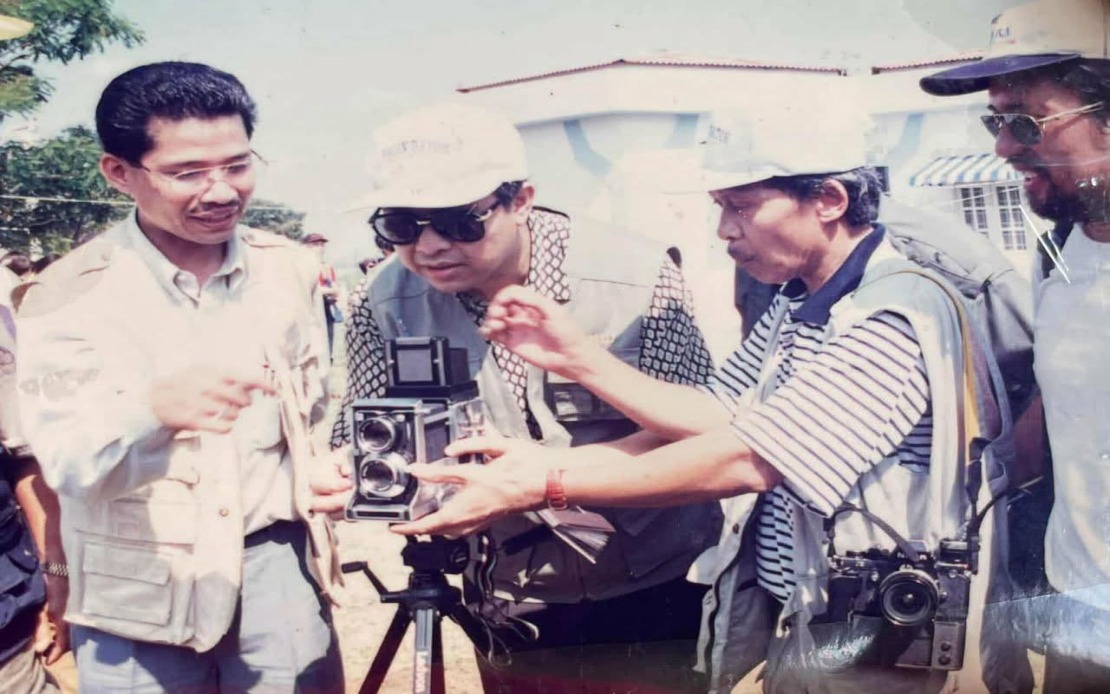
Deputy Prime Minister Datuk Seri Dr Ahmad Zahid Hamidi has acknowledged the profound importance of photography in contemporary society, extending his greetings to image-makers around the world on World Photography Day 2026. His recognition underscores a broader appreciation for the craft of visual documentation, which spans professional practice, media work, and the everyday snapshots that define personal and family histories.
The tribute reflects an understanding that photography operates across multiple levels within society. Professional photographers operating in commercial and editorial spaces represent one tier of the profession, yet Ahmad Zahid's acknowledgement encompassed a far wider spectrum. Media photographers who document news events, event specialists who capture significant occasions, and the countless individuals who assume the informal role of family historian during gatherings all deserve recognition for their visual storytelling.
Photography's layered significance extends beyond the sentimental. While personal and family photographs serve as anchors for private memory—treasured keepsakes that line mantels and fill albums—many images transcend their original context to become something far more consequential. Photographs that document pivotal moments, social conditions, and historical events eventually assume the status of archival material. They transform into primary sources that shape how future generations understand the past, serving as visual testimony to human experience across time.
The technical artistry underlying photographic practice deserves particular attention. What may appear instantaneous—the fraction of a second required to depress a shutter—actually represents the culmination of observation, anticipation, and deliberate choice. Photographers must develop an almost intuitive capacity to recognise decisive moments, positioning themselves in anticipation of actions yet to unfold. This combination of technical skill, aesthetic judgment, and temporal awareness distinguishes photography from casual documentation, elevating it to a form of visual expression.
In the Malaysian context, photographers have played a crucial role in documenting the nation's development trajectory. From independence-era photography that captured formative political moments to contemporary work reflecting urban growth and cultural diversity, visual archives constitute an irreplaceable dimension of national memory. As Malaysia continues its development journey and grapples with questions of identity and progress, photographs serve as anchors connecting past aspirations to present realities.
The digital revolution has democratised photographic practice, enabling broader participation than ever before. Smartphones equipped with sophisticated imaging technology have placed professional-grade capture capabilities in the hands of millions. This accessibility has expanded the universe of visual documentation, yet simultaneously highlighted the distinction between technical capability and artistic vision. Professional photographers bring training, intention, and specialised knowledge that distinguishes their work from casual image-making.
Ahmad Zahid's statement carries particular resonance given Malaysia's multicultural composition and diverse visual heritage. Photographers working across the nation's different communities capture the texture of plural society—festivals, rituals, everyday interactions that reflect the country's religious and ethnic heterogeneity. This visual record becomes increasingly valuable as a repository of cultural knowledge and social history.
The archival function of photography carries specific implications for Southeast Asia and the Global South more broadly. Nations in the region often struggle with incomplete historical documentation, particularly regarding non-elite perspectives and experiences. Contemporary photographs—especially those created by independent and community-based practitioners—help fill these gaps, creating records that might otherwise remain uncaptured. This expanded photographic archive strengthens the region's capacity for historical reflection and self-understanding.
Media photographers, in particular, operate within frameworks of increasing complexity. Their work shapes public understanding of current events, yet they navigate ethical considerations regarding truth, context, and representation. In an era of image manipulation and misinformation, photographers committed to documentary integrity serve a critical function in maintaining informational credibility. Their labour undergirds public discourse and democratic accountability.
The recognition of photography's multivalent roles—personal memory keeper, professional documentary tool, and historical archive—reflects a mature understanding of visual culture's significance. Ahmad Zahid's tribute acknowledges that photography matters not merely as aesthetic practice but as a fundamental mechanism through which societies understand themselves. From the formal portrait that marks family milestones to the news photograph that documents social transformation, images constitute the visual scaffolding of collective memory.
Looking forward, the role of photographers in Malaysian and Southeast Asian societies will likely intensify. Climate change, urbanisation, technological transformation, and evolving social dynamics will demand sophisticated visual documentation. Photographers equipped with technical expertise, artistic sensitivity, and ethical commitment become increasingly vital witnesses to change.
The World Photography Day greeting thus carries broader implications than ceremonial acknowledgement. It represents recognition that photography—in all its forms and across all skill levels—constitutes an essential cultural practice. Whether serving professional editorial purposes, documenting family celebrations, or creating archival materials for historical scholarship, photographers contribute to the fundamental human endeavour of meaning-making through visual representation. Ahmad Zahid's tribute aligns with a growing global recognition that photography deserves consideration not as mere technical commodity but as a profound form of cultural expression and historical documentation.

