The African Union's Peace and Security Council has taken a firm stance against external powers attempting to shape Sudan's political future, declaring its opposition to foreign meddling and the establishment of breakaway administrations that could fragment the nation. The position emerged during high-level talks in Khartoum between Sudan's Sovereignty Council Chairman Abdel Fattah al-Burhan and a delegation from the continental body led by Algerian diplomat Mohamed Khaled, who currently holds the rotating chair of the council.
The emphasis on Sudan's unity reflects growing international concern that the prolonged conflict between the Sudanese armed forces and the paramilitary Rapid Support Forces is creating space for external actors to pursue competing interests. Since the outbreak of fighting in April 2023, the civil war has become increasingly internationalised, with regional and global powers offering backing to different factions. The African Union's intervention signals an attempt by the continent to assert leadership in resolving the crisis through its own institutional mechanisms rather than allowing the dispute to become a proxy battleground for external powers.
Mohamed Khaled characterised the meeting as constructive, noting that discussions encompassed multiple dimensions of Sudan's multifaceted crisis spanning military conflict, humanitarian collapse, and political paralysis. His emphasis on the rejection of parallel entities takes on particular significance given historical patterns in African conflicts where competing governments claiming legitimacy have deepened fragmentation. The reference to such structures is widely understood to encompass rival administrations that various armed groups or international backers might seek to establish, effectively partitioning the state and making eventual reunification far more difficult.
The council's call for inclusive dialogue and national reconciliation represents a push toward political solutions rather than military outcomes. Khaled stressed that only through engagement, political settlement, and consultation with diverse Sudanese stakeholders can the country achieve durable peace. This framing acknowledges that the current conflict cannot be resolved purely through battlefield victory, as the underlying political grievances that sparked the war must eventually be addressed through negotiation and constitutional reforms. The emphasis on inclusive governance also implicitly critiques the concentration of power that preceded the outbreak of fighting.
Prime Minister Kamil Idris signalled that the government is preparing to launch direct dialogue with opposing factions, suggesting at least rhetorical movement toward negotiation. The timing of this announcement during the African Union delegation's visit indicates coordination between Khartoum and continental leadership, and possibly an attempt to demonstrate to international observers that Sudan is moving toward conflict resolution. However, credibility gaps remain substantial given the RSF's continued territorial gains and the military's apparent belief that it can still achieve decisive victory.
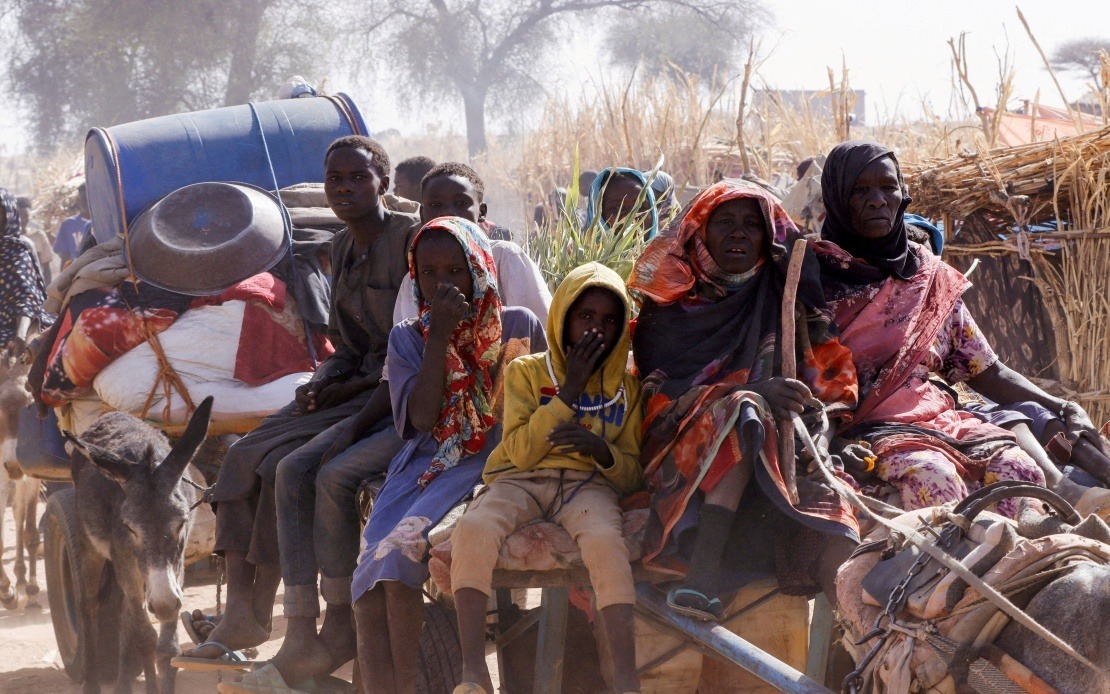
The humanitarian toll of the conflict has reached catastrophic proportions, with the United Nations estimating that approximately 13 million people have been displaced from their homes, and tens of thousands have been killed. These staggering figures underscore why dialogue cannot be indefinitely postponed; the longer fighting continues, the more communities are fractured and traumatised, and the harder eventual reconciliation becomes. For Malaysian policymakers watching the situation, Sudan's crisis illustrates how regional conflicts can destabilise entire continents and create migration pressures that eventually affect other countries.
The African Union's emphasis on the government's return to Khartoum and restoration of state institutions addresses a practical dimension of the conflict. By controlling the capital and re-establishing administrative functions, the government can provide essential services and demonstrate state capacity, which is crucial both for legitimacy and for preparing citizens for political transitions. Without functioning institutions, even a ceasefire can quickly unravel as communities lack channels for grievance resolution and economic recovery cannot begin.
The council's call for constitutional reform through free and fair elections represents a longer-term vision extending well beyond immediate conflict cessation. This roadmap suggests that the international community envisions Sudan's transition eventually leading to civilian democratic governance rather than perpetuating military or factional rule. However, the gap between this aspirational framework and the current reality of armed warfare remains vast, and many Sudanese analysts question whether either party currently fighting has genuine commitment to surrendering power through elections.
For Southeast Asian observers including Malaysia, Sudan's predicament offers cautionary lessons about the dangers of allowing elite political disputes to transform into armed conflict. The rapid escalation from an institutional disagreement about military integration into a nationwide civil war demonstrates how quickly security forces can turn against civilian populations and how difficult such conflicts are to reverse. Malaysia's own experience with internal security challenges makes Sudan's case study particularly relevant to understanding conflict prevention and the importance of addressing grievances before they militarise.

