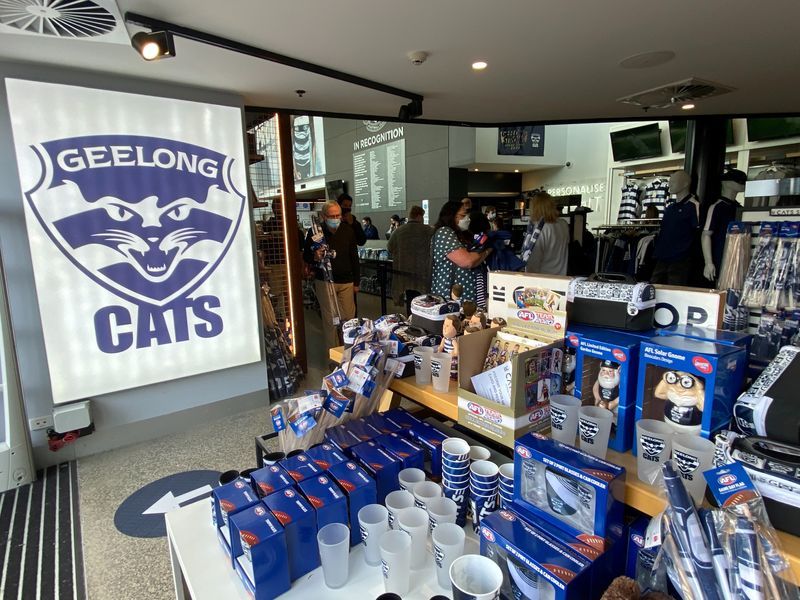
The Australian Football League has handed down a substantial fine against Geelong Cats following an independent review into the handling of a concussion liability waiver that was kept confidential from the league's governing bodies. The A$140,000 penalty—equivalent to approximately $100,500—represents the AFL's strongest signal yet that clubs cannot operate outside established protocols when managing player health matters, particularly those involving serious neurological risks.
At the centre of the controversy is an "informed consent letter" that Geelong executed with Jake Kolodjashnij, the club's championship-winning midfielder, roughly two years before the public disclosure in August. The agreement explicitly acknowledged the inherent dangers associated with competing at the elite level of Australian Rules football whilst simultaneously functioning as a contractual waiver that limited the player's legal recourse should he sustain concussion-related injuries. What made the arrangement particularly problematic was not merely its existence but the club's failure to formally notify either the AFL Commission or the Australian Football League Players' Association (AFLPA) of the document's terms and its attachment to Kolodjashnij's playing contract.
Kolodjashnij's history of repetitive head injuries formed the contextual backdrop to this agreement. Having experienced multiple concussions throughout his career, the midfielder nonetheless received medical clearance from an AFL-appointed panel, paving the way for him to extend his tenure with Geelong through to the conclusion of the 2026 season. The rationale presented by the club suggested that the consent letter was designed to afford the player agency over decisions affecting his playing future, whilst simultaneously documenting his understanding of the physical risks inherent to the sport. However, this narrative unravelled when the Herald Sun newspaper broke the story earlier in August, triggering substantial public backlash and questions about whether players possess genuine autonomy when clubs present such waivers as preconditions to continued employment.
The independent review commissioned by the AFL determined unequivocally that Geelong had violated league regulations by introducing an unauthorised variation to Kolodjashnij's contract whilst simultaneously withholding the signed document from both the AFL and the players' union. Critically, investigators found no evidence of deliberate concealment or intentional deception, yet this absence of malicious intent did not shield the club from significant sanction. AFL Commissioner Paul Bassat articulated the league's position with clarity: the administrative breach was sufficiently grave to warrant substantial financial penalty, irrespective of motive. The decision emphasises that all member clubs must adhere strictly to established procedures designed to safeguard player welfare and preserve the competitive integrity of professional Australian Rules football.
The controversy has been complicated by a potential conflict of interest at the governance level. Craig Drummond, the current chairman of the AFL Commission, served as Geelong's president at the precise moment when the concession letter was formalised. Drummond subsequently recused himself from the review process and issued a public apology acknowledging procedural missteps in the handling of the consent arrangement. This development has prompted scrutiny of oversight mechanisms within the league's administrative structure and whether existing protocols adequately prevent the intermingling of club interests with league-wide responsibilities.
Geelong's official response positioned the club's actions through a lens of player welfare and empowerment. Club officials contended that their primary objective throughout the deliberations surrounding the consent letter was to furnish Kolodjashnij with both practical support and meaningful input into decisions shaping his playing future. The framing attempted to recast the arrangement as protective rather than exploitative, yet this characterisation has found limited traction given the document's function as a legal instrument narrowing the player's remedial options. The club's attempts to justify the arrangement have been further undermined by the fact that Kolodjashnij has not featured in Geelong's playing lineup since July, raising questions about his current status within the organisation.
Kolodjashnij himself issued a measured statement three weeks prior to the AFL's decision, describing his current physical condition as sound whilst expressing disappointment that confidential medical information had entered the public domain without his consent. His distress appears centred less on the waiver itself than on the involuntary disclosure of sensitive health data, a distinction that underscores the complex dynamics between player welfare, privacy rights, and corporate interests within professional sport. The AFLPA, the representative body for competing athletes, has thrown its weight behind the midfielder, with chief James Gallagher asserting that Kolodjashnij ought never to have been positioned in a circumstance requiring such an agreement, thereby validating concerns that the arrangement represented an inappropriate imposition of liability risk onto a vulnerable party.
This incident arrives amid a broader confrontation between the AFL and cumulative concerns regarding repetitive head trauma in the sport. More than 100 retired players have initiated collective legal action against the league and member clubs, with proceedings commencing in 2023, seeking damages for sustained injuries and ongoing harm stemming from concussions endured during their playing careers. The litigation has forced the AFL into a defensive posture, with league leadership acknowledging potential liability whilst simultaneously maintaining assertions regarding its commitment to player safeguarding. In response to mounting pressure, the organisation pledged A$25 million towards comprehensive research into the long-term neurological consequences of concussive and subconcussive impacts experienced by athletes competing in Australian Rules football.
The Geelong disciplinary outcome carries implications extending well beyond a single club's administrative failing. The decision signals to all sixteen AFL member clubs that the league will deploy its enforcement authority to ensure compliance with health and governance protocols, particularly where player safety intersects with contractual arrangements. For Malaysian and broader Southeast Asian audiences following Australian sport, the matter illustrates how even elite professional leagues must navigate the tension between commercial imperatives, athlete autonomy, and institutional responsibility for player welfare. The fine simultaneously represents a watershed moment for player protection advocacy and a reminder that procedural compliance remains foundational to the legitimacy of professional sporting organisations.

